Changing nature of urbanization


Focus should be on improving people's quality of life, sustaining resources and protecting the environment
Urbanization has played an important role in driving China's economic growth over the past decades since the launch of reform and opening-up.
However, with economic development driven by industrialization, investment and measures to expand the size of the economy, urbanization has been reliant on the low-cost utilization of resources and a degraded environment.
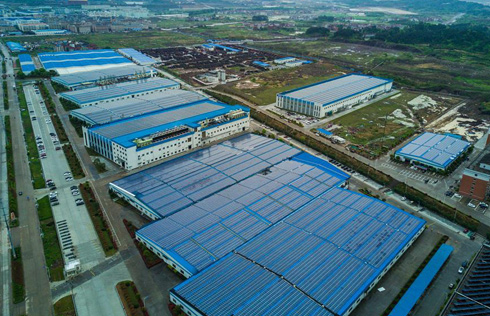
For example, China's use of land for urban construction was 1.71 times as fast as the growth of its urban population from 1990 to 2000, and the ratio rose to 1.85 to 1 from 2000 to 2010. China's arable land has also rapidly decreased and its per capita arable land is now half the world's average. Meanwhile the country's energy consumption has soared, and its energy consumption per unit of gross domestic product is now more than double the world's average, and its dependence on imports of mineral resources has been on the increase. These, together with its deteriorating environment, like serious underground water pollution and deteriorating air quality, are evidence that China has paid an enormous price for its resources-dependent urbanization.
As China's development enters a new stage, people have higher expectations of urbanization, such as better jobs and a better quality of life. This means China's traditional urbanization model has lost the support of the public.
The role of cities and their functions change when a country enters the stage of industrialization in which consumption and services replace production activities as the main forces for economic growth and development. So the accelerated urbanization the Chinese government is committed to should not be just the expansion of cities. Instead, it should be focused on raising people's quality of life.
Accelerated urbanization is essential because it has the largest potential to release the domestic consumption needed for China's development in the future. But realizing this potential depends on whether or not the country can achieve demographic urbanization and a service boom. Fortunately, China still has a lot of room to raise the urbanization ratio, especially the demographic urbanization ratio.
China's nominal urbanization ratio was 52.57 percent in 2012. But the real ratio, when those without an urban registration are excluded, is probably around 35 percent, far below the world's average of 52 percent. If current policy barriers lying in the way of its urbanization are cleared away, the country's urbanization ratio is expected to have an annual increase of 1.5 to 2 percentage points. That, if realized, will bring China's ratio of demographic urbanization to the level of the world's average by 2020.
Demographic urbanization is the process in which migrant workers are gradually integrated into cities and enjoy a similar status as their urban counterparts. The existence of policy and system barriers that block their acquisition of an official urban identity has hampered efforts to release domestic demand.
Demographic urbanization will help China facilitate transformation and upgrading of its industrialization, and its push for its long overdue industrial structural adjustments. It will also cause the service sector to rise to 55 percent of the country's economic aggregate by 2020.
China should try to remove policy and system barriers and be more resolved to launch sweeping reforms in its controversial household, land and public service systems and press for innovations. It should set a definite timetable for the demolition of the entrenched dual urban-rural household registration system that was put in place in the late 1950s in the planned economy era and has ever since remained the biggest obstacle to rural residents enjoying equal public resources and welfare as urban residents do.
Raising the demographic urbanization ratio will not only create huge investment opportunities, it will also give a real boost to domestic demand. According to estimates, urbanization will result in additional consumption of 100 billion yuan ($16.13 billion) by 2020, which will constitute a solid prop for an anticipated 7 to 8 percent annual economic growth over the next decade.
China should also revise the relevant laws and regulations as soon as possible to give farmers property rights over their collective land so that they can benefit more from the transfer of land ownership. This will facilitate the transfer of rural land, promote larger-scale and more intensive agricultural operations and increase farmers' land revenues.
Practical measures should also be taken to promote the balanced development of services between urban and rural areas to prevent the marginalization of migrant workers in the country's network of pension, medical, housing and education welfare.
The author is president of the Hainan-based China Institute for Reform and Development.