The challenges of urbanization


|
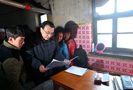
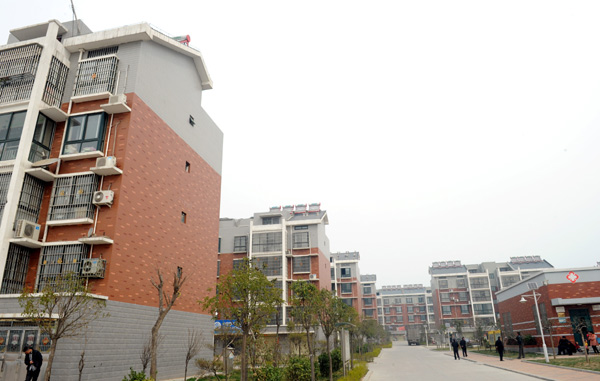 Modern Zhengchangliu village in Zhengzhou, Henan province. China's urbanization program is expected to cost 40 trillion yuan ($6.53 trillion) over the next decade. [Photo / Provided to China Daily]
|
At the closing ceremony of an urbanization training program organized by the Chinese Academy of Governance, Liu Chuncheng, a trainee and vice-mayor of Chifeng, in the Inner Mongolia autonomous region, made a speech on behalf of his team.
"In the run-up to the presentation, we suffered an embarrassment. Our team's research topic was public service. Only six trainees chose to join the team. Public service is mostly related to urbanization. But the number suggested our officials had little interest in the topic," he said.
The audience, mainly made up of local officials, responded with understanding laughter and applause.
Indeed, among the four topics offered to the 38 officials from local governments, State-owned enterprises and ministries under the State Council, "public service" was the least favorite. Three other topics - investment and financing, land management and industry - met with more enthusiasm.
"Local governments think that providing public service should came after the development of the local economy. Public service should improve only after the economy is boosted," Liu said. "In terms of public service, there is also a tendency to rely on central government."
Another largely unspoken reason, according to an official sitting below the stage who declined to be identified, is the fact that ratcheting up public service is less likely to promote local officials' political performance. Investing in new zones, highways and bridges is more likely to be recognized.
The slower economic growth rate has pushed China to focus more on domestic demand. Much hope has been pinned on the urbanization program, which will reportedly cost 40 trillion yuan ($6.53 trillion) in investment in the next decade.
Premier Li Keqiang, one of the masterminds of urbanization, has reiterated the importance of pushing forward the strategy. Last May, he signed a communique with Jose Manuel Barroso, president of the European Commission, on an urbanization partnership. The Chinese Academy of Governance is part of the program. It is responsible for inviting European experts in this area to give lectures to Chinese officials. Last month, it invited architects and consultants from Italy and Germany to give a lecture to them.
But, ultimately, how the grand strategy is actually implemented is largely dependent on the idea of millions of local officials at the country's provincial, municipal, county and even township levels, who live in an environment very different from that of central government officials.
There are already many reports in the Chinese media about how local officials are preparing to ramp up infrastructure and property spending in the name of urbanization.
The training program organized by the Chinese Academy of Governance, a top school to train elite officials, offered us a rare chance to focus on the important topic.
China Daily's interviews with these officials provided a sense of reassurance against concerns local governments might spoil the strategy, at least from the tone of their rhetoric.
All trained officials agreed the new urbanization drive should emphasize public service as well as investment opportunities. It should aim to improve the quality of the urbanization process and steer away from reckless urban expansion, they said.
Xiao Wensun, vice-mayor of Liuzhou, an industrial city in southwest Guangxi Zhuang autonomous region, said new urbanization should focus on the settlement of migrant workers, industrial development and services matching the development of the urban area.
"We should regard urbanization in the macro system of four pillars," Xiao said, referring to urbanization, industrialization, informatization and agricultural modernization. "It is a handle to transform the economic model."
Many officials stressed the importance of developing industries to sustain urbanization, a drive that is expected to create abundant job opportunities for those emigrating to expanding cities.
- Urban planners eye China's cities
- Sustainable urbanization
- China's urban fixed-asset investment up 20.4% in Jan-May
- China's urban unemployment rate remains 4.1%
- China plans urbanization steps
- Reports on shelved urbanization plan untrue
- Urbanization plan not rejected: NDRC
- Creating the modern face of urbanization