The next development agenda


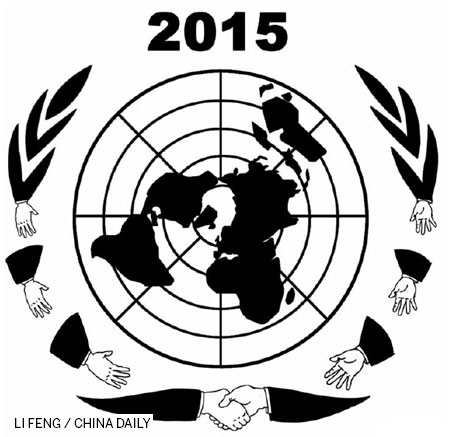
The United Nations High Level Panel of Eminent Persons on the Post-2015 Development Agenda recently delivered its report to the UN Secretary General. "A New Global Partnership: Eradicate Poverty and Transform Economies through Sustainable Development" gives a clear and compelling call for five transformations in development. It calls on all countries to:
Leave no one behind, ensuring that no person, regardless of ethnicity, gender, geography, disability, race or other status is denied universal human rights and basic economic opportunities;
Put sustainable development at the core, making a rapid shift to more sustainable consumption and production patterns; and mobilizing social, economic, and environmental action to eradicate poverty irreversibly;
Transform economies for jobs and inclusive growth, building more diversified economies and equal opportunities for all;
Build peace and effective, open and accountable institutions for all, recognizing that peace and good governance are core elements of well-being; and that responsive and legitimate institutions encourage the rule of law, property rights, freedom of speech and the media, open political choice, access to justice, and accountable government and public institutions;
Forge a new global partnership, based on a new spirit of solidarity, cooperation, and mutual accountability.
The five transformations aim to "end extreme poverty in all its forms in the context of sustainable development and to have in place the building blocks of sustained prosperity for all". This is an inspiring and worthy vision.
China's development experience bears testimony to the value of setting such lofty goals. In fact, it has achieved many of the current Millennium Development Goals ahead of the 2015 target date. The proportion of people living in extreme poverty has fallen by more than half, enrollment in lower secondary school has become nearly universal, maternal and child mortality rates have fallen, and the number of people with access to safe drinking water has increased by 220 million. China's progress has helped make the MDGs a global success, while going a long way toward achieving xiaokang, the country's vision for an all-round, harmonious society.
There is much to learn from the China's experience. In one generation, China has moved from being a net recipient of development finance to being a major contributor. Indeed, many countries turn to China to understand aspects of public administration, economic growth models and public finance that have facilitated rapid development.
At the 2012 the 5th Ministerial Meeting of the Forum on China-Africa Cooperation, China pledged support for Africa's peaceful development. It planned $20 billion in loans, people-to-people exchanges, and support for regional integration, peace and security. This type of support can help countries lay the foundation for a more prosperous future.
As the outlines of an even more ambitious post-2015 development agenda emerge, countries must begin to consider the means of implementation.
Are data and statistical systems robust enough to support good decision-making, and open enough to stimulate research and allow people to hold their governments accountable? How can goals be translated into specific indicators and targets that will guide progress? Are arrangements in place to build knowledge of what programs are effective and what are not, and to share knowledge across countries? Finally, what would be the elements of an appropriate financing strategy for the post-2015 agenda?
The World Bank is keen to work with its partners to ensure successful the emerging post-2015 development agenda. Governments, civil society, the private sector and donors must rise to the challenge of delivering transformative ideas, mobilizing resources and acting in accordance with principles of social, economic and environmental sustainability.
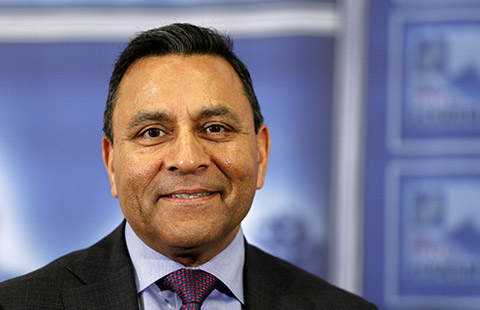
The author is special envoy for the president of the World Bank.