Comments
  Print
Print  Mail
Mail  Large Medium Small
|
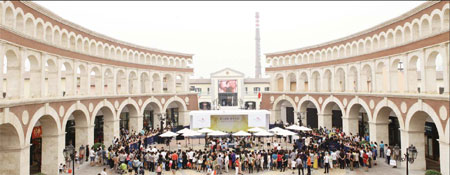 Florentia Village Jingjin Designer Outlets in Tianjin has announced a slew of plans to further expand its presence in China. [Photo / Provided to China Daily] |
Although recent government austerity measures have dampened the expansion plans of several foreign luxury brands in China, it has not led to a decline in the demand for such products. Lower prices for the recognized brands are proving to be an irresistible draw for Chinese shoppers.
No one knows this better than Florentia Village Jingjin Designer Outlets, a high-end outlet mall on the outskirts of Tianjin. The joint venture between Italy's Fingen Group and the Waitex Group of the United States recently celebrated its second anniversary in Tianjin and announced a slew of plans to further expand its presence in other Chinese cities.
|
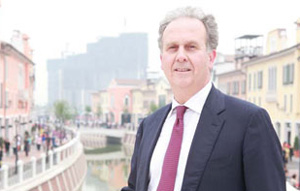 Maurizio Lupi,managing director,construction and operations,Fingen Group Asia.[Photo / Provided to China Daily]?? |
"We will expand our brand mixture by accommodating 60 more international brands from the current 159 at the Tianjin mall, including Polo, by the Spring Festival of 2014," says Maurizio Lupi, managing director of construction and operations with Fingen Group Asia.
Florentia Village outlets have been planned in Shanghai and Guangzhou next year, along with more such facilities in second- and third-tier Chinese cities.
"We have added well-known high-end brands such as Jimmy Choo and Etro to our line-up. The new brands have been introduced after repeated demand from customers," Lupi says, adding that the Tianjin outlet offers luxury, international premium, sports and outdoors, as well as leisure brand products.
"About 20 percent of the products are high-end brands, such as Prada, Gucci, Bulgari and Celine," Lupi says.
"The recent austerity measures have not affected us because we are selling branded goods at discounted prices. Customers who used to buy these products at boutique stores prefer to buy from us now because they get them for reasonable prices along with a good environment and the same quality."
Despite the global financial woes, the mall has managed to stay above the water through sustainable partnerships with leading global brands and its outlet business management concept, Lupi says, indicating that they are poised for steady growth in China.
"We change our product line-up frequently and on average replace 5 to 6 percent of the brands in the village each year," he says.
Apart from big international names, the Italian-style village is also trying to rope in some exceptional domestic brands."Local brands only account for 10 percent of the total shops in the village," Lupi says.
"The outlet industry should not hinge its future only on international luxury brands. In smaller cities, local clothing brands cannot be ignored because it may be difficult to get sufficient leftover or off-season products from the big brands," says Guo Zengli, president of the China Shopping Center Development Association of Mall China.
Florentia Village is located in the Wuqing development area, roughly halfway between Tianjin and Beijing. Covering an area of 60,000 square meters, with 42,000 sq ms of gross leasing area, the village attracted more than 2 million tourists and fashion enthusiasts last year.
"Last year our revenues were in excess of 1 billion yuan ($163 million), a 20 percent year-on-year growth. China accounts for 10 percent of our global business currently and we expect it to increase further," says Lupi. Globally, the company has developed five Florentia Villages in Italy and 21 throughout Europe.
Guo from Mall China says factors such as convenient transportation, brand mixture and discount levels have been important for the success of Florentia Village.
However, with other developers such as Yansha Outlets, the first outlet mall in China, planning outlets in Tianjin, competition will intensify. "The number of such outlets in a city is restricted because these are for a niche market. In a city such as Beijing or Shanghai, there will be an oversupply if there are more than four outlets, " Guo says.
According to current estimates, there are around 300 outlet centers in 81 Chinese cities. However, there is a world of difference among them when it comes to quality.
"Outlets are not just places for customers to buy discounted goods. It is not a lower-end business model in retailing. They need to provide a good shopping environment and get the best possible leftover products from the limited suppliers," Guo says.
With more developers and retailers joining the sector, the risks in the industry are also growing, he says.
"There are still enough growth opportunities for good outlets, depending on whether they have stable goods supply channels, reasonable planning, good location and brand line-up."
The real game-changer, Guo says, will be when outlets start focusing more on improving the shopping experience, rather than just adding products.
 Models at Ford pavilion at Chengdu Motor Show
 Brilliant future expected for Chinese cinema: interview
 Chang'an launches Eado XT at Chengdu Motor Show
 Hainan Airlines makes maiden flight to Chicago
 Highlights of 2013 Chengdu Motor Show
 New Mercedes E-Class China debut at Chengdu Motor Show
 'Jurassic Park 3D' remains atop Chinese box office
 Beauty reveals secrets of fashion consultant
Copyright 1995 - . All rights reserved. The content (including but not limited to text, photo, multimedia information, etc) published in this site belongs to China Daily Information Co (CDIC). Without written authorization from CDIC, such content shall not be republished or used in any form. Note: Browsers with 1024*768 or higher resolution are suggested for this site.
License for publishing multimedia online 0108263 Registration Number: 20100000002731