

 Comments
  Print
Print  Mail
Mail  Large Medium Small
|
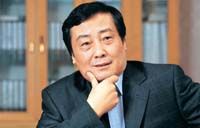
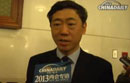
Gary Liu says one of the risks of opening up the capital account and making the yuan fully convertible is an exodus of capital. Gao Erqiang / China Daily |
Zone not necessarily intended to be as ambitious as some headlines suggest, says expert
Gary Liu believes setting up the Shanghai free trade zone might mean that China avoids its own Asian financial crisis.
The deputy director of the CEIBS Lujiazui International Finance Research Center says the dangers of opening up the capital account too quickly are clear from what happened to many other Asian economies in the late 1990s.
The 39-year-old is confident having a three-year free trade zone pilot in a limited area is the right model for China to adopt.
"I think three years is long enough for the government to get some useful experience and lessons from how to experiment and they can then decide whether the free trade zone model can be copied in the rest of China and what modifications are required," he says.
Liu, not one to cloud his views in jargon, believes there would be huge dangers if the government rushed to make the yuan fully convertible in a short period of time.
"It would be very risky. If you opened the capital account fully it could be a disaster. Look what happened during the Asian financial crisis," he says.
"Then, when the Asian economies grew very fast they opened up their capital accounts while maintaining rigid exchange rates. Capital flooded in, creating an asset bubble in the stock markets. So when there was negative information, there was capital flight overnight and everything was a disaster."
Liu was speaking in a villa on a riverside campus, where the Lujiazui International Finance Research Center is based.
An oasis of calm near the bustling Shanghai financial center, it is nonetheless close to events at the center of China's financial reforms. A director of the center is Wu Xiaoling, the former vice-governor of the central bank.
Liu thinks even the FTZ - officially called the China (Shanghai) Pilot Free Trade Zone - will be good for the city and sees it alongside the Shanghai Expo in 2010 and Shanghai Disneyland (scheduled to open in 2015) in its developmental potential for the city.
"It will be very positive because the Shanghai growth rate is not very high right now and we need new drivers. The World Expo, Disneyland and the free trade zone are all important," he says.
"We need to develop our service sector. We don't need any more factories because if you have more factories you could end up with the same pollution problems as Beijing."
Liu says it is important to understand that the free trade zone, which is only 29 sq km in four separate territories on the outer limits of Shanghai, is not necessarily intended to be as ambitious as some of the headlines suggest.
"The FTZ is only a small first step because it is only a small place. Sooner or later what can be done in the free trade zone will be allowed in the rest of China.
"I don't think they will set up more free trade zones in other cities. I think Shanghai may be the only one and the next step will be a rollout of these measures across China."
Liu, who is an influential thinker in the financial community and was Bloomberg Businessweek person of the year last year, studied economics at Renmin University of China in Beijing before doing his PhD at East China Normal University in Shanghai.
Before joining CEIBS more than a decade ago, he had first-hand experience of financial institutions working on the Shenzhen Stock Exchange, the second major exchange on the Chinese mainland.
Apart from being a regular columnist for the Financial Times and other leading publications, he is also a member of the Global Agenda Council of World Economic Forum.
Liu says one of the risks of opening up the capital account and making the yuan fully convertible is an exodus of capital.
Private individuals in China are currently allowed to send out of the country only $50,000 (37,000 euros) in any one year.
"Transferring money outside of China is a very complex process and there are caps for most people like me.
"If the restrictions were removed someone like me with two apartments would sell one and buy a place in California because a place there would be cheaper. It would be a very easy decision."
He says one of the most important reforms within the FTZ will be interest rate liberalization, allowing banks freedom to set their own interest rates and compete for deposits instead of them being centrally-set by the People's Bank of China.
He says China's current system has led to an explosion in shadow or informal banking, which according to global rating agency Standard & Poor's is now 130 percent of China's GDP.
"Shadow banking in China is growing very fast because the formal banking system (mainly the "big four" state-owned banks) cannot meet the needs of the real economy," he says.
"If we liberalize the interest rates the banks will find it easier to compete with the shadow banks who currently charge high interest rates. This will make the cost of borrowing lower for many private sector businesses."
With a more liberal financial regime in place, particularly in terms of the convertibility for the yuan, the free trade zone authorities are keen to attract multinationals, particularly those wanting to set up their Asia headquarters.
"At least that is the dream of the Shanghai government. I think it is possible. Of course Singapore starts with advantages because it is a very transparent place with low taxes," he says.
He says the measures being introduced will put the free trade zone on a more level playing field.
"Any company wanting to move their money outside of China would have to move it first outside the FTZ and then to wherever they wanted. If your headquarters was in Singapore you would have the same problem as a zone based in the FTZ area. So what is the difference?" he asks.
Liu does not think the FTZ will be the catalyst to Shanghai becoming China's main financial center as many in Hong Kong are now fearful of.
"I think it will be several decades before Shanghai really competes with Hong Kong because there are still a lot of gaps in Shanghai.
"The Shanghai market is still at a very early stage. It is closed and foreign capital can't get in. There is a problem with manipulation, regulatory quality and the legal system is not so transparent. It is also too dependent on government interference.
"Hong Kong is very international, almost everyone can speak English and it has a lot of talented people across many different specializations."
Liu says that if the yuan becomes more convertible it is not necessarily going to become a global reserve currency like the dollar any time soon
"It would be very good for China. We have $3 trillion of foreign exchange reserves and we can only invest in US treasury bills on which the return is very low.
"It is not something that is going to easily happen. The position of the US dollar was decided by the Bretton Woods system (set up after World War II) and it is very embedded. Because of US soft power, it is also very difficult to challenge the US dollar's position."
Liu believes that with the free trade zone underway people should not expect any sudden, dramatic moves to open up China's financial markets.
"I think interest rate liberalization is possible within three to five years but full convertibility of the yuan could be a long way to go. It is difficult to foresee. It could be 20 years but it could also be never. We don't know."
andrewmoody@chinadaily.com.cn
(China Daily Africa Weekly 11/08/2013 page8)
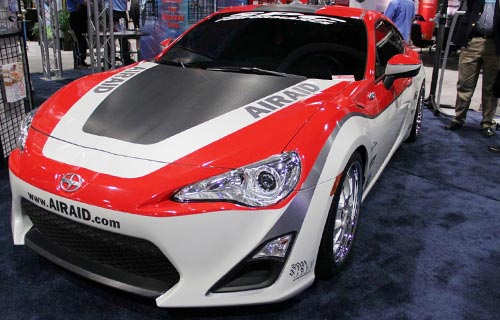 Scion FR-S (Toyota 86) modified by Airaid at SEMA Show
 Models at Spyder pavilion at SEMA Show
 Models at Anso pavalion at SEMA Show
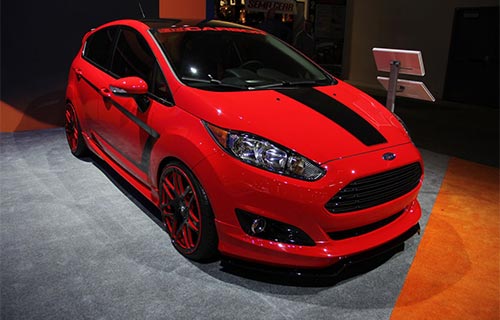 Modified Ford Fiesta by 3D Carbon at SEMA Show
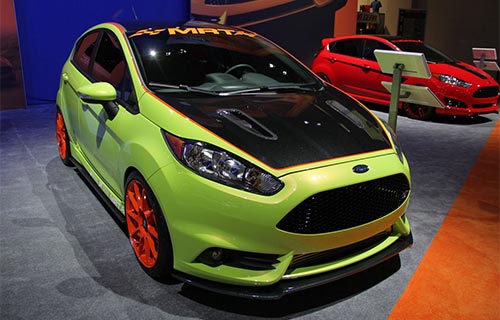 Modified Ford Fiesta ST by MRT at SEMA Show
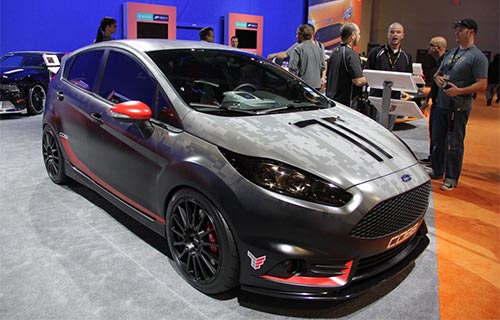 Modified Ford Fiesta ST by COBB at SEMA Show
 Hong Kong Optical Fair Kicks off
 The predicted christmas best gifts for children
Copyright 1995 - . All rights reserved. The content (including but not limited to text, photo, multimedia information, etc) published in this site belongs to China Daily Information Co (CDIC). Without written authorization from CDIC, such content shall not be republished or used in any form. Note: Browsers with 1024*768 or higher resolution are suggested for this site.
License for publishing multimedia online Registration Number: 20100000002731