Comments
  Print
Print  Mail
Mail  Large Medium Small
China Forum | Zou Lixing
To improve bilateral ties, the two nations should seek common grounds, enhance cooperation and take globalization forward
As the Chinese economy beats the odds of global financial crisis and growth slowdown, trade frictions between China and the United States, such as those over trade imbalance, renminbi exchange rate, intellectual property right protection and market access, have increased and bilateral economic and trade ties are becoming more politicized. These are not unexpected developments even though China-US trade ties are bilaterally the most important in the world. And since their causes are complicated, they have to be properly addressed to promote healthy bilateral relations.
First, the trade frictions reflect the conflict between developed and developing countries amid complex changes across the globe where the developed world is represented by the US and the developing by China.
Second, the frictions mirror the complexity of China-US economic and trade ties. The unstable and uncertain global political and economic climate makes it more complicated for the two countries to adhere to the principle of opening-up in trade. And different stipulations of bilateral free trade agreements and regional trade agreements form the "Spaghetti bowl" phenomenon and effect, further complicating the situation.
Third, the frictions are the result of both sides' underestimation of and insufficient preparation for the changes in world. Many people in the US, for example, cannot accept China's rapid development over the past few decades. In China, on the other hand, some people get carried away by GDP data and assume China has become a developed country and even a superpower. The fact is China's economic and social development still lags far behind that of developed countries. Though China may gradually overtake the developed world in terms of economic aggregate, the power of the developed countries will not necessarily subside any time soon.
Fourth, the trade frictions reflect the insufficient understanding between China and the US. As a country that advocates "harmony foremost", China does not have the culture to offend others. China is endeavoring to empower and rejuvenate itself, but it has no intention of building a "Central Kingdom", expanding its territory or seeking hegemony. China is striving to maintain its national unity, territorial integrity and economic prosperity. But unlike China, the US pays too much attention to ideology and tries to force its ideas on other countries.
Fifth, the frictions indicate that economic and trade theories do not fully conform to current trade practices. To some extent, globalization of production and consumption now determines trade. Trade is no longer simply commodity exchange that realizes final product value. Instead, it is a necessary step to ensure normal global production. Apart from "horizontal trade" and "vertical trade", there is also "circular trade". In circular trade, multinationals based in developed countries control the key links in the trading chain such as market concept, product design, factor purchase, wholesale and retail pricing, consumption and market feedback, leaving only processing, export packaging and delivery to the so-called manufacturing bases. This leads to severe deterioration in developing countries' trade conditions in the long run, further complicating the international trade imbalance.
China-US trade frictions tend to become frequent as global competition and integration intensify. Since the two countries have common factors as well as disputes in terms of ideology, political views and economic interests, they need to explore new ideas and measures to overcome their differences.
To begin with, they should seek common grounds while shelving their differences to develop win-win economic and trade relations. Since China-US trade frictions are increasing along with their common interests, the two sides have to carefully analyze and plan their long-term strategies and policies on national security and development.
Second, the two countries have to promote sustained and healthy economic development in a complementary manner. In the coming decades, the US will maintain its position as the most powerful and innovative country, and China will remain in the primary stage of socialist market economy. So close cooperation between them will be conducive not only to their sustainable development, but also to the rest of the world's stability and development.
Third, China and the US have to enhance mutual respect to jointly drive forward globalization. The two countries have different histories, cultures and political systems but both reflect the spirit of creation. Hence, they have to treat each other on equal terms, appreciate each other's advantages and use them to promote economic growth and social progress. The US has to follow an inclusive policy not only at home, but also across the globe. And China should adhere to international principles and advance its reform amid global integration.
Fourth, China has to strengthen its research and development sector and work with other countries to improve international trade rules and multilateral mechanisms. It should better utilize multilateral mechanisms of the World Trade Organization to settle trade frictions, expedite the implementation of its intellectual property strategy and intensify efforts to build international brands in order to reduce technical trade frictions. China also has to speed up its industrial restructuring and carefully select market segments to position its products to give shape to a new pattern of differentiated development and competition.
China-US economic and trade ties have seen quantitative, not qualitative, changes. As their ties mature, the two sides tend to have higher expectations from each other. Conflicts arise when one or both sides fail to measure up to those expectations. Nevertheless, they achieve win-win results when they cooperate and meet failure when they quarrel.
That is why the Trans-Pacific Partnership which the US is promoting cannot reduce the importance of China-US trade ties. And China's cooperation with other BRICS countries is not meant to challenge the US' status in the international community. It is thus important not to politicize economic and trade issues, because it will only make them even more complicated.
In their long-term interests, China and the US should try to see things from each other's perspective to seek common grounds, base their plans on reality, enhance cooperation and advance the cause of globalization.
The author is vice-president of the Research Institute of China Development Bank.
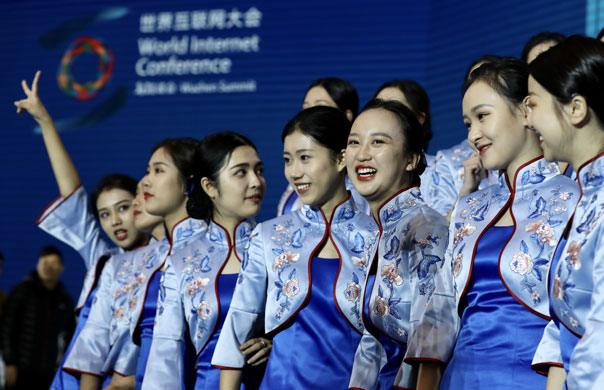 4th World Internet Conference concludes
 Starbucks Reserve Roastery set to open in Shanghai
 Smile to get discounts in Tmall's unmanned supermart
 Top 10 richest Chinese women in 2017
 World leading internet sci-tech achievements released in Wuzhen
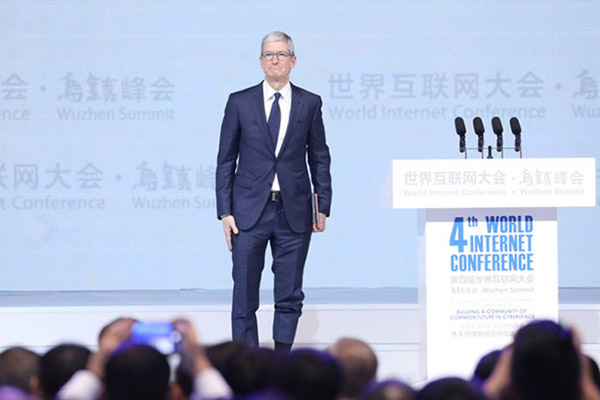 Top tech CEOs take to the stage as Wuzhen Summit opens
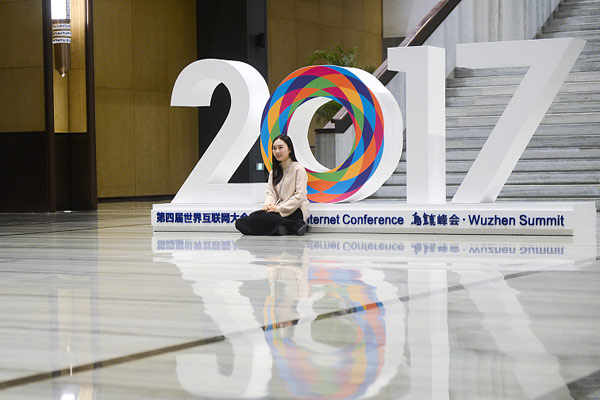 Major topics at 4th World Internet Conference
 'Made in China' dinosaurs amuse the world

Copyright 1995 - . All rights reserved. The content (including but not limited to text, photo, multimedia information, etc) published in this site belongs to China Daily Information Co (CDIC). Without written authorization from CDIC, such content shall not be republished or used in any form. Note: Browsers with 1024*768 or higher resolution are suggested for this site.
License for publishing multimedia online 0108263 Registration Number: 20100000002731