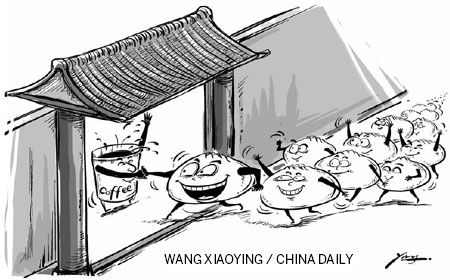
Goubuli, or Go Believe, believes it can "go out". The Chinese eatery giant based in Tianjin, which is known for its stuffed steamed buns, is in the final stages of talks to buy a chain of US coffeehouses in the first half of this year. When the deal is completed, Goubuli will acquire hundreds of stores in more than 40 countries and regions worldwide, and the deal will be the biggest acquisition of an overseas eatery chain by a Chinese company. Zhang Yansen, Goubuli's chairman, said that the company is seeking to use the coffee chain's business network to promote Chinese cuisine overseas.
Up to now, Chinese eateries have only had a small supporting role in overseas markets, with the majority being small family-owned restaurants. Moreover, compared with Western fast-food giants such as KFC and McDonald's, which have created a fast-food culture since they entered Chinese market and gained popularity in the early 1990s, Chinese restaurant chains have not yet formed similar associations that help reflect the country's culture.
A Bite of China, which has been widely considered the most successful television documentary in China since the 1990s, attracted more than 100 million viewers after it was shown on a major TV station, and it aroused the interest of both people home and abroad in traditional Chinese cuisine, be it snacks or the dishes in a formal meal. It showed how rich China's culinary heritage and food culture are, something that has yet to be properly exploited.
The reason for this, aside from the insufficient attention paid to promoting the country's cultural culinary richness in a global context, is the lack of a clear management vision for expanding China's eateries overseas and the cultural, institutional and policy restraints Chinese restaurants can encounter in overseas markets. For example, import restrictions may prohibit some key raw ingredients, making it difficult to guarantee the original flavor and reducing the desire of companies to explore overseas markets.
And these are not the only obstacles that need to be overcome if China's eateries are to flourish overseas, not least consumers awareness of Chinese foods, such as steamed buns, will need to be raised. Chinese cuisine is known around the world, but it tends to be either Sichuan or Cantonese dishes. Chinese fast foods and snacks are less well-known except to those who have visited the country or one of the Chinatown areas in cities overseas. One of the things Goubuli will have to do with its new outlets overseas when the deal goes through is to raise awareness of what it is they are selling. And with Chinese foods often making the headlines for the wrong reasons they will have to win over the trust of consumers in other countries.
Besides, support from the government is far from enough for domestic branded restaurants looking to go global. Other countries have already taken note of how effective fast-food chains such as KFC and McDonald's have been in promoting the image of the US and its soft power and they are keen to emulate this. In 2009 alone, the South Korean government invested 55 billion won ($52 million) in promoting the country's cuisine and food culture globally, both as a way to enhance its national image and boost exports of its agricultural and fishery products. Looking at the huge number of Korean restaurants to be found in many Chinese cities it would seem that outlay has been paying off.
In a survey named "China in the World's Eye" conducted in 2008, tourists and respondents coming from all over the world to Beijing for the Olympic Games, when asked about what can best represent China, most of the interviewees chose the Great Wall, kungfu and Chinese food.
With this in mind, to help raise the image of China's food industry and use the rich content of China's culinary culture to enhance the country's soft power, the Chinese government should introduce policies to encourage Chinese eatery enterprises to expand overseas. If companies such as Goubuli can make the most of their pioneering opportunities it is not unreasonable to believe that Chinese coffee shops and fast-food joints might one day be as ubiquitous as Starbucks and McDonald's.
The author is a writer with China Daily.
Copyright 1995 - . All rights reserved. The content (including but not limited to text, photo, multimedia information, etc) published in this site belongs to China Daily Information Co (CDIC). Without written authorization from CDIC, such content shall not be republished or used in any form. Note: Browsers with 1024*768 or higher resolution are suggested for this site.
License for publishing multimedia online 0108263 Registration Number: 20100000002731 

