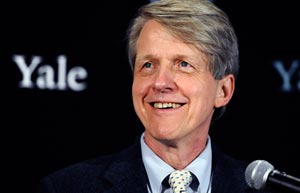
Deepening reform in a comprehensive manner is not only the common aspiration of the Chinese people, but also a widely expected decision for the people who have been closely watching China's socioeconomic development from overseas.
They believe that the implementation of reform has helped China achieve leapfrog development over the last 35 years, while comprehensive and deepening reform will ensure long-term sustainability of economic growth.
DIALOGUE 1
Xinhua: In your opinion, what are the most pressing reforms China needs to carry out? What can China learn from your country's experience?
"The top strategic priorities of the third plenum were marketization, enterprise restructuring and public finance," said Hans Hendrishke, a professor of Chinese Business and Management at the Business School of University of Sydney.
"The Australian experience that corresponds most closely to the changes that China is currently undergoing is the deregulation that Australia underwent in the 1980s."
"Deregulation brought a winding back of protectionism and tariffs on goods such as steel, oil and rural produce. Financial reforms included the removal of government control of foreign exchange and interest rates, licensing of foreign banks and reforms to public finance, taxation and social welfare."
"The reforms further included corporatization and privatization of public enterprises and linked to these, reforms in education, training and labor-market regulations. Nearly each of these reforms can be compared to the reform agenda currently faced by China. For Australia these reforms brought a decade of productivity growth."
Michael Schaefer, chairman of the BMW Foundation in Germany, said China has witnessed a booming economic growth over the past three decades.
"But the growth was unbalanced," he said. "Therefore, in my opinion, to ensure the market's leading position, citizen participation and the equal rights is the task and challenge of the Chinese government."
Schaefer also talked about Germany's experience in social and economic development after World War II.
"In general, markets leading, social security, subsidiary responsibility of the state and the development of mid-sized enterprises, I think, such a quadrant of formula is very important for the stability of German economy and the social development," he said.
"I welcome the decision that in China more state-owned unit will be run as enterprises and more state-owned enterprises will be privatized. I think a country needs the creativity and flexibility of private companies," Schaefer added.
Read more:
|
 |
 |

Copyright 1995 - . All rights reserved. The content (including but not limited to text, photo, multimedia information, etc) published in this site belongs to China Daily Information Co (CDIC). Without written authorization from CDIC, such content shall not be republished or used in any form. Note: Browsers with 1024*768 or higher resolution are suggested for this site.
License for publishing multimedia online 0108263 Registration Number: 20100000002731