Companies that have flourished over generations sustain Asian economy
In 1873, Eu Kong left his hometown in southern China to seek his fortune in Malaysia. On arrival, he set up a shop that he named Yan Sang-which means caring for mankind in Chinese-supplying Chinese medicine and herbs.
Eu passed the mantle of this small firm on to his only son, Eu Tong Sen, who continued to expand the business, adding the family name to the brand. Today, Eu Yan Sang International is a listed entity in Singapore and Hong Kong.
Eu Yan Sang is far from the only family business to become a major international concern. A growing number of familyowned businesses is boosting Asia's economy today, particularly in the private sector.
The Forbes China billionaires list over the past few years has included many self-made tycoons who retain tight control over their business empires. They include Wang Jianlin, reputedly the richest man in the Chinese mainland and chairman of Wanda Group; Zong Qinghou, founder of Hangzhou Wahaha Group; He Xiangjian, founder of Midea Group; and Chan Laiwa of Fu Wah International.
Wanda owns 75 department stores, 85 shopping plazas and 51 five-star hotels. Hangzhou Wahaha is China's largest homegrown beverage company, while Midea Group is one of the country's largest manufacturers of electrical appliances, employing some 135,000 people in China and overseas.
The family of another Chinese billionaire, Yang Guoqiang, including his daughter, Yang Huiyan, owns the Guangdong-based property developer Country Garden, which listed on the Hong Kong Stock Exchange in 2007.
However, the long list of family-firm billionaires does not end here. China has seen massive growth in private enterprises over the last 30 years, with family members working together to create some of the country's most successful businesses.
"Family values and Asian cultural mores are significant factors in the perpetuation of families in business across generations," Alexis du Roy de Blicquy, CEO of Family Business Network (FBN) International, tells China Daily. "Entrepreneurs, especially those in China, are now in the process of grooming or handing over the reins to the next generation."
He adds that family businesses are bound by strong values and common purpose in profit.
According to Hurun Report, a China-based magazine and research firm that produces an annual list of China's wealthiest people, so far this year the country added 41 new billionaires, largely from family businesses, to consolidate its second position with 358 billionaires.
The Hurun list includes family business owners like Liu Yonghao, chairman of agribusiness New Hope Group, and property tycoon Wu Yajun.
A study by the All-China Federation of Industry and Commerce found that 85.4 percent of China's private companies are family businesses in which an individual or a family controls at least a 50 percent stake. The study was run in collaboration with Sun Yat-sen University, Zhejiang University and family-controlled sauces giant Lee Kum Kee.
Experts say that by guaranteeing market supply, encouraging investment and increasing the country's exports, family businesses have greatly contributed to China's rapid economic growth.
This picture is reflected across much of the rest of Asia.
Across the 10 major Asian markets-the Chinese mainland, Hong Kong, India, Indonesia, Malaysia, the Philippines, Singapore, South Korea, Taiwan and Thailand-nearly half of all the listed companies are family-owned.
To further reinforce the point, Hay Group, a global management consulting firm, indicates that family firms have 32 percent of total market capitalization in these 10 Asian markets.
"Some of the oldest family businesses in the world are found in Japan and India," says Angelyn Sng, director of membership and programs at FBN Asia, a regional chapter of FBN International.
According to Credit Suisse, a global financial services company, family businesses are a key source of private wealth creation in Asia and form the backbone of the region's economies.
 |
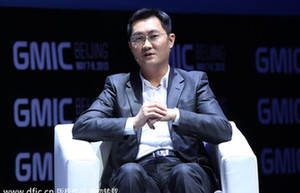 |
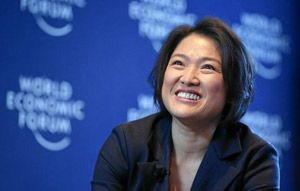
| Top 10 richest families in China |

Copyright 1995 - . All rights reserved. The content (including but not limited to text, photo, multimedia information, etc) published in this site belongs to China Daily Information Co (CDIC). Without written authorization from CDIC, such content shall not be republished or used in any form. Note: Browsers with 1024*768 or higher resolution are suggested for this site.
License for publishing multimedia online 0108263 Registration Number: 20100000002731