How do you cope with a prolonged period of low growth, which economists call secular stagnation or economic immobilism?
How should businesses define their niche? How should college graduates plan their career? How should older workers plan their retirement? No one, from government to top-level economists to college students' parents, seems able to offer a clear answer. And again, just like China's slowdown in growth, it may not be a bad thing.
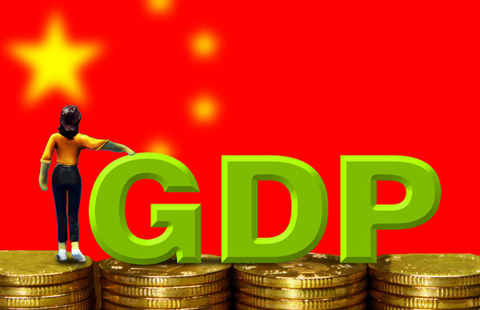
Of course, in China as well as in other parts of the world, stagnation or immobilization can only be applied in relative terms. But it is certain that many parts of the world are going to go through a long period of slower economic growth. We've already seen that in China, with the fall of its GDP growth rate from 7.5 percent in 2013, to last year's 7.4 percent, then probably to 7 percent this year. And no one is quite certain how long the slower-growth cycle will last.
Some people say the United States, whose latest growth performance seems quite strong, could be an exception. But further information is needed to decide how much of its growth comes from rebalancing with the rest of the world, such as in a decline in relative costs, and how much of it is from new productivity.
Others say India, and many Southeast Asian economies, will become a second or a third to China in terms of leading the world's economic growth. But who would pay for such a large a quantity of goods and services that potentially would be produced by so much low-paid labor in those places? And how would those countries maintain the basic health and security of their financial systems? These questions can be answered only with the passage of a few years.
In the meantime, low inflation (if not deflation) and low employment growth will continue to threaten many industries based in the countries where labor costs are no longer low. For China, which in some ways already is an industrial country, there are further complications even though its labor costs are still low compared with those of older industrial countries. The social cost, or the government cost, in pollution control and in paying for skyrocketing medical bills, partly fueled by rising pollution-induced diseases, can be enormous and siphon off much of the national savings.
What happened in China in the past few years was that people chased what seemed to them to be the immediate solution. That was to look for job security. Many college graduates, at the urging of their parents, swarmed to apply for government jobs or jobs in large, State-owned enterprises.
But as shown in the news about civil servants' would-be salary raises, low-ranking government employees actually don't make much for their tedious, paper-pushing work. Middle-ranking officials can't afford much enjoyment either, and will have to subject their family assets to close surveillance by higher-level discipline authorities.
So the alleged job security of government offices and State-owned enterprises is not as attractive as it seems. Yet, looking around China, which industries can offer more secure jobs, and where can people get them?
Basically, there are none. The more painfully that China's local governments struggle with their mounting debts, and the more manufacturers move their unprofitable production out of the country, the more quickly people will realize that the most dependable development-for household living standard as well for the economy-is to try something new. That means using whatever resources one has, including a certain proportion of one's savings.
In fact, what Nobel laureate and economist Edmund Phelps called "mass flourishing" (meaning a society's flourishing in economics and in culture) can only have one starting point. That is the mass phenomenon of starting new ventures. Since the beginning of last year, there have been more and more venture capital events in large cities like Beijing, Shenzhen and Hangzhou. (Shanghai has yet to be quite so outstanding in startup enterprises.) These are not organized just by well-known global VC firms, but also by individuals who were tired of gambling in the stock market and housing market.
On a recent weekend, a social event in Beijing organized on just two social networks on WeChat, the mobile messaging/service platform owned by Tencent, attracted up to 400 small investors and startup entrepreneurs. They represented a different economy.
The author is editor-at-large of China Daily.

Copyright 1995 - . All rights reserved. The content (including but not limited to text, photo, multimedia information, etc) published in this site belongs to China Daily Information Co (CDIC). Without written authorization from CDIC, such content shall not be republished or used in any form. Note: Browsers with 1024*768 or higher resolution are suggested for this site.
License for publishing multimedia online 0108263 Registration Number: 130349