In the third in a series on the 'new normal' economy, Zheng Yangpeng reports on efforts to resolve local government finances.
 |
|
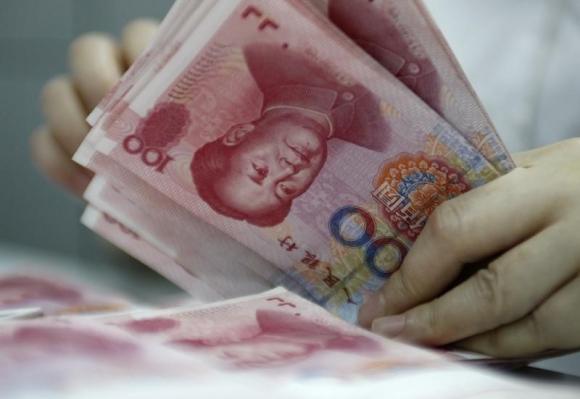
An employee counts yuan banknotes at a bank in Huaibei, Anhui province June 22, 2010.[Photo/Agencies] |
The nation is pursuing a more proactive fiscal policy in 2015 to offset the economic slowdown. But for experts familiar with China's public finances, there is a worrying source of uncertainty-that of local governments' off-budget spending.
The target for the national budget deficit this year is 1.62 trillion yuan ($260 billion), which would be 270 billion yuan wider than last year's, according to the annual Government Work Report. This year's figure represents 2.3 percent of GDP, up from 2.1 percent last year.
Fiscal expenditures are a major factor in a country's economic performance, especially in China, which relies heavily on government-led investment. As many economists have pointed out, public spending matters in China for more than one reason.
First, there is its sheer scale, accounting for nearly 40 percent of fixed-asset investment. Second, it leads private investment. If public investment growth tumbles, private investment will not expand, either.
But the official budget is just part of the fiscal picture, and not the biggest one either. Provincial and city governments spend huge amounts on capital projects off-budget through government-related entities. The country's fiscal deficit would be much larger if this spending was included.
"The fiscal deficit set by the central government held at about 2 percent of GDP in the past three years. But in the same period, the growth of off-budget spending, classified as 'local government debt', was astonishing," said Zhu Haibin, chief economist in China at JPMorgan Chase & Co.
State auditors found that as of the end of June 2013, total liabilities of local governments stood at 17.9 trillion yuan, up from 10.7 trillion yuan at the end of 2010. That means local government debt grew at an annualized rate of 23 percent.
By comparison, budget spending in 2013 rose 10.1 percent.
Zhu estimated these debts alone would yield an annual fiscal deficit of 6 percent to 7 percent.
"These numbers demonstrate why even though China's fiscal deficit remained at a moderate level, GDP growth maintained high levels in the past few years," Zhu said.
In August, the central government intensified its curbs on local government borrowing, which might rein in off-budget spending this year. Economists agreed that regulating opaque borrowing through local government financing vehicles was an appropriate step.

Copyright 1995 - . All rights reserved. The content (including but not limited to text, photo, multimedia information, etc) published in this site belongs to China Daily Information Co (CDIC). Without written authorization from CDIC, such content shall not be republished or used in any form. Note: Browsers with 1024*768 or higher resolution are suggested for this site.
License for publishing multimedia online 0108263 Registration Number: 130349