|
 |
|
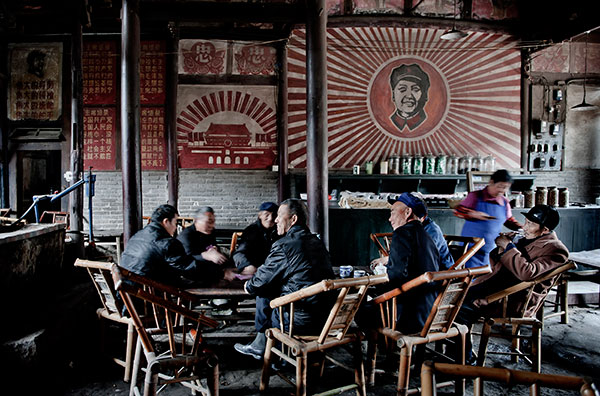
A traditional teahouse with decades of history in Chengdu, Sichuan province. [Photo/China Daily] |
Liu Yong struggles to find an affordable teahouse when he is out with his friends and colleagues. The 39-year-old English professor at a university in Chongqing is not a big coffee fan and loves a cup of China's traditional beverage.
"I like tea much more than coffee," he said. "But the traditional teahouses are so expensive and those modern places in shopping malls have only limited choices."
Liu is not alone in looking for a comfortable, affordable place to sip tea in China's major cities.
Despite the country's long history, teahouses have been pushed out by trendy coffee bars, which have become extremely popular in recent years.
Last year, around 1.28 billion kilograms of hot drinks were consumed in China, with tea accounting for 82 percent of the total volume, Canadean, a global market research and consulting company specializing in the beverage and food industries, reported.
Although coffee had only a 5.7 percent market share, Canadean has predicted that by 2019 that will increase to around 15.4 percent. Tea will grow by just 5.6 percent during that period.
"Overall, hot coffee is forecast to increase its market share in China, while the share of hot tea will decline," Canadean's report concluded.
In a move to stem the tide toward coffee, Chinese teahouses owners established an industry alliance last year in Hangzhou, Zhejiang province, to revive one of the country's oldest pastimes.
Managers from more than 20 provinces and municipalities concluded that their businesses were not attracting enough younger customers. Poor management and marketing methods were also major problems.
"With rising costs, teahouses have had to aim at upmarket consumers, who will pay more for expensive tea, food and service, in order to develop as businesses," Matthew Crabbe, Asia-Pacific research director of Mintel Group Ltd, a market intelligence agency based in the United Kingdom, said in a report on Chinese teahouses and coffee shops.
"Yet there is little difference among the competing teahouses, and only a few are beginning to build brands that can be developed into chains," he added.
Reinventing the business model is the only way forward, including brand building to attract a younger generation of tea drinkers.
"The lack of strongly branded chains among the traditional teahouses means the sector has so far failed to meet the challenge posed by the rise of the cafe outlets," Crabbe said. "The few existing chains have focused on a very narrow, higher-end, generally older consumer segment."
But during the past five years, teahouses have slowly started to develop brands in the same way that Starbucks sells coffee.
In 2010, the modern teahouse chain NenluTea, meaning tender green tea, was founded in Southwest China's Chongqing. Last year, Seektea, or Si Ke Yi in Chinese, opened its first shop in Hangzhou. It plans to roll out 100 teahouses within Zhejiang province, according to Hangzhou Daily.
"Since the cafe chains continue to successfully sell tea to their core younger consumer market, there is evidence that there could be potential in developing branded, franchised chains of teahouses with a broader consumer appeal," Crabbe said.

Copyright 1995 - . All rights reserved. The content (including but not limited to text, photo, multimedia information, etc) published in this site belongs to China Daily Information Co (CDIC). Without written authorization from CDIC, such content shall not be republished or used in any form. Note: Browsers with 1024*768 or higher resolution are suggested for this site.
License for publishing multimedia online 0108263 Registration Number: 130349