New generation of startups confidently throwing business caution to the wind
Since the early 1990s, China has been the world's fastest-growing economy. It has opened its economy to the outside world with unprecedented speed and success.In the process, China has also acquired a large number of critics, who claim that China's economic success is due, in good part, to unfair practices by China: its mercantilist trade regime, its currency manipulation that keeps the value of the yuan artificially low, its subsidies for manufacturers, and the alleged pirating of foreign goods and technology.
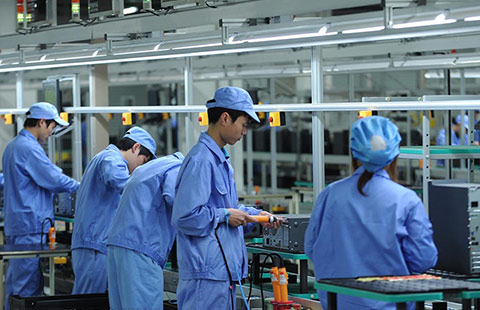
The main beneficiaries of these policies, they say, have been Chinese export manufacturers-those who produce inexpensive smartphones, computers, toys, clothes, and other consumer goods. Another factor frequently cited by overseas critics is the prevalence and influence of State-owned enterprises in China.
The country's biggest companies-its banks and insurers, oil and energy companies, telecom operators and airlines, leading steel, auto and construction firms-are all government-owned or government-controlled. In mid-2014, some 92 companies on the Fortune Global 500 list were Chinese, but just 10 of these were privately owned enterprises.
Using money from China's foreign exchange reserves, many of these businesses have been investing heavily overseas. Since the early 2000s, Chinese State-owned firms have been striking multibillion-dollar deals in Africa, South America and other regions, gaining access to energy supplies, raw materials and even land for farming.
But this view of the Chinese economy as a mercantile juggernaut, driven by a single-minded government, does not tell the most dramatic part of the Chinese story.
That is the emergence of a new group of entrepreneurial business leaders, all from the private sector, most of them operating with little direct government influence or support, and all of them transforming their industries.
These entrepreneurial disrupters are among the most successful and powerful individuals in China today. Many are billionaires, and some are multibillionaires. They are the reason that (as of August 2014) China hosts the world's second-largest concentration of billionaires after the United States-152 out of the total of 1,645, according to Forbes magazine.
China remains home to 2.3 million State-owned companies. That number, however, is dwarfed by its other businesses. As early as 2004, China had about 3.3 million privately held companies-many owned by investors with shares traded on public exchanges-and 24 million proprietorships-individual or family-run operations.
By 2013, the country had nearly 12 million private companies and more than 42 million proprietorships. Moreover, the government is firmly committed to increasing these totals. In the first seven months of 2014, thanks to regulatory reforms abolishing registered capital requirements, 1.5 million new private companies were set up-double the number during the same period the year before.

Copyright 1995 - . All rights reserved. The content (including but not limited to text, photo, multimedia information, etc) published in this site belongs to China Daily Information Co (CDIC). Without written authorization from CDIC, such content shall not be republished or used in any form. Note: Browsers with 1024*768 or higher resolution are suggested for this site.
License for publishing multimedia online 0108263 Registration Number: 130349