Kutesmart sews up tech-based biz model in traditional industry


 |
|
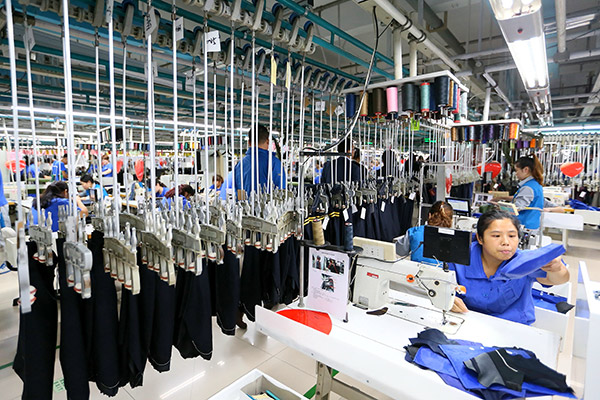
Workshop of Red Collar, a brand owned by Qingdao Kutesmart, has been transformed from a traditional garment factory into a high-tech unit capable of making customized products. [Photo provided to China Daily] |
Garment manufacturing is usually thought to be the prototypical low-wage industry. Companies in the industry move to wherever the labor is cheapest.
Qingdao Kutesmart Co in East China's Shandong province is proving that by using the right technology and a smart business model, it's possible to be highly competitive in a traditional industry, even as wages rise.
The "smile curve", proposed in the early 1990s by Stan Shih, the founder of Acer Inc in Taiwan, says that most of the profits from a product are captured by designers, brand owners or retail channels, not by the manufacturers. By contrast, Zhang Daili, chairman and founder of Kutesmart, argues that by using direct contacts with customers and efficient production processes, manufacturers can get most of the profits.
Through its Red Collar and Cotte brands, the company's "customer-to-manufacturer", information-intensive and integrated process boosts profits by providing highly customized business suits below mass market off-the-shelf costs, cutting out the middlemen.
 |
|
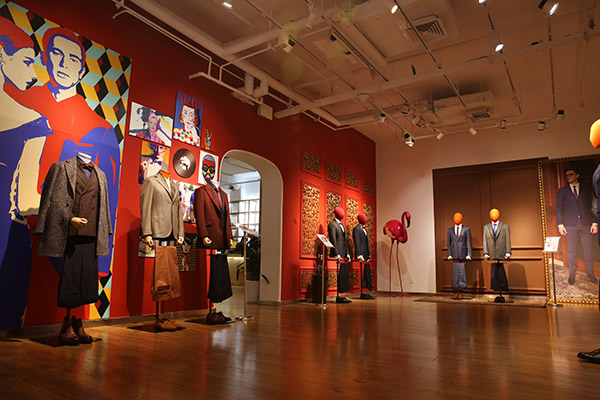
A customer experience center of Cotte, a brand owned by Kutesmart, in Qingdao, Shandong province. [Photo provided to China Daily] |
According to research by Lu Yinghan of Jinan University Management School, Kutesmart's profits increased by more than 25 percent per year in 2014 and 2015. By contrast, public companies in the clothing industry saw average revenue fall by 2.6 percent and net profits fall by 3.6 percent in those years. The company is privately held and does not disclose profit information directly.
Kutesmart employs about 3,000 people, paying wages approximately 20 percent higher than the industry average, according to He Wei, a company representative in the branding and public relations department.
Started in 1995, the company was at first a traditional clothing manufacturer. Zhang, its chairman, worked for many years developing what the company calls its "source data engineering" or SDE process, which links custom orders to a finished product.
 |
|
Zhang Daili, Kutesmart's founder, personally checks measurements of a custom-made suit at a finishing line. [Photo provided to China Daily] |
In a company video, Zhang said: "In 2003, Chinese were struggling for razor-thin margins from processing orders from New York. Red Collar used to be a traditional enterprise group. As contradictions between production and the market increased, the only way out was to open up a new path by ourselves. We began to consider the transformation from mass production to personalized customization. It lasted 12 years and cost hundreds of millions. Based on deep integration of informatization and industrialization, we formed a complete internet-of-things system and made it our core value."
Chen Shaozhi, a senior journalist who heads the Made in China 2025 team at Xinhua News Agency's Economy and the Nation Weekly, stresses that the company's success is based on its appropriate use of information systems.
"Kutesmart uses typical machines, but they do customized production at the same time. Some companies might think about using robots for this role. Kutesmart did not reduce its worker count, but enhanced its profit margin a lot. This model is very appropriate for China's current situation," Chen said.
 |
|
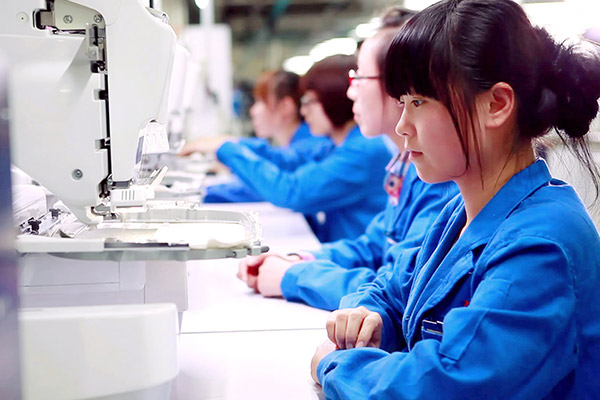
Expert tailors at Qingdao Kutesmart factory verify custom specifications received through online channels. [Photo provided to China Daily] |
"At present, we've contracted pilot upgrading plans with nearly 100 enterprises in jeans, clothing, hats, shoes, furniture, casting and electrical appliances," He said.
In the company video, Zhang Yunlan, Kutesmart's president and daughter of the founder, said: "Around 2014, the inventory in China's clothing market was conservatively estimated to be worth about 400 billion yuan ($59 billion)-enough to cover three years of sales in the Chinese market. But Kutesmart managed to have zero inventory. When other garment enterprises were suffering because of high inventory, Kutesmart achieved rapid growth year-on-year.
"Behind these good numbers is the unique internet-industry model of this enterprise-manufacturing personalized products by means of industrialization, efficiency, and cost-reduction."