

 Comments
  Print
Print  Mail
Mail  Large Medium Small
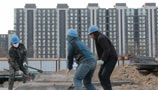
CHENGDU -- Squat, shabby houses built over half a century ago still stand and harbor more than 100 households in the Alley 14 neighborhood in the center of Chengdu, capital of southwest China's Sichuan province.
Discarded sewage and garbage on its narrow lanes is a constant eyesore and renders the place a complete mismatch to the tall modern buildings in the vicinity. Residents, mostly elderly and laid-off workers, struggle in their daily lives, from sharing the single public toilet in the area to living in cramped rooms.
"My original house here was built before New China was founded. It's separated into two rooms. The roof was originally thatch. Over the years, we added layers of shingles such as asphalt felt, asbestos, and plastic in order to prevent rain leakage," said Shi Ziqing, a resident in her 60s.
Shi's family has moved to an adjacent home more recently, but the new dwelling is barely any better in terms of living conditions.
With similar situations in many other Chinese cities, the country has begun work in earnest to do something about the problem and modernize accommodation for its increasingly urban population. Shi's family and their neighbors are currently experiencing the full force of this drive.
Under a government-led renovation plan, Alley 14 will disappear in two or three years, and it is not the only Chengdu neighborhood waiting to be renovated or demolished.
Work on Caojia Alley, also a run-down section of the city center, was officially launched in July. Under a range of settlement packages, residents are temporarily living elsewhere as they wait to return to the rebuilt Caojia Alley, being resettled in other districts or accepting compensation.
In late August, the Chengdu municipal government announced that all shantytowns will be renovated or rebuilt over the next five years, a project which will see homes totaling 15 million square meters renovated or reconstructed.
In recent years, the city has invested 30.2 billion yuan ($4.9 billion) in renovating 3.7 million square meters of old buildings for nearly 65,000 households.
Nationwide, the Chinese government aims to revive another 10 million homes in dilapidated neighborhoods. Between the start of 2008 and the end of 2012, 12.6 million such homes were restored.
Analysts point out that such projects are being integrated into China's new-style urbanization that improves livelihoods on the one hand, and on the other injects new vitality to the economy, which slowed to 7.5 percent in the second quarter of 2013 from 7.7 percent in the first.
The Political Bureau of the Communist Party of China Central Committee,China's top decision maker, pledged to maintain a reasonable investment increase and push "human-centered" urbanization in the second half of 2013.
Premier Li Keqiang has also reiterated the importance of human-centered urbanization. He emphasized that improving urban infrastructure and other weak sectors can not only satisfy people's aspirations, but also stimulate investment and consumption.
 4th World Internet Conference concludes
 Starbucks Reserve Roastery set to open in Shanghai
 Smile to get discounts in Tmall's unmanned supermart
 Top 10 richest Chinese women in 2017
 World leading internet sci-tech achievements released in Wuzhen
 Top tech CEOs take to the stage as Wuzhen Summit opens
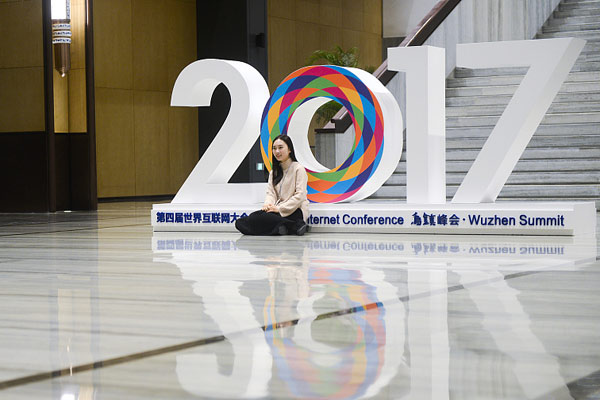 Major topics at 4th World Internet Conference
 'Made in China' dinosaurs amuse the world

Copyright 1995 - . All rights reserved. The content (including but not limited to text, photo, multimedia information, etc) published in this site belongs to China Daily Information Co (CDIC). Without written authorization from CDIC, such content shall not be republished or used in any form. Note: Browsers with 1024*768 or higher resolution are suggested for this site.
License for publishing multimedia online 0108263 Registration Number: 20100000002731