News
Finance plan critical to fight global warming
By Li Jing, Lan Lan and Li Xing (China Daily)
Updated: 2010-10-06 09:49
 |
Large Medium Small |
Chief negotiator spells out hope for Cancun climate change talks
TIANJIN - China hopes a "clarified, detailed and feasible" arrangement of fast-start climate finance will be finalized at the coming United Nations Climate Change Conference in Mexico, Su Wei, the country's chief climate negotiator, said on the sidelines of the six-day UN climate meeting in Tianjin on Oct 5.
 |
|
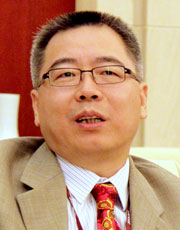
Su Wei, director of the climate change department of the National Development and Reform Commission. |
The current climate talks, which have been ongoing for more than a decade, seek fair and legally binding global action to limit and reduce greenhouse gas emissions and prevent "dangerous human intervention" in the climate system, using two channels: Long-term cooperative action under the UNFCCC and the Kyoto Protocol, an international environmental treaty.
Climate finance is also an important factor in "rebuilding trust in the process" to get all countries engaged in the action, Su told a small group of journalists, who raised questions ranging from finance and the developed countries' reluctance to further cut greenhouse gas emissions to the United States' role in global efforts to fight climate change.
Under the Copenhagen Accord, the fast-start fund, with money to be committed by developed countries, was to assist mostly developing countries in adapting to and mitigating the effects of climate change between 2010 and 2012.
The money should be "new and additional", not gleaned from rich countries' existing funds, such as the Overseas Development Assistance programs, said Su.
"You can't simply fill a new bottle with old wine," he said, adding that re-labeling tactics by some developed countries are not in line with the rules set in the negotiation principles under the UNFCCC.
"China believes that an inclusive governing body under the UNFCCC should be built to manage the fund," said Su.
Developed countries have insisted that any cuts to emissions by developing countries under projects financed by new international climate change financing should be measurable, reportable and verifiable.
Su said China does not have a problem with that when it comes to programs with international financing.
"Our voluntary actions are also transparent, with a set of mature mechanism and statistical appraisals that have targets no lower than international requirements," he said, adding China also reports the results of its actions to the UNFCCC.
Although many developing countries do not accept international consultation and analysis for their independent voluntary actions under the Copenhagen Accord, Su said China does, believing that international consultation and analysis should respect developing countries' sovereignty and be non-confrontational.
A major stumbling block in negotiations for the Kyoto Protocol beyond 2012, when the first commitment period expires, he said, is the developed countries' reluctance to make commitments to further cut their greenhouse gas emissions.


"They also need to cut more to allow (atmospheric) space for developing countries to reduce poverty and improve people's livelihoods," he said.
Cuts to emissions will undoubtedly be a key topic at the Cancun climate summit, he said, even though the meeting is unlikely to result in a legally binding outcome.
Negotiators from around the world need to make pain-staking efforts to find out what to do following the end of the first commitment period for the Kyoto Protocol, Su said.
US role
The United States has been criticized for its inaction during the climate change talks.
Slim hopes of a US climate change law this year pose a big challenge for the Cancun meeting and further negotiations next year, said Su.
However, he said the failure of the US should not impede efforts to push forward the climate change negotiations, as climate change is an urgent issue and action cannot wait.
"It's not appropriate to give up on the US (in talks). Countries should persuade the US and, at the same time, the whole process should be pushed forward," said Su.