
'No compromise on principles'
By Li Xing and Lan Lan (China Daily)
2010-12-06 07:13
 |
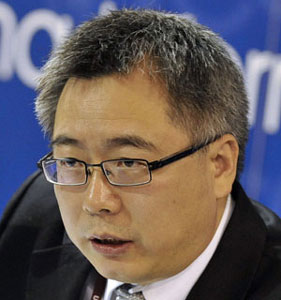 Su Wei, China's chief climate change negotiator. [Photo/China Daily] |
Negotiator: Time for climate action by developed nations
CANCUN, Mexico - China will not give in on matters of principle, Su Wei, China's chief climate change negotiator, said over the weekend.
Climate talks in the Mexican resort of Cancun, which end on Dec 10, are trying to hammer out "balanced decisions" to pave the way for a legally binding outcome next year in South Africa to further cut global carbon emissions. The present targets end in 2012 under the Kyoto Protocol which came into force in 2005.
China wants "clear confirmation" on "a second commitment period" for the Kyoto Protocol, Su said.
"We don't just want signals. We've been talking about signals since 2005. We need confirmation in crystal terms", even though China may not ask developed countries to come up with exact numbers for emission reduction targets in Cancun, he said.
Confirmation of the pledge given by developed countries in the protocol's Annex I, (developed nations plus former Soviet bloc states minus the United States and Australia), to consider further commitments for the period beyond 2012, is the most crucial part of "a balanced outcome" that the Chinese delegation is pursuing, Su told China Daily on Saturday.
The Kyoto Protocol is an international and legally binding agreement to reduce greenhouse gas (GHG) emissions worldwide and it is part of the United Nations Framework Convention on Climate Change.
Su likened the Kyoto Protocol and the convention to two pillars of the global architecture tackling climate change. Without the second commitment period of the Kyoto Protocol, the international regime would collapse, he said.
"The position by some developed countries" would pose a serious threat to a balanced outcome at Cancun, he added.
However, Japan announced at the start of the Cancun negotiations that it would not make new commitments to reduce its GHG emissions after Kyoto expires in 2012.
Japan argues that the nations required to set GHG emission reduction targets under Kyoto together release only 27 percent of GHG emissions into the atmosphere. They want major emitters such as the US and emerging economies, including China, to be roped in a new legally binding treaty along with developed countries.
"That's a false argument," Su said. "When we talk about climate change, we are not talking about future emissions, we are talking about the concentrations of greenhouse gases in the atmosphere."
Developed countries, many of them industrialized for more than a century, have released excessive amounts of GHGs into the atmosphere, he said. The gases "have a lifespan ranging from 50 to 200 years", and it is the concentration of these that affects the climate.
So developed countries have a responsibility to lead global efforts to reduce GHG emissions, Su said. "We should not just be talking about future and current emissions."
Su highlighted the fact that the overall percentage of GHG emissions by developed countries is declining while developing countries need to have a higher emission threshold to support development and poverty eradication goals.
However, "it's not an excuse to abandon the Kyoto Protocol, because both the Kyoto Protocol and the convention should be taken as a package", he said.
As stipulated in the Bali Roadmap, named after a 2007 UN climate conference held on the Indonesian island, the Kyoto Protocol would continue with developed countries taking mitigation, namely action to reduce emissions or increase carbon sinks, in the second commitment period. At the same time developing countries would take voluntary action in the context of sustainable development with the support of developed countries in finance, technology and other areas.
"That's the package," Su said.
"A balanced outcome" is a catchphrase in Cancun but each country has its own definition of what it means.
For China, apart from confirmation of the second period of commitment under Kyoto, "a balanced outcome" would include mitigation, adaptation (measures to tolerate the effects of global warming), improved technology and finance under the convention, he said.
For the mitigation, there are two aspects, he said. One is the comparable mitigation targets by "non-Kyoto Protocol annex parties", namely the US and mostly developing countries.
"The targets would also be subject to MRV (measuring, reporting, and verification) procedures as well as compliance procedures", comparable with those applied to developed countries under the Kyoto Protocol, he said.
The other is that while developing countries are committed to sustainable development, their efforts should be supported with the provision of finance and technology transfer by developed countries. In return, developing countries should be able to get their emission reduction programs, supported by developed countries, measured, reported and verified.
He said adaptation - meaning adjustments in natural or human systems in response to actual or expected climatic change - is a major concern for developing countries.
"I think the optimistic outcome is to secure a general framework for adaptation activities under the convention," he said, adding that developing countries have already proposed to establish an adaptation committee under the convention.
Means to support adaptation and mitigation are very important, he said.
The countries "need to have some general arrangements regarding the mechanisms for technology development and transfer, and also the provision of financial supports for developing countries for their mitigation and adaptation activities," he said.
"That's the picture of an overall balanced package in Cancun," he said.
Charger captures power from Wifi
A US electronics company invented a charger that draws its power from Wifi signals, according to TGDaily.com.
'Green seeds' chewing gum bottle
The "Green Seeds" chewing gum bottle designed by Jiang Gonglue makes it easier for you to deal with gum residue.
Bulb water heater
A French graduate designed a kettle using an incandescent bulb to heat water, according to dezeen.com

China International Green Industry Expo 2010
The China International Green Industry Expo 2010 (CIGIE 2010) is an important international green industry exhibition hosted by the Chinese government and held at the Beijing Exhibition Center, Nov 24 to 27.

China Wind Power 2010 Conference&Exhibition
China Wind Power 2010 is the largest and most important international wind power conference and exhibition in China.
