
Fu helps Sinopec navigate overseas markets
Updated: 2012-11-20 08:11


Lessons learned
Fu said Sinopec's overseas business is proceeding smoothly.
"We have learned some lessons and changed the way we do things," he said.
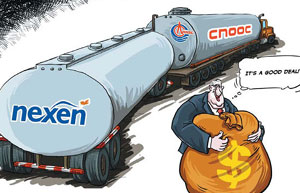
Since the Unocal bid, Chinese companies have made more than $20 billion worth of investments in the US oil industry.
For a Chinese company to operate overseas, it needs to work closely with local people, he said. It also needs to make an effort to learn about the culture of its host country and about how people there do things, he said. One step he always takes is to make sure that local politicians understand the goals behind Chinese investments. He also wants to see local companies benefit from the deals in some way.
To avoid doubts and suspicions, he is usually in favor of only arranging purchases of minority shares of companies.
"It is normal to see protectionism become stronger when an economy is not doing well, but you can't stop that," he said.
He said he has learned these lessons from experience rather than business models. Textbooks all teach the same things, he said, but the circumstances companies operate in are rarely so uniform. "You have to understand who you are and where you are," he said.
China now finds itself amid times when people and companies are striving to achieve success too quickly. In seeking to move forward, companies should make plans and stick to them.
"When you are not clear about something, don't do it," he said.
He said decision-makers should not devote a great amount of thought to trying to determine if a deal offers them a price that is too high or low. They should instead ask if what they are contemplating will add value to their companies.
When people look at headlines and financial figures, they might think Sinopec is moving too quickly. In his mind, though, he is clear about the reasons behind the deals.
Many of the companies bought by Sinopec had been the company's business partners for years, he said, ensuring that there was a certain amount of familiarity with what was being bought.
Also, mergers and acquisitions in the oil industry are different from those in manufacturing. In some ways, they are less risky. In the oil business, a company's output, means of production and value remain the same even when it changes hands.
No matter how big a risk is, if you are aware of it, it is no longer a risk, he said. "The biggest problem is when you cannot see the risk," Fu said.
According to a Chinese saying, "Those who do not have a strategy at heart have plenty of ideas, and that is the biggest risk".
Chinese way
Fu has been in the oil business for more than 30 years, starting as a worker in an oilfield in Northeast China. During that time, he said, he has never lost his confidence that Chinese companies can compete internationally.
He first went to the US in 1984, and was shocked by the differences he saw between China and the US. He realized that both he and his homeland had much to learn if they were to catch up.
At the same time, he noticed flaws in Western work habits and advantages to the Chinese way of conducting business. For instance, in the oil business in China, people are patriotic, and they are willing to sacrifice personal advantages for a bigger goal, he said. This kind of devotion, which makes it far easier to get things done, is scarce in Western companies, he said.
Higher interests also shape his thinking about business. A Chinese company should support the country's development strategy, he said. For instance, the 18th Party congress called for people to work to ensure China is beautiful, meaning that companies such as Sinopec should place a priority on protecting the environment. He said these problems cannot be solved on the outside and solutions must instead come from within.
The extent of waste in China is daunting, he said. Energy, he said, is too often used in an inefficient way. For each percentage of the country's GDP, the amount of energy used in China is three times of that used in the US, four times of that in Europe and five times of that in Japan.
"Our fast economic growth has also resulted in an acceleration of global resource pressures," he said. "We have to be, we are determined to be, part of the solution of these difficulties."
diaoying@china daily.com.cn






- BYD exports three electric cars to Thailand
- Grid gets first jolt of residential solar power
- US now largest buyer of China's exports
- China's outbound M&As on the rise
- Tobacco control may entail price, tax rises
- Quanzhou becomes pilot financial reform zone
- New automobiles shine at Geneva Motor Show
- World's longest high-speed rail 'on track'
- Jiugui Liquor involved in plasticizer scandal again
- Accident reignites school bus safety concerns
- China to revise labor law
- Trademark registration under scrutiny
- Dinner ban takes toll on liquor firms
- CIC tables bid for London's Chiswick Park
- Property buyers eye overseas market
- Call for law to protect personal information
- China to cut train ticket prices
- Christmas business
- Solar industry to get jolt from new policies
- KFC chicken under spotlight
Survey & Comments