

Chinese enterprises' obligations abroad
Updated: 2013-03-18 10:09


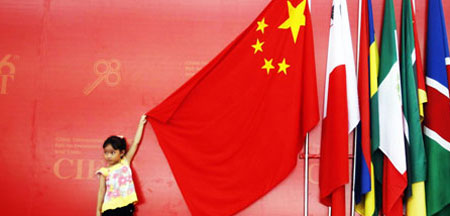
China's overseas investment is growing rapidly. According to MOFCOM figures, Chinese investors invested in 4,425 overseas enterprises in 141 countries and regions in 2012, with a total direct investment of $77.22 billion in the non-financial sector, up by 28.6 percent.
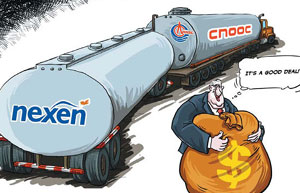
However, in the face of changing investment environments, country-specific policies, and different cultures and labor structures as well as complicated international relations, some Chinese enterprises have encountered difficulties fulfilling their obligations and are subsequently criticized as irresponsible by international media.
Many Chinese enterprises have committed to being socially responsible long before the government's guidelines were released. For example, China Metallurgical Group Corp's copper mine project in Saindak in Pakistan offers free medical services to local villagers, at a cost of $50,000 a year. The company has also built a school offering free education to local children. During the global financial crisis, China Nonferrous Metal Mining (Group) Co Ltd didn't reduce production, lay off workers or slash wages for local workers at its Zambian copper mine project.
According to MOFCOM figures, in 2011 Chinese outbound enterprises paid taxes of $22 billion to host nations, and among 1.22 million employees 888,000 were locals, accounting for 72.8 percent.
Hao Jie, deputy director of the Foreign Trade and Investment Office under the National Development and Reform Commission, says outbound enterprises have a lot to improve regarding social responsibility, not out of an unwillingness to do so but because some Chinese enterprises have failed to understand their host nations.
Large and medium-sized State-owned enterprises do better than smaller private enterprises in this regard because the latter lack well-developed plan to confront local challenges. Moreover, some enterprises do a poor job advertising their achievements, and others are simply not aware that social responsibility should be connected to their long-term sustainable development.
Future steps
"In the medium- and long-term, the ability of Chinese enterprises to meet social responsibility requirements overseas will determine their success, hence both enterprises and the government should pay attention to this issue," says Hao.
Developing countries in Asia, Africa and Latin America are increasingly aware of labor rights and the need to protect the environment, and their environmental protection standards are reaching international norms, says Hao, therefore the behavior of Chinese investors will be subject to stricter supervision by host nations. Most Chinese investment in Southeast Asia, Africa and Latin America are in sectors directly tied to the environment, such as exploitation of oil and natural gas, mining, hydropower, forestry and infrastructure construction.
For those who fail to meet their obligations and damage the local environment or disregard the rights and interests of local employees, the government should mete out punishment, says Hao.
Yao says that over these years Chinese enterprises have made enormous strides in fulfilling their social responsibilities overseas, adding the MOFCOM will continue to offer support to companies in the future. "Next we may change what we have proposed into laws and regulations in order to advance environmental protection."
Yao also says the government will further improve regulations by requiring Chinese enterprises to fully understand local laws related to trade unions, labor protection, taxation and environmental protection.
"When formulating and improving related laws and regulations, the government should also make environmental protection and social responsibility one of the standards when evaluating overseas investment results," he says.
Chi Changhai, vice chairman of the China International Contractors Association, thinks industrial associations should play a more important role in the fulfillment of corporate responsibility.
Industrial associations are very important communication channels between the government and enterprises, says Chi. The MOFCOM has supported the establishment of associations in host nations.
"Industrial associations can help regulate the business behavior of enterprises by ensuring that obligations toward social responsibility are met, by preventing destructive competition, and by mediating between enterprises and the local people, community, government, religious organizations and trade unions," Chi says.
Find more in

Related Links
Banks, companies need to cooperate to go global
Chinese firms still short of 'global admiration': Poll
Green guidance on the way for Chinese companies operating abroad
China companies see Germany as EU springboard
China firms to refurbish image in overseas advance
Chinese firms 'not alone' in going global
Prejudice dents enterprises' overseas expansion
China eyes bigger say in global investment rules








- BYD exports three electric cars to Thailand
- Grid gets first jolt of residential solar power
- US now largest buyer of China's exports
- China's outbound M&As on the rise
- Tobacco control may entail price, tax rises
- Quanzhou becomes pilot financial reform zone
- New automobiles shine at Geneva Motor Show
- World's longest high-speed rail 'on track'
- Jiugui Liquor involved in plasticizer scandal again
- Accident reignites school bus safety concerns
- China to revise labor law
- Trademark registration under scrutiny
- Dinner ban takes toll on liquor firms
- CIC tables bid for London's Chiswick Park
- Property buyers eye overseas market
- Call for law to protect personal information
- China to cut train ticket prices
- Christmas business
- Solar industry to get jolt from new policies
- KFC chicken under spotlight
Survey & Comments