

The changing face of Chinese ODI in the United States
Updated: 2014-01-09 01:16


As Chinese investment in the United States is on the rise this year, a few new elements are worth noticing from the deals of 2013. New York-based research firm Rhodium Group released a new report noting three interesting observations about Chinese investment in the US last year. More private firms invested; more local jobs were created; and politics was no longer the common denominator of deals that failed.
Overall, Chinese investment in the US doubled last year, driven by large-scale acquisitions in food, energy and real estate, according to Rhodium. Among them private firms started to take off in investment — accounting for more than 80 percent of transactions and more than 70 percent of total value.
David Riedel, president of New York-based Riedel Research Group, said investment in these sectors will continue to grow this year.
"These are all sectors that are important to China and where opportunities to learn best practices and benefit from experience in the US will be valued," noted Riedel.
The pickup by private firms in comparison with State-owned enterprises, according to Riedel, reflected the commitment of the Chinese government's focus on development driven by the private sector.
"This is a healthy development from the perspective of the broader Chinese economy," said Riedel. "External investments by private companies are less politically sensitive than investments from State-owned companies, which is critical to investment success in the US," he added.
The Rhodium report said that most failures of investment deals were related to commercial factors rather than politics. The Committee on Foreign Investment in the US, or CFIUS, that reviews foreign investments in the US — sensitive deals in particular — has nixed past deals of Huawei Technologies, citing "national security" reasons.
Chinese investors have gradually accepted that the CFIUS review is a process on sensitive deals, and the filings with the agency increase as investments increase.
Last year, CFIUS approvals of China's auto parts maker Wanxiang buying the A123 Systems for $257 million and meat producer Shuanghui taking over Smithfield for $4.7 billion were good omens for Chinese investors.
"It is a process issue. As long as you are transparent, you follow the procedure and follow the rules, and address the issue, then it should be OK," Wanxiang America president Ni Pin told China Daily after the deal was closed.
Wanxiang American employs some 6,000 people, more than 90 percent of them local hires, out of the 70,000 jobs created by Chinese investments in the US.
Riedel said liberalization of regulation to encourage external investment is likely a theme we will see continuing to grow this year and beyond.
"The government there is eager to provide alternative investment opportunities for Chinese companies and institutions as well as develop stronger ties with the rest of the world through strategic investment," he noted.
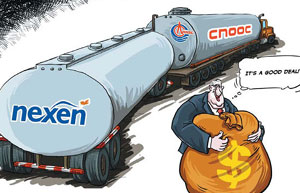
Among the total of 82 deals — 44 acquisitions and 38 greenfield projects — several big deals account for most of the value of the total investment. The top six transactions, sorted by Rhodium — Shuanghui-Smithfield, CNOOC-Nexen US, Sinpec-Mississippi Lime JV, Fosun-Chase Manhattan Plaza, General Motors Building (40 percent stake acquired by group led by Soho China CEO Zhang Xin), and Sinochem-Wolfcamp Shale — account for more than 80 percent of total combined value.
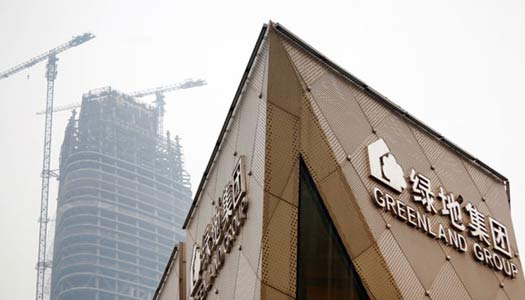
Investment from last year also marked a noticeable increase in the real estate market.
In California, the Chinese are the third-largest foreign buyers of real estate, after Mexicans and Filipinos, according to Realtor.org.
In February, China's largest residential developer Vanke teamed up with Tishman Speyer, whose properties include New York City's Chrysler Building and Rockefeller Center, to build a luxury condominium project in San Francisco. The investment for the project totaled $620 million, with Vanke's $175 million and Tishman's $75 million.
"More and more of the high-end deals are going to international buyers, many of which are coming from China. This is a growing market so it makes sense to do everything possible to tap into the needs of this demographic," said Sally Forster Jones, an agent with Coldwell Banker International in Los Angeles.
The Rhodium report said the outlook for Chinese investment will be positive this year because of the strong economic reforms set out by the Chinese government.
Related Links
ODI on track to outstrip FDI, official says
ODI expansion outpaces GDP growth by 3 times
ODI set to become more diverse
Economy, ODI and currency bring opportunities
China's ODI hits $50.6b, up by 20%
ODI to retain fast growth in H2: ministry
Chinese will continue to invest abroad as ODI forecast to rise






- BYD exports three electric cars to Thailand
- Grid gets first jolt of residential solar power
- US now largest buyer of China's exports
- China's outbound M&As on the rise
- Tobacco control may entail price, tax rises
- Quanzhou becomes pilot financial reform zone
- New automobiles shine at Geneva Motor Show
- World's longest high-speed rail 'on track'
- Jiugui Liquor involved in plasticizer scandal again
- Accident reignites school bus safety concerns
- China to revise labor law
- Trademark registration under scrutiny
- Dinner ban takes toll on liquor firms
- CIC tables bid for London's Chiswick Park
- Property buyers eye overseas market
- Call for law to protect personal information
- China to cut train ticket prices
- Christmas business
- Solar industry to get jolt from new policies
- KFC chicken under spotlight
Survey & Comments