Chinese technologies connect Belt and Road
BEIJING - For centuries, the "Four Great Inventions of Ancient China" - namely compass, gunpowder, papermaking and printing - have been celebrated as technologies that have made a significant contribution to world civilization.
Today, novel technologies have once again shortened the physical as well as cultural distance between different parts of the world.
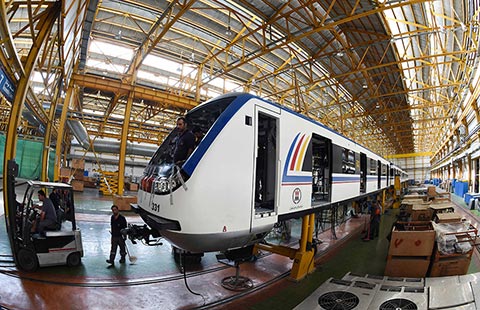
In a video that went viral online recently, foreign students in China have redefined the "four great inventions" of modern age: bike-sharing services, e-commerce, high-speed trains and mobile payment systems.
While technically speaking, these are not purely Chinese inventions, there's no doubt that Chinese innovation has made these technologies even more important to a closely connected world.
For instance, buyers from Europe can easily purchase Chinese goods through e-commerce services provided by Alibaba, China's Internet giant. With an extensive infrastructure network and multi-currency payment systems provided by Chinese firms, customers worldwide can have enjoyable and convenient online shopping experiences.
"Chinese people have a very good life, you can use the apps to benefit yourself a lot... In China there's a lot of good stuff that my country doesn't have," a student from Thailand said in the video, which was jointly produced by the Institute of Silk Road Studies at Beijing Foreign Studies University and the People's Daily.
Students from more than 20 countries and regions said that technologies including Alipay (Alibaba's mobile payment system), bike-sharing apps and high-speed trains are among the things that they most want to bring back to their homelands.
Their dreams are coming true. In the same way China transported silk and tea via the ancient Silk Road, the country is now sharing knowledge and expertise via the Belt and Road Initiative.
The initiative proposed by China in 2013 aims to build a trade and infrastructure network connecting Asia with Europe and Africa along and beyond the ancient Silk Road trade routes.
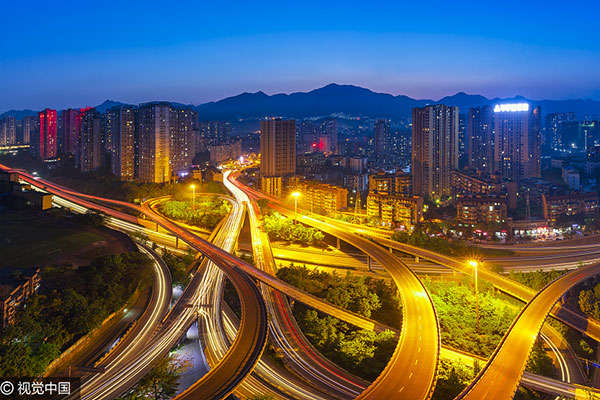
Construction has started or neared completion on some large infrastructure projects along the Belt and Road, including the Jakarta-Bandung high-speed railway in Indonesia and the China-Laos railway.
Justin, an Indonesian student interviewed in the video, said he had a wonderful experience riding high-speed trains in China, as they were clean and efficient. In addition to trains, he wanted to bring China's online food ordering and online shopping services to his homeland.
"It's very convenient living here in China, all these apps are super integrated, everything is connected," he said.
China's Internet companies are not missing out on the opportunities that the initiative brings. JD.com, a major e-commerce site, has already started operating in Indonesia. It is planning to open more than 20 overseas warehouses in the next five years to store and transfer goods from over 100 countries and regions including those along the Belt and Road.
The initiative will evolve into a "smart highway carrying information, knowledge, and services across continents, not just goods," said Jerry Hultin, co-founder of Global Futures Group, a consulting firm.
For young international students, Chinese innovations that they want to take home are not limited to the above-mentioned fascinating technologies.
"I want to bring everything. It's not only the Chinese lifestyle that I want to take back, but all the technological advances," said a student from Romania.
As the Belt and Road Forum for International Cooperation which kicked off Sunday in Beijing, more technological cooperation among participating countries and regions are likely to be launched.
While delivering a keynote speech at the opening of the forum, Chinese President Xi Jinping underlined the role of innovation in pursuing the initiative.
"We should pursue innovation-driven development and intensify cooperation in frontier areas such as digital economy, artificial intelligence, nanotechnology and quantum computing, and advance the development of big data, clout computing and smart cities so as to turn them into a digital silk road of the 21st century," Xi said.
Wu Hao, executive dean of the Institute of Silk Road Studies at Beijing Foreign Studies University, said the wishes of the international students reflect a bright future for international cooperation.
"The youth are the future of the Belt and Road," said Wu. "Their understanding and involvement in the initiative, to great extent, will decide the breadth and depth of cooperation."