Comments
  Print
Print  Mail
Mail  Large Medium Small
Two related events have heightened the urgency for big traders and banks to gain access to China's booming commodity exchanges: The tightening of US regulations and China's crackdown on over-the-counter trade.
Unfortunately for foreign traders, however, both events are also likely to make it even harder than before to begin tapping into the flood of liquidity on the country's guarded exchanges.
Chinese regulators are more wary of foreign speculation than ever after the sub-prime crisis.
While determined foreign players have found ways to trade on local copper, zinc, corn, or fuel oil markets, newcomers likely face a rockier road.
"Our regulators were very worried and scared, believing that derivatives were to blame for plunging the world into recession," said professor Hu Yuyue, head of research on securities and futures at Beijing Industry and Commerce University.
"The pace of China liberalizing its derivatives market will likely be slower than earlier plans because of this," said Hu, noting that a Shanghai index futures contract, which was to be China's first financial future, is still in the making after more than three years of work.
While Washington's plan to clamp down on its freewheeling derivatives markets has sharpened appetites for accessing China's three futures exchanges, the exchanges offer compelling reasons in their own right to tempt leading banks such as JPMorgan Chase, Barclays Capital and Goldman Sachs.
Trade is up five-fold in the three years to 2008 to hedge growing raw material imports. The world's fastest-growing major economy uses nearly a third of the world's copper, half its steel and imports half of all traded soybeans.
Shanghai's copper futures trade now rivals that of the London Metal Exchange, and Dalian's soybean volumes already exceed that of Chicago.
In liquidity lies opportunity, especially for those foreign players able to trade the spread between Chinese domestic prices and international commodities in Chicago or London - which are being increasingly influenced by price action in China.
At the same time, Beijing has moved to limit trade in over-the-counter commodity derivative hedges, many of which turned toxic when prices collapsed.
Regulators worried that State-owned firms may have used them as an illicit way to speculate, or that banks were selling overly complex products without adequately warning the buyers of the potential downside.
US futures markets also look less attractive as regulators there work to tame market volatility.
"If America shoots itself in the foot, the business is going to go somewhere," said long-time commodities bull Jim Rogers, co-founder of the Quantum fund. "The obvious places where the business will migrate to will be Asia."
Liquidity growth
Liquidity growth in many Chinese futures markets accelerated this year as some of Beijing's $585 billion stimulus plan found its way into risk assets rather than infrastructure, analyst said.
Shanghai's copper and aluminum futures in the first half of 2009 saw trade volume surge five-fold and triple, respectively, versus a year ago. The fuel oil contract rose six-fold, while Dalian palm oil jumped nine-fold and soy oil doubled in that period.
More participation by foreign players is good news for local traders like Guangdong-based independent oil trader Twinace.
"It's a very good thing - more liquidity, meaning more opportunities for companies like us. It will make Chinese markets more integrated with international markets and eventually more influential in pricing," said Zhou Yibing, general manager of Twinace.
But for now Chinese stock exchanges, set to top 50 trillion yuan this year in turnover, remain isolated from the rest of the world, dominated by retail-level speculative trade from the small, private investors who flourished in the boom.
China has banned all banks and other financial institutions operating in China from becoming members at futures stock exchanges, or clients of futures firms.
Domestic banks are not allowed to trade futures under a rigidly segregated financial system that bars banks, securities companies and futures firms from allowing any overlap in their businesses as part of Beijing's broader scheme to curb risks, and partly to shield retail players from too much volatility.
But foreign players with physical portfolios are active in China, particularly in Dalian soy meal and soy oil contracts. These are used by the likes of Wilmar, Cargill, Bunge, Louis Dreyfus and Toepfer to manage price risks related to their large soybean import and crushing businesses.
Some like oil major BP are exchange members, and independent traders like Trafigura or Glencore are active through locally registered entities, funded by their large physical trading positions that give them sizeable cash flow.
Trafigura, the world's No 3 independent oil firm, has in the last couple of years expanded its Shanghai metals operations to a team of 100, active in copper, zinc, lead and iron ore.
Getting a foothold
There are ways around the restrictions for newcomers.
Morgan Stanley, which runs a Shanghai representative office of two key staff, in 2007 set up a wholly owned foreign enterprise (WOFE) under a non-financial umbrella to trade metals futures, bank sources said.
Barclays Capital is actively seeking government approval to trade on both the Shanghai and Dalian exchanges, possibly also by registering as a WOFE, which is seen as the most direct route.
JPMorgan Chase, which has a staff of five in China for commodities and energy, is looking to expand, its Asia commodities chief executive officer Oral W Dawe said.
Some have chosen to tap into the boom by becoming brokers rather than traders.
JPMorgan, France's Credit Agricole Indosuez and ABN Amro each teamed up with a local futures firm, although brokerages are barred from proprietary trading.
But early last year, Beijing quietly stopped granting new permits for brokerage joint ventures amid a long-held suspicion on derivatives that was compounded after big State-owned firms such as China Ocean Shipping (Group) Company (COSCO) and Air China lost billions of dollars on hedges this year.
Even once established, there are limits that are likely to frustrate traders that want to run larger books.
Apart from regulatory hurdles, banks also face the difficulty of funding exchange margin requirements in the controlled yuan, as each WOFE is subject to a quota of foreign exchanges to be converted into yuan, and a cap on registered capital limits transaction volumes, bank and trade sources said.
Another problem is remitting out the capital gains from the futures trading - again in the not fully convertible renminbi and categorized under the capital account, which is tightly regulated, instead of the deregulated current account, the sources said.
Reuters
(China Daily 09/14/2009 page4)

 Night views of Harbin through the lens
 Tibetans take train home after pilgrimage or travelling
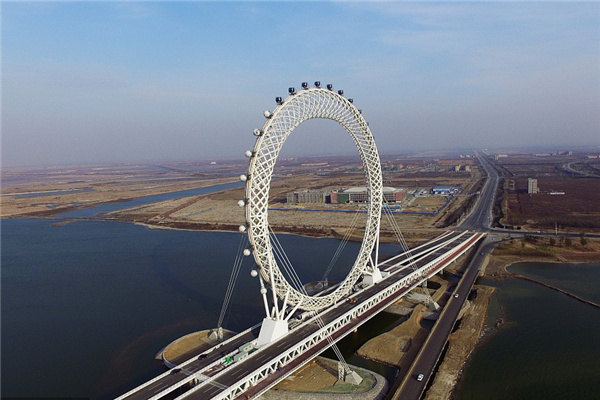 World's largest shaftless Ferris wheel built in China
 Ancient cities to be connected by Xi'an-Chengdu high-speed railway
 Snow turns Harbin into winter wonderland
 Reed Catkin Festival held in Wuhan
 Is it a building or a bookshelf?
 First flight
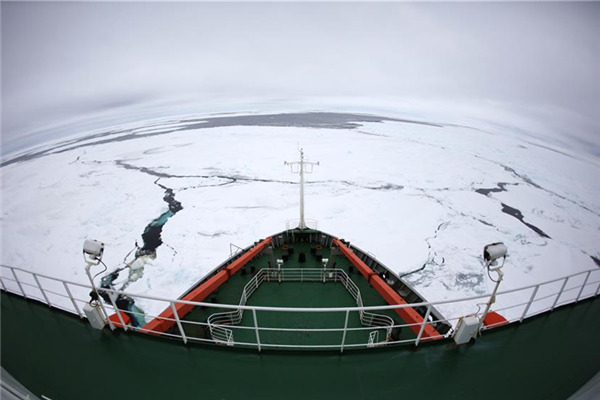 Polar icebreaker Snow Dragon arrives in Antarctic
 Xi's vision on shared future for humanity
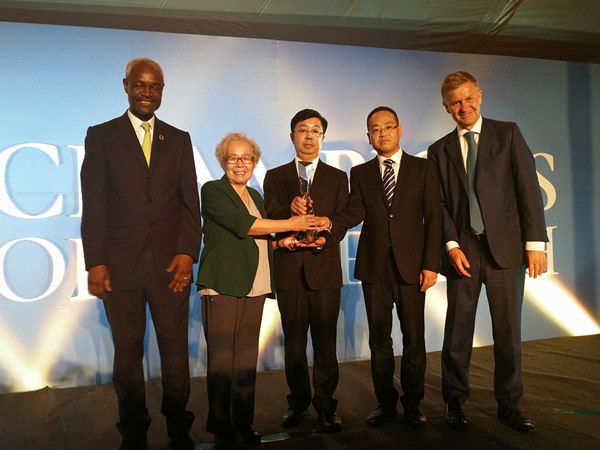 UN's top environmental honors go to three in China
 German trains collide near Duesseldorf, several people injured
 China beats Germany 7-4 in men's curling Olympic qualification
 Bayern beat Paris Saint-Germain 3-1 in UEFA Champions League


Copyright 1995 - . All rights reserved. The content (including but not limited to text, photo, multimedia information, etc) published in this site belongs to China Daily Information Co (CDIC). Without written authorization from CDIC, such content shall not be republished or used in any form. Note: Browsers with 1024*768 or higher resolution are suggested for this site.
License for publishing multimedia online 0108263 Registration Number: 20100000002731