

 Comments
  Print
Print  Mail
Mail  Large Medium Small
|
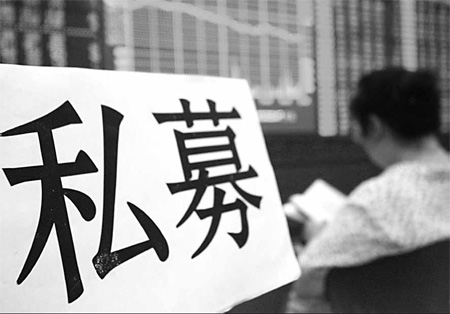
The global private equity market is proving lucrative to firms with strategic know-how. CFP |
Asia's private equity (PE) markets have not been crushed by the downturn that dried up deal flows in Europe and North America, but they have been transformed by it.
Deal values in Asia tumbled by one-third in 2008 from a year earlier - less than half the fall-off suffered in the developed economies - and is already showing strong signs of recovery.
But the relatively mild decline has intensified competition across the region, driven by two forces.

First, global PE funds have stepped up their focus on Asia as the markets where opportunities lie. And second, several large local funds, particularly in China, have joined the competitive fray. Over the last year, 189 new funds emerged wielding $40 billion in capital to invest.
Facing these new competitive dynamics, PE firms will be operating by new rules as investors vie to identify and acquire stakes in the most attractive target companies.
In this new climate, leading firms have started to recognize they need stronger teams and deeper industry expertise.
Many expect to focus on specific industry sectors and organize around them. How well they execute this shift will be important not only to the PE industry.
The businesses in which they invest will increasingly rely on the specialized sector insights of their PE backers as they navigate today's economic turbulence.
The move toward sector specialization has gained momentum because its benefits are powerful.
Serious players
In deal generation, it marks a PE firm as a serious player, increasing the volume and quality of deal flow. In due diligence, it can speed a company's ability to identify good deals and bring to bear proprietary insights that provide a competitive edge.
Following an acquisition, it helps the firm quickly set the right strategic direction, improve performance and build value.
When the time is ripe to sell, the firm can better identify the right potential buyers and present the sale in the most compelling light.
Because they no longer have the winds of growth at their backs, PE firms will select sectors by weighing their ease of entry, competitive dynamics and availability of acquisition targets.
Building these sector skills will be especially challenging for Asian PE firms that operate across national boundaries. Beyond barriers of language, regulation and business cultures, firms will need to overlay their local country focus with transnational sector expertise.
As firms start to increase their activity, they will pick their spots carefully. Instead of trying to land deals across a wide range of companies and industries, they will zero in on attractive industry sub-sectors.
'Heat maps'
Some firms work from sector "heat maps" to help identify the most promising segments and regions where they can add value.
They also mobilize sector teams to gather unbiased information from the field to get an early read on impending shifts in relative market share, earnings volatility, profit pools and other industry-shaping trends.
They use this intelligence to develop concrete, and sometimes counterintuitive, investment theses.
Instead of waiting for bankers to pitch deals, activist directors will spend more of their time cultivating relationships with industry insiders, trading the latest sector intelligence.
More important, they will work to earn the trust of management teams at companies that are high on their target lists.
This is an especially critical factor in Asia's emerging markets, where entrepreneurial owners remain skeptical of accepting PE capital.
Their objective is to become so deeply in tune with the sector's business metabolism that they will be ready to jump when promising deal opportunities mature.
PE firms that use the downturn to identify and build relationships with sector-leading companies should be well positioned to pull away from their rivals coming out of the downturn.
Our analysis has found that an acquirer can typically purchase a sector leader for a lower price relative to its competitors just before a cyclical rebound.
As they continue to help local industry become more competitive, PE firms wielding well-tuned sector expertise will be holding a trump card.
Vinit Bhatia is a partner in the Hong Kong office of Bain & Company and a member of the firm's Asian Private Equity practice. Based in Seoul, Chul-Joon Park is a Bain partner and leader of the firm's Private Equity practice for Asia.
(China Daily 09/28/2009 page8)

 Night views of Harbin through the lens
 Tibetans take train home after pilgrimage or travelling
 World's largest shaftless Ferris wheel built in China
 Ancient cities to be connected by Xi'an-Chengdu high-speed railway
 Snow turns Harbin into winter wonderland
 Reed Catkin Festival held in Wuhan
 Is it a building or a bookshelf?
 First flight
 Polar icebreaker Snow Dragon arrives in Antarctic
 Xi's vision on shared future for humanity
 UN's top environmental honors go to three in China
 German trains collide near Duesseldorf, several people injured
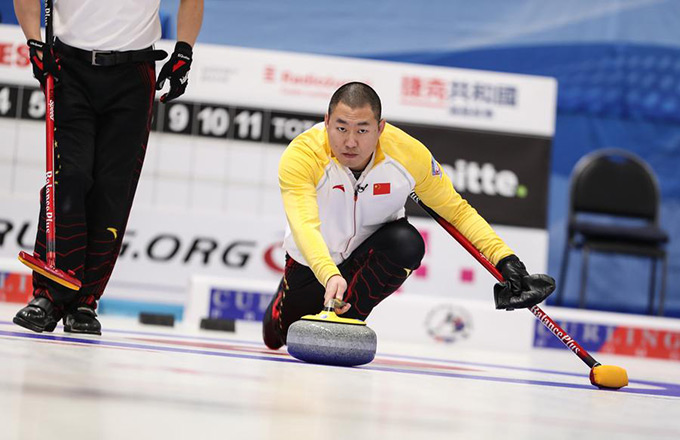 China beats Germany 7-4 in men's curling Olympic qualification
 Bayern beat Paris Saint-Germain 3-1 in UEFA Champions League


Copyright 1995 - . All rights reserved. The content (including but not limited to text, photo, multimedia information, etc) published in this site belongs to China Daily Information Co (CDIC). Without written authorization from CDIC, such content shall not be republished or used in any form. Note: Browsers with 1024*768 or higher resolution are suggested for this site.
License for publishing multimedia online 0108263 Registration Number: 20100000002731