Comments
  Print
Print  Mail
Mail  Large Medium Small
According to experts and as proposed in the upcoming Copenhagen climate discussions in December, the goal is to reduce the atmospheric concentration of carbon dioxide (CO2)back to safe levels of 350 parts per million (ppm) or lower.

The average concentration today exceeds 385 ppm, and the rate of increase is alarming at more than 2 ppm per year. We are obligated to reduce emissions to a safe value to assure preservation of the earth as humans have known it for the past thousands of years.
One approach is to focus on coal-fired power plants, as well as demand reduction through load efficiencies and minimization of losses in transmission and distribution.
More than 40 percent of CO2 emissions are from coal-fired power plants, and 8 to 10 percent of this energy is lost in transmission and distribution. In the short term, energy efficiency improvements are one of the more cost-effective methods of helping to achieve the 350-ppm target.
If the efficiency of Chinese coal-fired plants could be increased by 1 percent, the annual reduction in carbon emissions would be more than 35 million tons. This alone would reduce atmospheric carbon concentration by 10-20 ppm if adopted worldwide. Not only will this reduction have a significant impact on reducing worldwide concentrations of atmospheric carbon, but it will also create wealth for the owners of these plants via the United Nations Kyoto Treaty carbon trading system (Clean Development Mechanism, commonly known as CDM) -- a system with high levels of Chinese participation.
Coal-fired plants will continue to be our major source of electricity for at least 40 more years. In the meantime, what can be done to slow the input of atmospheric carbon?
Carbon sequestration is one approach, and a large pilot operation is planned in China. However, proof of feasibility is a long way off, and some doubt that cost-effective permanent sequestration methods can be found. For example, will liquefied CO2 escape from underground storage in future years?
However, there is technology available today to improve coal-fired plant operations significantly, and China has shown interest in adopting these new control technologies from the United States.
The US Commerce Department's Trade Development Agency will soon fund a feasibility study to determine how to effectively install this technology in China. Shanghai Electric Power Co is the Chinese grantee for this study and will be the first to benefit from its adoption.
More new power plants have been built during recent years in China than any other country. However, they do not have long-term operating experience.
The recent changes in dispatching rules by the State Grid indicate that plants with the highest efficiency and with the lowest emissions will be dispatched preferentially; however, wind and solar plants will generally be dispatched first. Thus, power plants installing these new systems will generally be the first to be dispatched and last to be reduced.
This is the ideal situation, since plants with the highest efficiency should be run at their highest capacity. These new dispatching rules should also reduce the emissions of carbon into the atmosphere.
The "packaged" control system from the US is assured to increase efficiency by more than 1 percent, thus reducing carbon dioxide emissions by more than 35 million tons each year and also saving more than $1 billion in coal costs.
The Strategic Economic Dialogue agreement fosters this type of international cooperation, and authorities are seeking the means to provide financing for projects of this type. China's National Development and Reform Commission has expressed interest in the technology, since it approaches global warming by addressing the energy efficiency of existing plants rather than developing new technology. Investments in energy efficiency are typically the most cost-effective means for improvement.
The US is looking forward to working with Chinese power companies to help them fully understand and implement these innovative control systems.
The basic systems also provide the basis for improvements in other sections of power plants, including coal handling, pulverization, ash handling, and steam turbine and generation controls. The goal is to operate coal-fired power plants as efficiently as possible over their remaining life.
But we are concerned that China and other countries throughout the world do not fully understand what climate scientists have been telling us for decades, and consequently will not implement best practices in coal combustion.
Without prompt action, we will soon reach the tipping point (Some believe we have already set a path to devastation of the atmosphere.), where catastrophic, irreversible climate change will occur regardless of our future actions.
The author is chief scientist for the Center of Excellence division of OSIsoft, a leading vendor of real time infrastructure software. The views expressed here are his own.
(China Daily 11/16/2009 page2)

 Night views of Harbin through the lens
 Tibetans take train home after pilgrimage or travelling
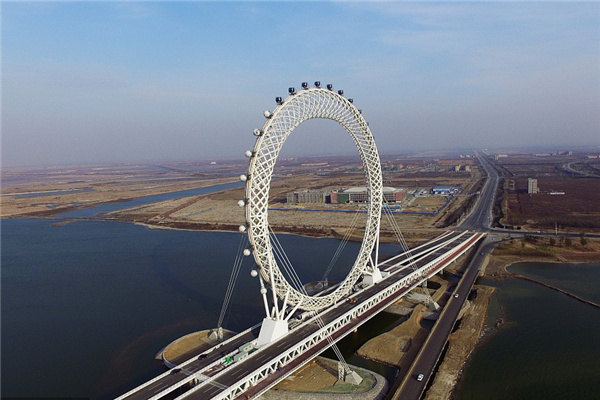 World's largest shaftless Ferris wheel built in China
 Ancient cities to be connected by Xi'an-Chengdu high-speed railway
 Snow turns Harbin into winter wonderland
 Reed Catkin Festival held in Wuhan
 Is it a building or a bookshelf?
 First flight
 Polar icebreaker Snow Dragon arrives in Antarctic
 Xi's vision on shared future for humanity
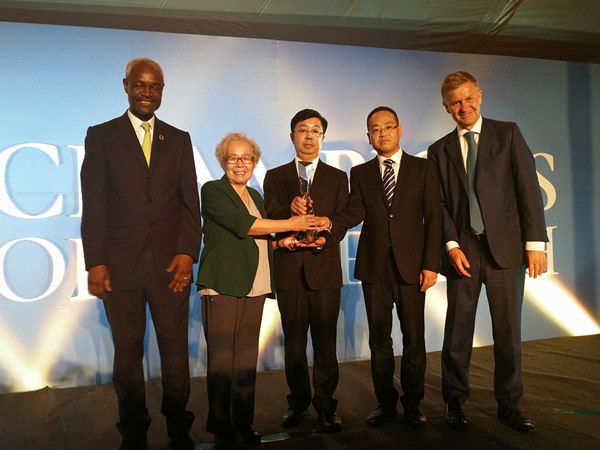 UN's top environmental honors go to three in China
 German trains collide near Duesseldorf, several people injured
 China beats Germany 7-4 in men's curling Olympic qualification
 Bayern beat Paris Saint-Germain 3-1 in UEFA Champions League


Copyright 1995 - . All rights reserved. The content (including but not limited to text, photo, multimedia information, etc) published in this site belongs to China Daily Information Co (CDIC). Without written authorization from CDIC, such content shall not be republished or used in any form. Note: Browsers with 1024*768 or higher resolution are suggested for this site.
License for publishing multimedia online 0108263 Registration Number: 20100000002731