Comments
  Print
Print  Mail
Mail  Large Medium Small
Overproduction and overlapping construction were the main issues raised at the meeting of the State Council of China chaired by Premier Wen Jiabao in August.

Along with steel, cement and glass industries, polysilicon and wind power generation equipment industries are also cause for overproduction concerns.
Production capacity has exceeded demand with the overlapping construction of solar and wind power plants. If all the solar photovoltaic power plants, including those under construction, start operations, China could produce twice the global energy demand.
Until the first half of 2009, as many as 50 companies were expected to install or operate assembly lines for polysilicon solar cells in 20 provinces, including Sichuan, Yunnan, Jiangsu.
The total investment amounted to 100 billion yuan. The number of wind power equipment manufacturers increased from 10 to 70. With production capacity already exceeding 35 million kilowatts, the amount of wind power generation China needs is 1,000 kilowatts.
According to a report on China's wind power generation released by the State Electricity Regulatory Commission, one-third of the wind power plants in China stopped operations because of management problems.
Due to the affordable production cost and low level of regulation on pollution, China was able to quickly grab the global market share in the polysilicon industry.
Ninety-seven percent of polysilicon products are exported, but the global financial crisis contracted overseas demand, causing overproduction.
With the increases in energy prices before the financial crisis, some European countries gave subsidies to the solar photovoltaic generation industry. After the financial crisis took hold, however, the subsidies were reduced, and the demand for polysilicon dropped.
Production glut
Surging oil prices before the financial crisis and growing attention to new energy industries after the financial crisis led to increased investments.
With higher oil prices, global energy-related industries emerged as the most promising next-generation industry.
About 10 Chinese companies, including Suntech, who raised about $400 million through the New York Stock Exchange. China Sunergy, LDK Solar and Yingli Green Energy advanced into the overseas market. And with rising expectations on new energy, stock prices of related businesses surged.
Conflicting plans between central and local governments caused over-investment in the new energy industry. An ambiguous interpretation of the central government's policies on new energy drove local governments and businesses to make reckless investments and production expansions.
Local governments jumped on the bandwagon of the new energy industry, trying to increase GDP in their respective regions.
Local governments in western and northern regions of China had particularly high expectations, since these regions are abundant in wind and solar resources and are economically less developed than other regions.
Prospects for the new energy industry are looking bright. However, a wide gap between industries likely will be created, considering the differentiated subsidies that the industries receive.
While the cost of coal generation is 0.2 to 0.3 yuan per kilowatt, solar energy generation cost is relatively high at 2 yuan per kilowatt, making the solar energy generation industry dependent on government support.
An effective revenue model can only be created with government support, because solar and wind power projects require large investments and take time to create revenue. Unfortunately, with technological barriers and a lack of government support, the investment risk in the new energy industry is still relatively high.
Solutions
The new energy industry, which relies heavily on government support, needs to be cautious about over-investment and overproduction.
New energy equipment manufacturers tend to be too optimistic about the future of the industry. They need to make investments and start production after carefully analyzing the government's planning and support policies.
The government and businesses need to cooperate to develop a market and technologies for new energy on a gradual basis. The government needs to stabilize the market by establishing policies.
It also needs to set up long-term policies considering the status of new energy businesses. Furthermore, the government must encourage businesses to build their competitiveness by avoiding unilateral support for new energy equipment manufacturers, and strengthening oversight on environmental protection and market entry.
China's new energy industry needs to secure competitiveness in the global market. Overlapping construction undermines the overall development of industry in China.
China should establish a cooperative development system in which equipment manufacturers, power plants and grid operators can drive industrial development together.
The author is a researcher with Samsung Economic Research Institute (China). The views expressed here are his own.
(China Daily 12/14/2009 page2)

 Night views of Harbin through the lens
 Tibetans take train home after pilgrimage or travelling
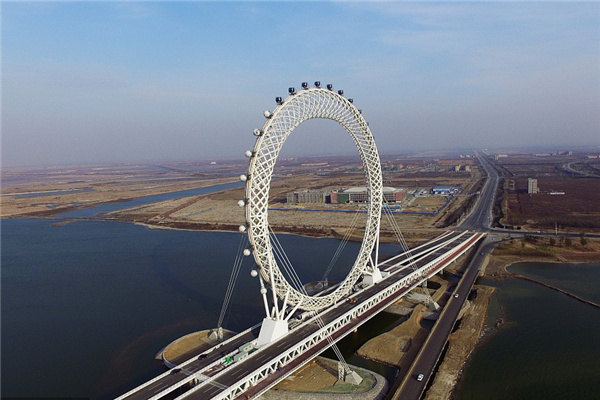 World's largest shaftless Ferris wheel built in China
 Ancient cities to be connected by Xi'an-Chengdu high-speed railway
 Snow turns Harbin into winter wonderland
 Reed Catkin Festival held in Wuhan
 Is it a building or a bookshelf?
 First flight
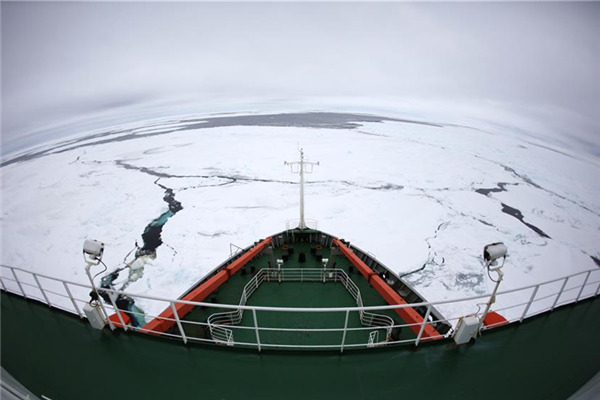 Polar icebreaker Snow Dragon arrives in Antarctic
 Xi's vision on shared future for humanity
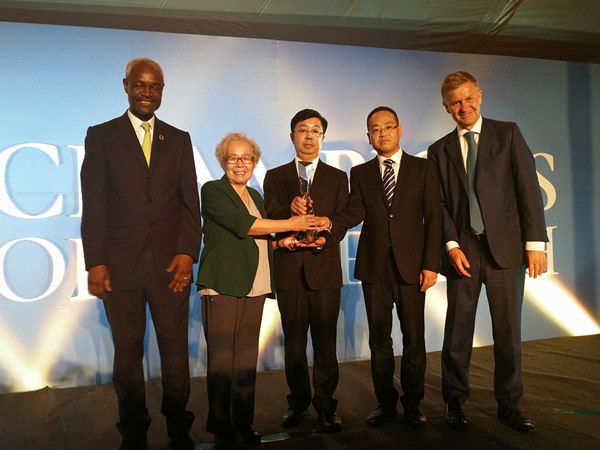 UN's top environmental honors go to three in China
 German trains collide near Duesseldorf, several people injured
 China beats Germany 7-4 in men's curling Olympic qualification
 Bayern beat Paris Saint-Germain 3-1 in UEFA Champions League


Copyright 1995 - . All rights reserved. The content (including but not limited to text, photo, multimedia information, etc) published in this site belongs to China Daily Information Co (CDIC). Without written authorization from CDIC, such content shall not be republished or used in any form. Note: Browsers with 1024*768 or higher resolution are suggested for this site.
License for publishing multimedia online 0108263 Registration Number: 20100000002731