Embroidery stitches a modern yarn in Jianhe
Miao artisan passes down the craft of tin-thread needlework







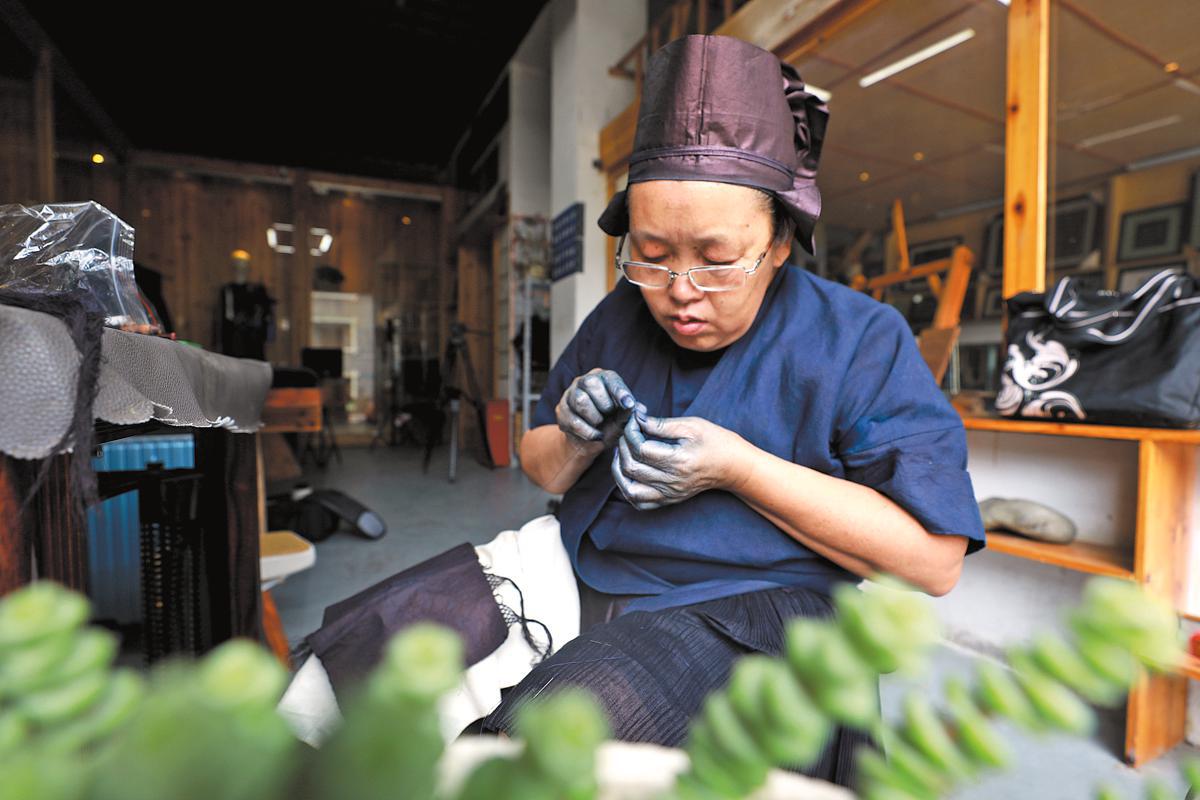
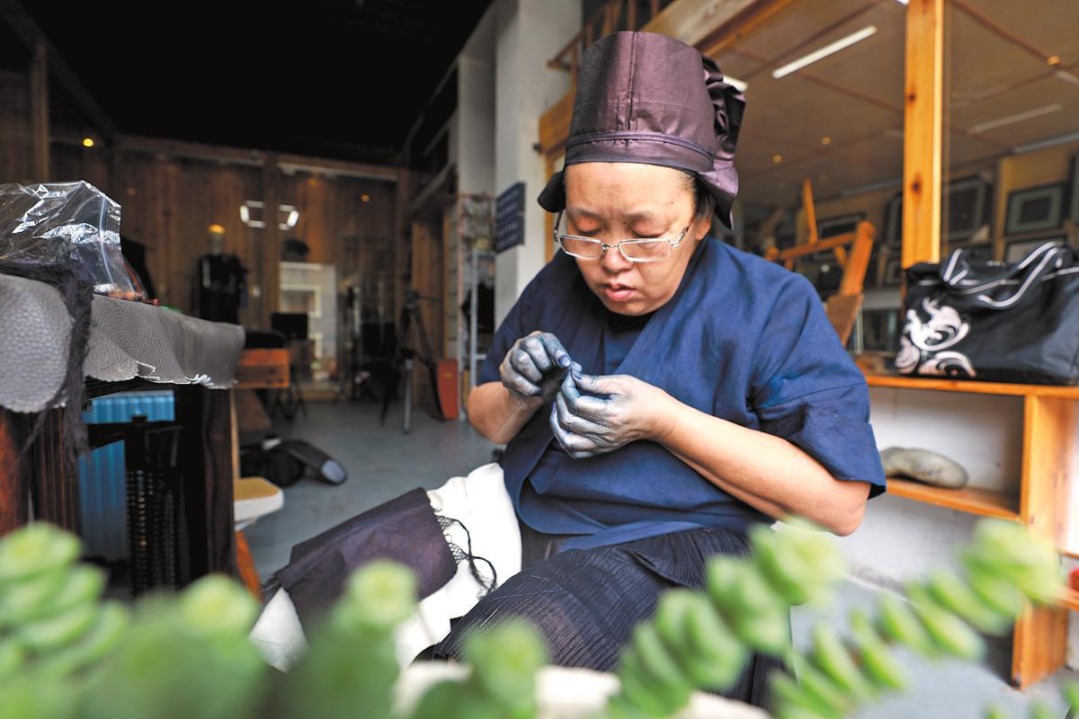
Big hills and small hills, rakes and harrows, long table feasts, these rhythms of Long Nyusanjiu's childhood in Jianhe county, Southwest China's Guizhou province, remain the wellspring of inspiration for her rare metal-thread embroidery.
Now in her 60s, Long is a nationally recognized inheritor of tin embroidery, a unique form of Miao needlework. To complete a garment, she begins with a cotton base, then trims tin sheets into strands about a millimeter wide, using each strip as both needle and thread.
Because tin is rigid, most designs rely on geometric shapes. Still, Miao artisans have drawn on everyday life — chicken feet, saddles or swirling water — to shape patterns that are passed down orally through generations. In sunlight, the tin threads shimmer with a silvery glow, while darker under-patterns in black, red, and blue provide contrast, creating designs that dazzle without overwhelming.
The process is painstaking. "An ordinary garment, from dyeing the cloth to the final stitches, takes at least six months," Long told China Daily. "A ceremonial costume is even more demanding. I spent two years on this one, sewing it stitch by stitch. If you try to rush it, it wears you out and ends up poorly done," she said, gesturing toward a festival outfit hanging nearby.
At one time, every young woman in Long's village had mastered this craft. Today, however, it survives in only a few Miao communities in the county. Its precise origins have been lost, but elders recall that silver was too costly while tin — salvaged from fishing nets — was plentiful. "If you melt tin, it turns white like silver," a villager said.
Traditionally, Miao girls were spared heavy labor before marriage and used their spare time to embroider dowries. Most completed no more than two outfits before their wedding day. Some describe tin-thread embroidery as the everyday armor worn by local Miao women.
"In our Zhanliu village, every girl loved tin embroidery," Long recalled. "After work, they dropped everything — cooking, resting — just to embroider. They lost themselves in it."
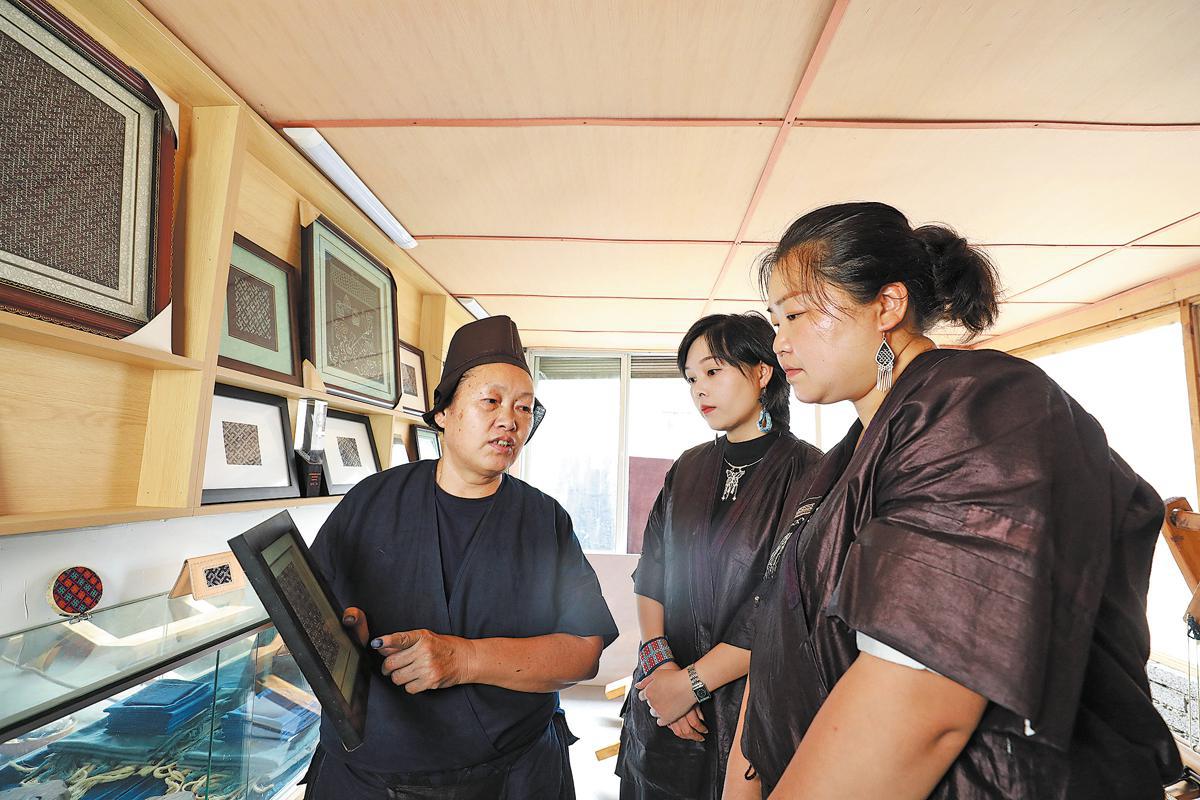
Long began learning the craft as a child and is now the fourth generation in her family to carry it on. She gently ran her fingers over a colored waistband her mother made more than 50 years ago. "The colors haven't faded," she said proudly. "That's real craftsmanship."
Her household is seen by villagers as the rightful guardians of the art. "She deserves to win awards," they said, "to honor her efforts and the skills of our ancestors."
Long finds comfort in seeing tin embroidery gain new audiences. Last year, it debuted on the runway at China International Fashion Week. More recently, her daughter Chen Yan wore a tin-embroidered outfit at a cultural tourism event in Sydney.
With state and local support, Long's workshop has begun showcasing its work in Beijing, Shanghai, Hong Kong, and beyond.
Orders now come in by the hundreds, sometimes even thousands. "I work with over 30 embroiderers," she said. "I teach them by hand. When new orders arrive, I divide the work among artisans in nearby villages and communities.
"Even small orders provide income and joy," she added.
Today, Long's daughter and daughters-in-law sat beside her at the embroidery frame. "They're following the same path I did," she said with a smile. Under Chen's guidance, tin embroidery, like many of China's intangible cultural heritages, is finding a new role in high fashion and cultural innovation.
"I am designing accessories, lifestyle goods, and collectibles that blend tin-thread techniques with modern style," Chen explained. "This way, we preserve our traditional patterns while appealing to contemporary audiences. Through these creations, I want the world to see the stitches my mother taught me."
Yang Jiameng contributed to this story.
Contact the writers at liuboqian@chinadaily.com.cn