We regard reform as a revolution
October 10, 1984
For the most part, the current changes in China started at the end of 1978, when the Third Plenary Session of our Party's Eleventh Central Committee was held. At that session the Central Committee reviewed our historical experience and decided on a series of policies designed to restore order. In fact, we had begun to set things to rights as early as 1975. At that time I was in charge of the work of the Central Committee and the government, and I introduced a series of rectification measures. Before long these measures produced excellent results in every area, but they ran counter to the "cultural revolution" and angered the Gang of Four. So once again I was ousted from office. For two years after the downfall of the Gang, we still didn't know what to do, because the chief central leader at the time carried out the policy of the "two whatevers" and reaffirmed the value of the "cultural revolution". The Third Plenary Session of the Eleventh Central Committee, however, marked the beginning of real changes, and nearly six years have passed since then. The results are even better than we had expected.
First we solved the problem of rural policies, instituting the contracted responsibility system for farming with remuneration linked to output, encouraging diversified production and the use of scientific advances in farming, and granting peasants the power to manage their own affairs. All these policies were so effective that three years after their implementation, notable changes had taken place in the countryside. In 1978 we held the Third Plenary Session of the Eleventh Central Committee, and in a few days we shall convene the Third Plenary Session of the Twelfth Central Committee, which will have its own special features. The first Third Plenary Session focused on rural reform, whereas this Third Plenary Session will focus on urban reform, including the reform of industry, commerce and other sectors. We can say this will be a comprehensive reform. The basic content of both rural and urban reform is to invigorate the domestic economy and open China wider to the outside world. Although urban reform will be more complex than rural reform, since we have succeeded in the one, we are confident that we can succeed in the other. It took three years for rural reform to show results, and it will take longer, three to five years, for urban reform to do so. When the resolution to be adopted by the Third Plenary Session of the Twelfth Central Committee is promulgated, people will see we aim at nothing less than a comprehensive reform. We regard reform as a revolution -- not as a "cultural revolution" of course.
When you visited China in 1974, you and I talked about the danger of war. Now we Chinese have slightly different views. We feel that although the danger of war still exists and we still have to remain vigilant, the factors that can prevent a new world war are growing. Our foreign policy is to oppose hegemonism and safeguard world peace. Under this general policy, we seek to improve our relations with the United States and the Soviet Union. We have made some substantive progress in improving relations with the United States. We are also trying to improve relations with the Soviet Union, while sticking to our principles. What is more important for us is to increase our cooperation with other Third World countries and at the same time to expand our relations with Europe and Japan and increase our cooperation with them. China is a force for peace, which is very important. The last thing China wants is war. China is very poor and wants to develop; it can't do that without a peaceful environment. Since we want a peaceful environment, we must cooperate with all of the world's forces for peace.
(Excerpt from a talk with Chancellor Helmut Kohl of the Federal Republic of Germany.)
(From Selected Works of Deng Xiaoping, Volume III <1982-1992>)


- China issues guidelines to develop 'all-for-one' tourism demonstration zones
- Torrential rain triggers disaster in Southwest China
- Harvest time for wheat reapers in Shanxi
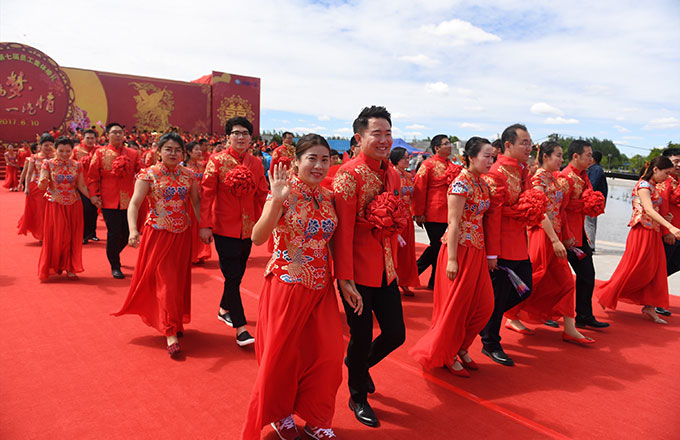
- Over 200 couples marry in Changchun group wedding
- Calligraphy tops other icons of Chinese culture, WeChat data shows