Remarks on the domestic economic situation
June 10, 1986
In general, the present economic situation is good. But how about the future? What obstacles are we going to run into? As I see it, there are two or three problems that might hold up the growth of our economy, if we fail to solve them.
The first is agriculture, which is essentially a problem of grain. If we have a setback in agriculture, it will be impossible for us to recover in just three to five years. Let's make a rough calculation: if in the year 2000 there are 1.2 billion people and each person consumes 400 kilograms of grain, we shall have to produce 480 million tons that year. To reach this goal, we shall have to increase output by more than 5 million tons annually from now on. But right now grain production is increasing slowly. An expert has predicted that if there is only a modest investment in rural capital construction and productivity remains low, agriculture will enter a new period of stagnation. This is something we have to watch out for. In managing the economy as a whole, we should give agriculture an appropriate priority, always bearing in mind our general goal of producing 480 million tons of grain in the year 2000. We should try to avoid having once again to import large amounts of grain a few years from now, because that will retard the growth of the economy.
The second problem is foreign exchange. Will the growth of the economy be impeded by a shortage of foreign exchange and a deficit in foreign trade? China has many things to export. We should think about ways to export them to world markets, including further expanding the Hong Kong, Southeast Asian and Japanese markets. We should also consider how to raise the quality of products. I said last year that we should not just emphasize quantity; we should put quality above everything else. The key to ensuring good sales of our exports is to improve their quality. Without high quality, they cannot be competitive on the world market. It is of strategic importance to reduce the deficit in foreign trade year by year. If we don't do that, it will be impossible for us to keep our economy developing steadily for a long time to come; it will eventually go into decline.
The third problem is political restructuring. As it stands, our political structure is not adapted to the current situation. Political restructuring should be included in the reform -- indeed, it should be regarded as the hallmark of progress in the reform as a whole. We must streamline the administration, delegate real powers to lower levels and broaden the scope of socialist democracy, so as to bring into play the initiative of the masses and the grass-roots organizations. At present, the number of organizations, instead of being reduced, has actually increased. Many companies have been established that are actually government organs. Through these companies people at higher levels have taken back the powers already delegated to lower levels. The more organs you have, the more staff members there are, and they all have to find something to do. They keep a tight grip on power, making it impossible for the lower levels to act on their own. As a result, the initiative of enterprises withers. And that is one reason why the economy has been growing only slowly in the first half of this year. We have to make a careful analysis to find out how to go about political reform. Early in 1980 it was suggested that we reform the political structure, but no concrete measures to do so were worked out. Now it is time for us to place political reform on the agenda. Otherwise, organizational overlapping, overstaffing, bureaucratism, sluggishness, endless disputes over trifles and the repossession of powers devolved to lower levels will retard economic restructuring and economic growth.
I think the reform is proceeding smoothly in general. Through it we shall create the necessary conditions for sustained economic growth. We are now advancing with a heavy load on our backs. The burden of tens of billions of yuan's worth of price subsidies provided annually by the state is getting heavier all the time. Sooner or later we must find a systematic, appropriate solution to this problem. Unless enterprises are given authority, they will have no power to make decisions and hence have no obligations to fulfil; it is the upper levels that will be held responsible for their success or failure. Under such circumstances, how can our work be done well? And how can the initiative of the masses be brought into play? So the current reform must be carried on.
(Addressed to leading members of the Central Committee of the Communist Party of China who had made a report on the subject.)
(From Selected Works of Deng Xiaoping, Volume III <1982-1992>)


- China issues guidelines to develop 'all-for-one' tourism demonstration zones
- Torrential rain triggers disaster in Southwest China
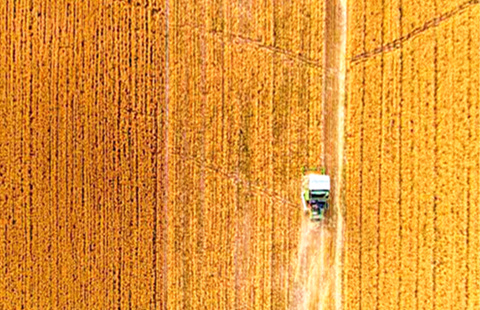
- Harvest time for wheat reapers in Shanxi
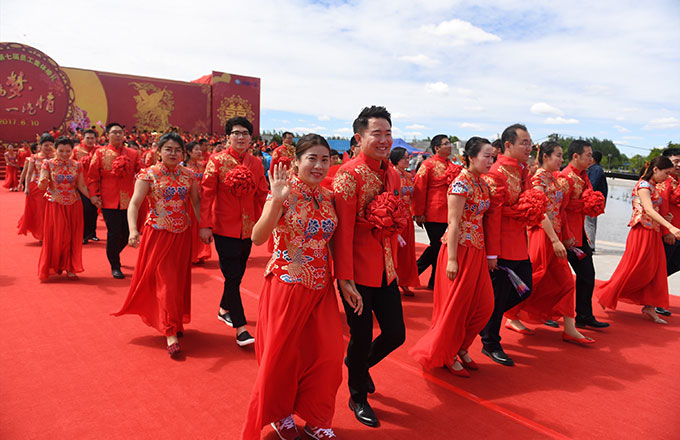
- Over 200 couples marry in Changchun group wedding
- Calligraphy tops other icons of Chinese culture, WeChat data shows