To uphold socialism we must eliminate proverty
April 26, 1987
Our current principles and policies were formulated at the Third Plenary Session of our Party's Eleventh Central Committee, held in 1978. Over the last eight years we have done relatively good work. Before that we lost too much time, especially the decade of the ``cultural revolution'', when we created troubles for ourselves with disastrous results. But we have learned from experience: these principles and policies are the product of the lessons we learned from the ``cultural revolution''. The fundamental thing we have learned is that we must be clear about what socialism and communism are and about how to build socialism. The way to build socialism must be determined by the particular conditions in each country. I believe you can understand why we propose to build a socialism adapted to conditions in China.
In the past we stayed in a rut, engaging in construction behind closed doors, and many years of hard work did not produce the desired results. It is true that our economy was gradually expanding and that we succeeded in developing certain things, such as the atomic bomb, the hydrogen bomb and even intercontinental ballistic missiles. But on the whole, the economy grew slowly or remained at a standstill for long periods, and our people were still living in poverty. During the ``cultural revolution'' the Gang of Four raised the absurd slogan, ``Better to be poor under socialism and communism than to be rich under capitalism.'' It may sound reasonable to reject the goal of becoming rich under capitalism. But how can we advocate being poor under socialism and communism? It was that kind of thinking that brought China to a standstill. That situation forced us to re-examine the question.
Our first conclusion was that we had to uphold socialism and that to do that we had, above all, to eliminate poverty and backwardness, greatly expand the productive forces and demonstrate the superiority of socialism over capitalism. To this end, we had to shift the focus of our work to the drive for modernization and make that our goal for the next few decades. At the same time, experience has taught us that we must no longer keep the country closed to the outside world and that we must bring the initiative of our people into full play. Hence our policies of opening up and reform. Our open policy has two aspects: domestic and international. We began with the countryside, applying the open policy there, and we achieved results very quickly. In some places it took only one or two years to get rid of poverty. After accumulating the necessary experience in the countryside, we shifted the focus of reform to the cities. The urban reform has been under way for nearly three years, but much remains to be done. We also obtained quick results from the open policy internationally.
China lags behind in science and technology. We have quite a few problems to solve, especially the problem of our huge population, which already stands at 1.05 billion. This makes it very difficult for us to raise the people's income and to eliminate poverty and backwardness in a short time. In everything we do we must proceed from reality, seeing to it that our targets are realistic and that enough time is allowed to fulfil them. In the last quarter of 1984 and throughout 1985 our economy grew at quite a rapid rate, and that caused us some problems. That's why we needed some readjustment and contraction. But this had its good side too, because we learned from the experience.
On the whole, our goals are not too ambitious. We give ourselves 20 years -- that is, from 1981 to the end of the century -- to quadruple our GNP and achieve comparative prosperity, with an annual per capita GNP of US$800 to $1,000. Then we shall take that figure as a new starting point and try to quadruple it again, so as to reach a per capita GNP of $4,000 in another 50 years. What does this mean? It means that by the middle of the next century we hope to reach the level of the moderately developed countries. If we can achieve this goal, first, we shall have accomplished a tremendous task; second, we shall have made a real contribution to mankind; and third, we shall have demonstrated more convincingly the superiority of the socialist system. As our principle of distribution is a socialist one, our per capita GNP of $4,000 will be different from the equivalent amount in the capitalist countries. For one thing, China has a huge population. If we assume that by the mid-21st century our population will have reached 1.5 billion and that we shall have a per capita GNP of $4,000, then our total annual GNP will be $6 trillion, and that will place China in the front ranks of nations. When we reach that goal, we shall not only have blazed a new path for the peoples of the Third World, who represent three quarters of the world's population, but also -- and this is even more important -- we shall have demonstrated to mankind that socialism is the only path and that it is superior to capitalism.
So, to build socialism it is necessary to develop the productive forces. Poverty is not socialism. To uphold socialism, a socialism that is to be superior to capitalism, it is imperative first and foremost to eliminate poverty. True, we are building socialism, but that doesn't mean that what we have achieved so far is up to the socialist standard. Not until the middle of the next century, when we have reached the level of the moderately developed countries, shall we be able to say that we have really built socialism and to declare convincingly that it is superior to capitalism. We are advancing towards that goal.
In the course of building socialism and trying to modernize we have encountered some interference from the ``Left''. Since the Third Plenary Session of the Eleventh Central Committee of our Party, we have been concentrating on combating ``Left'' mistakes, because those are the ones we have made in the past. But there has also been interference from the Right. By that we mean the call for wholesale Westernization, which would lead not to socialism but to capitalism. We have already coped with the recent widespread ideological trend in favour of bourgeois liberalization and made some changes of personnel.
In short, we shall unswervingly follow the road mapped out since that Plenary Session. We have been marching down this road for more than eight years. I think there is no doubt that we shall attain the goal we have set for the end of the century. Although the next goal, for the 50 years after that, will be harder to reach, I am convinced that we can reach that one too.
(Excerpt from a talk with Premier Lubomir Strougal of the Czechoslovak Socialist Republic.)
(From Selected Works of Deng Xiaoping, Volume III <1982-1992>)



- China issues guidelines to develop 'all-for-one' tourism demonstration zones
- Torrential rain triggers disaster in Southwest China
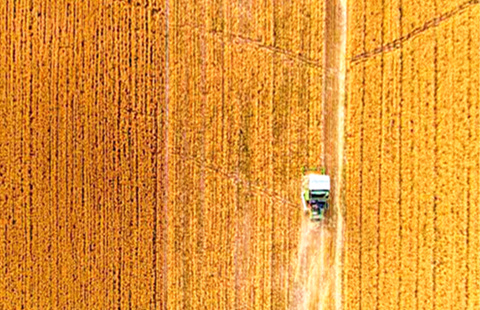
- Harvest time for wheat reapers in Shanxi
- Over 200 couples marry in Changchun group wedding
- Calligraphy tops other icons of Chinese culture, WeChat data shows