We must carry out socialist construction in an orderly way under the leadership of the Party
March 8, 1987
The principles our Party has laid down since the Third Plenary Session of its Eleventh Central Committee can be summed up in two points. First, we should adhere to the Four Cardinal Principles and second, we should strive for socialist modernization. The two goals we have set for our modernization drive are: to achieve a comparatively comfortable standard of living by the end of the century, and to approach the standard of moderately developed countries in another 30 to 50 years after that. To attain these two goals, we need two conditions: a peaceful international environment and political stability and unity at home. With those conditions we can carry out socialist construction in an orderly way under the leadership of the Party.
With this in mind, we have formulated the policy of opening up both internationally and domestically. Without this policy, it would be impossible for us to modernize. At the same time, we must ensure that the people enjoy more democratic rights and, in particular, that grass-roots units, enterprises, peasants and other people have more power to make decisions. While developing socialist democracy, we should strengthen the socialist legal system, so as to stimulate the people's initiative and enable us to go on with socialist construction in an orderly way under the leadership of the Party. All these policies and principles are interrelated.
The socialism we are building is a Chinese-style socialism. When we decided to open to the outside world, we anticipated that some negative aspects of the capitalist countries would find their way into China. Of course, we should learn from the Western countries whatever is useful, but the negative aspects can have a bad influence, especially on young people. That is why we must at the same time combat bourgeois liberalization, a requirement we have recognized not just today but ever since the Third Plenary Session of the Eleventh Central Committee. Some people are saying we have changed our principles and policies, but they are mistaken. I am sure our principles and policies -- including the policy of promoting more younger cadres to leading posts -- will only be carried out more smoothly.
In the second half of this year we are going to convene the Thirteenth National Congress of the Party. When you see what comes out of the congress, you'll have a better understanding of the question. Generally speaking, four things will remain unchanged: the Four Cardinal Principles, our wholehearted drive for modernization, the opening to the outside world and the reform of our economic and political structures. Let me emphasize that we shall continue our reform and the open policy.
The struggle against bourgeois liberalization will be conducted throughout the process of modernization, at least during the last dozen years of this century and the first 50 years of the next. At the Sixth Plenary Session of the Party's Twelfth Central Committee, held last September, during discussion of the ``Draft Resolution on Guiding Principles for Building a Socialist Society with an Advanced Level of Culture and Ideology'', some comrades did not agree that the document should include a reference to the need to struggle against bourgeois liberalization. Actually, Comrade Hu Yaobang shared their view. I made a speech at the session. I said that we would have to combat bourgeois liberalization not only now but for the next 10 to 20 years. Today, I add 50 more years to that estimate. If we don't struggle against it, there will be disorder everywhere, with no political stability or unity. Still, since the struggle is a long-term task, we shall use mainly the method of education and persuasion and not launch any political movements. However, if some people are bent on disturbing our tranquillity, we shall have to resort to disciplinary and legal action when necessary, or even to dictatorial means of dealing with them. In short, we need a stable environment to proceed with reform and construction.
The democracy we have in our country is not copied from the West. Recently, in a talk with an American, I said that socialism was the only solution for China and that capitalism could get China nowhere. Our construction can only be carried out in an environment of stability and unity. To ensure such an environment, we have to eliminate all factors that might impede our progress towards socialism or that might lead to unrest and turmoil. That too has been our position not just today but ever since the Third Plenary Session of the Eleventh Central Committee, and it will continue to be our position in future. We shall explain to the people, especially students, the reason for it. That is how we dealt with the recent student unrest. Events of that sort may occur at any time throughout the course of socialist construction.
In the last eight years we have accumulated considerable experience in construction and scored gratifying achievements. This shows the correctness of our policy of adhering to the Four Cardinal Principles and persevering in reform and the opening up. Our goal for the first stage, from 1981 to 1990, is to double the GNP of 1980. We are confident that we can reach that goal ahead of schedule. The goal for the second stage is, by the turn of the century, to double the GNP of 1990. From what we have accomplished so far, I think it should be possible for us to achieve that goal. In the eight years since the Third Plenary Session of the Eleventh Central Committee, living standards have risen visibly. In the year 2000 the total GNP will exceed US$1 trillion, and per capita GNP, though still low, will reach $800 to $1,000. With this fairly good foundation, it will be quite possible for us to proceed to reach the level of the moderately developed countries.
As for the failings such as bureaucratism, overstaffing, official misconduct and so on, to which the students drew attention in their marches and demonstrations, we shall try to overcome them. That is why we have to reform both our economic and political structures.
That's a general account of our tasks for the future.
(Excerpt from a talk with President Ali Hassan Mwinyi of the United Republic of Tanzania.)
(From Selected Works of Deng Xiaoping, Volume III <1982-1992>)


- China issues guidelines to develop 'all-for-one' tourism demonstration zones
- Torrential rain triggers disaster in Southwest China
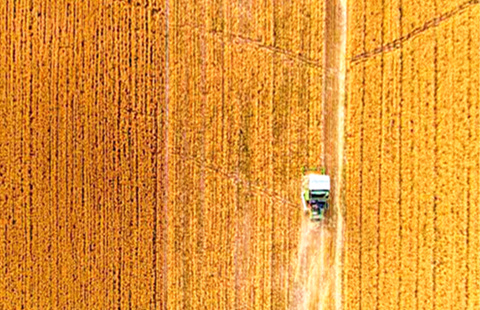
- Harvest time for wheat reapers in Shanxi
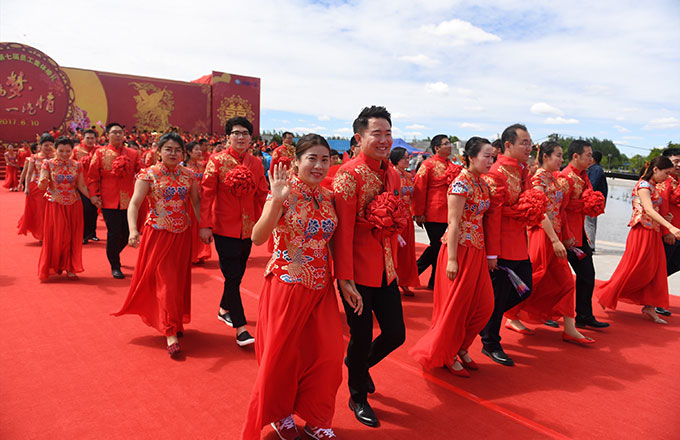
- Over 200 couples marry in Changchun group wedding
- Calligraphy tops other icons of Chinese culture, WeChat data shows