We have to clear away obstacles and continue to advance
January 13, 1987
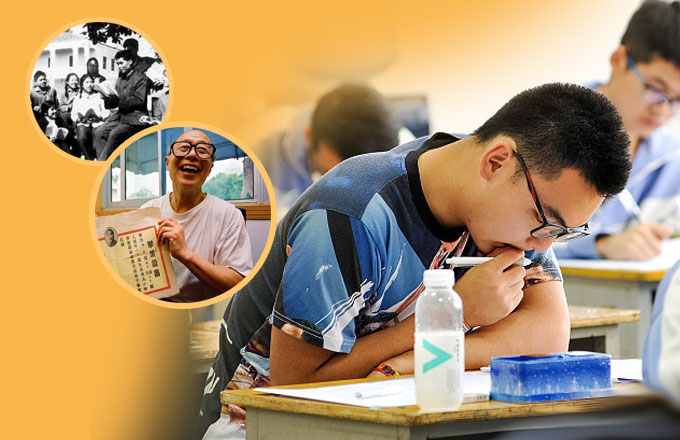
Recently some of our students created disturbances. These disturbances were different in nature from those of September 18, 1985, when students also took to the streets. We are now handling this matter. Actually, what concerns us is not the small number of college and university students, the one or two per cent of the total in the country, who took part. That is not really the problem -- a few students who take to the streets cannot affect the overall situation. The problem is that there has been some confusion in our ideological work, and students have not been given strong, effective guidance. That is a major mistake. We must change this situation and tell our young people about our past.
At the same time we should expose those persons who have acted out of ulterior motives, because this time they have adopted slogans that call for opposition to leadership by the Communist Party and to the socialist road. Certain individuals have made exceedingly pernicious statements, trying to incite people to action. They oppose Communist Party leadership and the socialist system, they call for total Westernization of China and adoption of the whole capitalist system of the West. These instigators are well-known persons, and we have to do something about them. They are to be found, of all places, inside the Communist Party. The Communist Party has its discipline. Actually, every party in the world has its own discipline. This time we are going to make a point of checking up on discipline.
A little trouble stirred up by students won't have any great impact, much less bring us down. There is one point I'd like to assure our friends of, and that is, we shall handle problems like this in an appropriate way. Even if these disturbances had been much more widespread, they would have had no effect on the foundations of our state or on the policies we have established. When we have dealt with them, our political stability and unity will only be enhanced, and our established principles and policies -- including the policies of opening to the outside world, reform and construction -- will only be carried out more smoothly and perseveringly. Of course, in settling this matter we shall review our experience and gradually overcome our weaknesses -- bureaucratism, for example. In this way we shall eventually turn something negative into something positive and help clarify the thinking of both the leaders and the people.
It is no simple thing to introduce reform and modernize our country, and we have never harboured any illusions that it would all be easy. There will inevitably be interference from various directions, including both the Right and the ``Left''. If in the past we have paid too much attention to interference from the ``Left'' to the neglect of that from the Right, the recent student unrest has reminded us that we should be more on guard against the latter. We have to clear away the obstacles. Without political stability and unity, it would be impossible for us to go on with construction, let alone to carry out the reform and pursue the open policy -- none of those efforts could succeed. Opening to the outside world is no simple matter, and reform is even more difficult and must be conducted in an orderly way. That is to say, we must be at once daring and cautious, and review our experience frequently so as to advance more surely. Without order, we would have to devote all our energies to combating interference of one kind or another, and that would be the end of reform. In short, I am convinced that our future accomplishments will be a further demonstration of the correctness of our present line, principles and policies. Problems will be solved gradually, so long as we go on developing in the way we have during the past eight years, try to overcome interference from any side, and continue to grow and advance and to raise the standard of living.
We should explain to the students who have been involved in disturbances what is at stake. A few mild remonstrations won't serve the purpose. It is essential to explain clearly to them what is right and what is wrong, what is beneficial and what is harmful. By what is right and what is wrong I mean what serves the fundamental interests of the country and what damages them. And by what is beneficial and what is harmful I mean what helps us to achieve the major socialist objectives we have set for this century and the next and what hinders us from doing so. This is the way to show our concern for the young people and to give them genuine guidance. Since the Third Plenary Session of the Eleventh Central Committee, held in December 1978, we have been opposing anarchism and ultra-individualism. But today some people are trying to make our society absolutely lawless. How can we allow that to happen? Even capitalist society doesn't allow people to defy the law; far less can we, who uphold the socialist system and want to build a Chinese-style socialism.
You are very concerned about this question in China. I should like to assure our friends that the student unrest will not lead to major trouble. It will have no effect on our established principles and policies; it will have no effect on our reform or our opening to the outside world. It has reminded not only ourselves but our friends as well that to understand China's problems, one must recognize their complexity. China is a country which has more than one billion people and dozens of nationalities and which has traversed a tortuous road over the more than 30 years since the founding of the People's Republic. So it is not surprising that such disturbances should have occurred. We shall try to prevent them from spreading, but even if ten times more people were involved, they would not affect the foundations of our state or make us alter our policies, because they are correct and the people have benefited from them. During the ``cultural revolution'' we had what was called mass democracy. In those days people thought that rousing the masses to headlong action was democracy and that it would solve all problems. But it turned out that when the masses were roused to headlong action, the result was civil war. We have learned our lesson from history.
(Excerpt from a talk with Noboru Takeshita, Secretary-General of the Liberal Democratic Party of Japan.)
(From Selected Works of Deng Xiaoping, Volume III <1982-1992>)


- China issues guidelines to develop 'all-for-one' tourism demonstration zones
- Torrential rain triggers disaster in Southwest China
- Harvest time for wheat reapers in Shanxi
- Over 200 couples marry in Changchun group wedding
- Calligraphy tops other icons of Chinese culture, WeChat data shows