On Hu Jintao's call for Marxist innovation
Hu Jintao's speech at the CPC's 90th anniversary gathering covered a wide range of historical, contemporary and future issues confronting Chinese Marxists. The main issue that the Western press concentrated on was Hu's emphasis on the need to combat corruption and maintain social stability in order to avoid the fate of Communist parties in Eastern Europe and the USSR. Although the speech did focus on corruption, institutional efficiency, social stability and democratic participation, Western observers decided to ignore the fact that Hu Jintao used the words "Marxist" or "Marxism" 24 times in his speech. This is no doubt because Hu argued that Marxist ideas and innovation could provide the solutions to the main problems confronting China.
The fact that corruption is universally acknowledged as a major negative factor in Chinese development reveals something extraordinary. It means that if corruption can be reduced, China can develop even more rapidly, more smoothly and with greater equality.
Market fundamentalists inside and outside China agree that corruption is corrosive to development, but they argue that public sector command over the economy is the root cause of corruption. They point out that administrative power tempts officials to demand unearned rents, and that businesses find bribery and the corruption of officials a way to get things done. This theory fails to explain why China's economy has developed so rapidly despite such corruption, while comparative capitalist countries, where private companies overwhelmingly dominate the commanding heights of the economy, have fared far worse. Indeed the extent of corruption exposed by the world financial crisis in the wealthy capitalist democracies makes a mockery of the endless finger pointing at the corruption and "lack of transparency" in China.
Hu Jintao argued that the key to fighting corruption is vigilance and forceful measures, and that leading officials at all levels must only exercise power as agents of the people. "We must serve the people, hold ourselves accountable to them, and readily subject ourselves to their oversight."
Hu placed great emphasis on Marxism and scientifically verified practice as the guiding ideology and method of the Chinese Communist Party. He reiterated one of the fundamental and oft forgotten principles of Marxism: "without democracy there can be no socialism" whilst recognising that the development of "China's socialist legal system has not fully met the need of expanding people's democracy" and that real socialism requires that "all state power belongs to the people".
Hu Jintao explained how the Party founders integrated "Marxism, Leninism with the Chinese workers' movement". The dream of Chinese and International Marxists of the 1920s was that the Communist parties would lead the working class to overthrow backwardness, semi-feudalism, imperialism and capitalism everywhere in the world in a chain of international revolutions. Then the workers' states would take the commanding heights of the economy into public ownership and place them under democratic administration. The societies were to be run according to the principles elaborated by Karl Marx's study of the Paris Commune, and reiterated by Lenin in his booklet the State and Revolution. This envisaged the election and recall of all officials, average workers' wages for officials, a rotation of administrative duties and workers' militias.
These are familiar slogans for Chinese Communists as they were popular in the Cultural Revolution, particularly in Shanghai, in the late 1960s and early 1970s. The problem was that in both Russia and China the working class was a minority class at that time. Therefore the idea that a democratic workers' state would be established, in which state power begins to wither away, was utopian in that context.
The Communist parties of the Third International were engaged in several revolutionary adventures, which used undue haste to try to force the pace of revolutions in some countries and misused the nascent Communist Parties as tools of Soviet foreign policy in others.
Lenin recognized that the attempt to storm heaven by global revolution was postponed and the introduction of the New Economic Policy (NEP) provided practical and essential experience in the methods of primitive socialist accumulation, as applicable to socialist revolutions in less developed countries. The Soviet NEP was the ideological and practical experimental foundation, for the policy that was successfully applied in greater scope and over a much longer period by the Chinese Communist Party after 1978.




- China issues guidelines to develop 'all-for-one' tourism demonstration zones
- Torrential rain triggers disaster in Southwest China
- Harvest time for wheat reapers in Shanxi
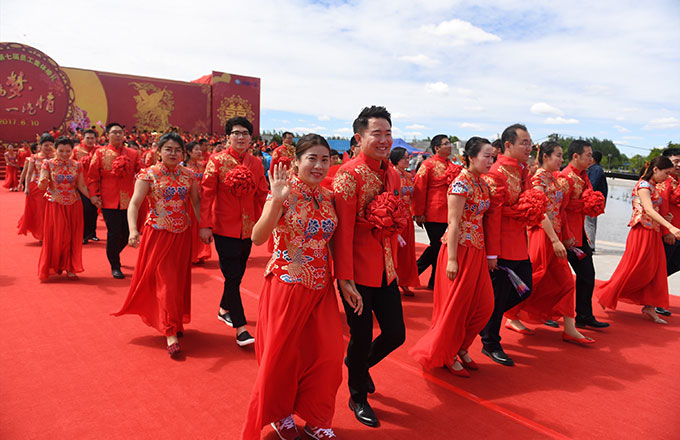
- Over 200 couples marry in Changchun group wedding
- Calligraphy tops other icons of Chinese culture, WeChat data shows