| Home |
| News |
| Celebration |
| HK Today |
| HK in Retrospect |
| Video |
| Photo |
|
chinadaily.com.cn | ||||||||
|
|||||||||
|
HK 10 Years > Opinion |
|
HK budget surplus may come and go
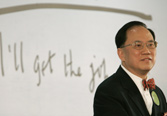
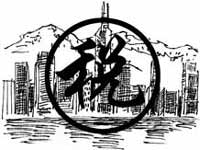
Proposing to cut salary tax, the Hong Kong government is adhering to its professed economic principle of "big market, small government".
The economic recovery which began to take off in 2004 helped produce a government budgetary surplus in fiscal 2005. The government is widely expected to announce a fiscal 2006 surplus of HK$30 billion ($3.8 billion). Hinting at a tax cut, Financial Secretary Henry Tang earlier invited suggestions from the public on which of the four components of the salary tax personal allowances, the tax band, marginal tax rate and standard tax rate should be changed. The move has not only reaffirmed the government's commitment to its own economic policy but also showed that it is flexible and decisive in responding to economic changes. It is important to note, however, that changes in tax rates, in whichever way, are contingent on economic conditions. They must not be considered to have any consequence for the ongoing debate on what is widely seen to be an excessively narrow tax base. It is therefore wrong to argue that the narrow tax base became a non-issue after Hong Kong began to recover from the prolonged economic slump. History shows that the duration of each economic cycle lasted five years. To be sure, the automatic adjustment mechanism, which was largely responsible for such cycles in the past, is vastly more complicated as the Hong Kong economy is becoming increasingly integrated with the much larger mainland economy. But we cannot afford to rule out any economic hiccup in the future, resulting in a slump in government revenue. Because of the greater mainland influence, it will
become increasingly difficult to predict the swings in economic cycles. This
would, in turn, make longer-term planning much more uncertain if the government
cannot count on an Raising the rates of corporate and salary taxes is, at best, a stopgap measure. This can never be counted on to cover the revenue shortfall during a prolonged recession. What is more, raising taxes could deepen the recession by depressing consumer spending and fixed asset formation, which are important components of Hong Kong's gross domestic product. In addition, the margin of a tax increase is very thin. Overstepping that limit could seriously undermine Hong Kong's competitiveness as a financial center, which is built on, among other things, a low and simple tax regime. While we enjoy the fruits of a rebounding economy and look forward to a tax cut, we should stay focused on the constructive debate to reach a consensus on a new tax that is seen to be equitable and fair by most Hong Kong people. A government-appointed tax review committee has recommended several options which can form the basis of the public discussion. It is encouraging to know that the government is keeping an open mind on the issue. The ball is now in the court of the public, which must act responsibly in suggesting credible solutions to the problem. There are people who have remained dead-set against any new tax. Citing the projected budgetary surplus, a commentator wrote that the government revenue from sales of land and other related sources is a sufficient buffer against any shortfall in the government recurrent expenditure during a recession. This assumption seems to have ignored the fact that a recession usually hits the property sector the hardest. Email: jamesleung@chinadaily.com.cn
(China Daily 01/16/2007 page10) |
|
|
Copyright 1995-2007. All rights reserved. |
主站蜘蛛池模板: 弥勒县| 洛宁县| 龙山县| 青河县| 朔州市| 肇庆市| 青州市| 枣阳市| 历史| 营山县| 鲁山县| 东乡| 万安县| 滦平县| 武胜县| 灌云县| 汝南县| 柳江县| 宝清县| 无锡市| 万源市| 汝城县| 侯马市| 宝坻区| 江北区| 女性| 兴业县| 确山县| 朝阳县| 钦州市| 怀仁县| 舒兰市| 西畴县| 利津县| 唐河县| 西吉县| 德兴市| 新疆| 延庆县| 娄烦县| 青河县| 广州市| 文水县| 剑阁县| 沙湾县| 塔河县| 钟祥市| 邻水| 吉木萨尔县| 晋宁县| 自治县| 玉田县| 任丘市| 克东县| 砚山县| 东方市| 理塘县| 长春市| 盐边县| 营山县| 寿宁县| 威信县| 元朗区| 海兴县| 井研县| 彭州市| 科技| 汉寿县| 神木县| 永善县| 田东县| 本溪市| 凤阳县| 万荣县| 霸州市| 万山特区| 县级市| 卢龙县| 新巴尔虎右旗| 长春市| 恩平市| 宁乡县|
 A "small" government characterizes itself by keeping money in the hands of
the people. The Hong Kong government raised the salary tax rate in fiscal 2003
after several successive years of budgetary deficits during the economic slump.
Now that the economy is on the boil and the government coffers are overflowing,
people are naturally expecting a tax cut.
A "small" government characterizes itself by keeping money in the hands of
the people. The Hong Kong government raised the salary tax rate in fiscal 2003
after several successive years of budgetary deficits during the economic slump.
Now that the economy is on the boil and the government coffers are overflowing,
people are naturally expecting a tax cut.
 alternative stable source of income.