US Treasury: China bill could backfire
(Reuters)Updated: 2007-08-03 08:43
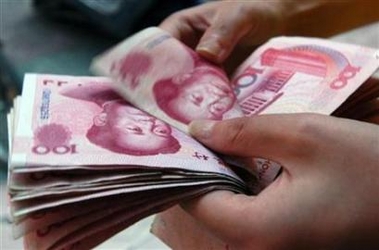 A shop assistant checks hundred yuan bank notes at a shop in Xiangfan, central China's Hubei province in this file photo. [Reuters] |
A senior U.S. Treasury official warned Congress on Thursday that a legislative drive to force China into letting its currency rise in value more quickly could backfire and do damage to the U.S. economy.
Deputy Assistant Treasury Secretary Mark Sobel warned a House of Representative trade subcommittee that U.S. lawmakers risked creating a perception abroad that the United States is becoming "an isolationist nation" that does deserve foreign investment.
"If the United States adopts currency legislation that is perceived abroad as unilateralist, investors' confidence in the openness of our economy could be dampened, diminishing capital inflows into the United States and potentially putting upward pressure on interest rates and prices," Sobel said.
However, Ways and Means Trade Subcommittee Chairman Sander Levin, a Michigan Democrat, objected to the administration's description of congressional proposals as protectionist, and other lawmakers testifying on Thursday argued China's "unfair" trade practices required a strong U.S. legislative response.
Two Senate committees have already approved legislation that aims to equip Treasury with new tools to pressure China into letting its yuan currency rise faster in value, which U.S. manufacturers say is necessary to eliminate an unfair price advantage for Chinese-made goods.
Rep. Tim Ryan, an Ohio Democrat, said Congress should pass an even stronger bill -- such as one he has crafted with Rep. Duncan Hunter, a California Republican -- that would allow U.S. companies to seek countervailing duties against China's undervalued exchange rate.
"Passage of a weak bill will only lead to many more years of inaction by the administration, loss of jobs and loss of critical U.S. manufacturing capability. We need legislation that will lead to action," Ryan said.
A Republican committee member, Rep. Thomas Reynolds of New York, said there was bipartisan support for taking a tougher line with China than Treasury has followed so far.
"Be ready for the fact that there's a boiling point in the Congress coming from the people of America saying we need to do better than what's happened so far," Reynolds said.
After the hearing, Levin told reporters that House leaders would decide when Congress returns in September the best way to proceed with China currency and trade legislation.
"I think we will look at all options," including the Ryan-Hunter bill, Levin said.
He expressed confidence that Congress could craft legislation that presses China on the currency issue without violating World Trade Organization rules.
But Treasury Secretary Henry Paulson has made clear that he does not want the additional legislative tools and that he prefers to seek a faster pace of economic reform in China through discussion, especially in a "strategic economic dialogue" that he initiated with Beijing last December.
Sobel's appearance before the House subcommittee was a bid by Treasury to wave off more legislation in Congress, where anger at China has been mounting and has helped fuel the bid to force Beijing into faster currency appreciation.
"We appreciate the frustrations of Congress with the slow pace of Chinese reform. Indeed, we strongly share those frustrations," Sobel said. "Yet we continue to believe that direct, robust engagement with China is the best means of achieving progress."
Paulson has just returned on Wednesday night from his fourth trip to China since taking over Treasury just over a year ago. Again he was unable to persuade Chinese officials to offer any commitment to speed up currency reforms.
Paulson told reporters in Beijing that Chinese officials whom he met, including President Hu Jintao, intended to move ahead with economic reforms including on currency but that the country's economic stability was critically important.
The failure to get firm Chinese promises on currency has fed into a sense in Congress that China does not play fair on trade rules.
Sobel said Paulson had "conveyed a strong message about the need for far more vigorous action by China to correct the undervaluation of renminbi (RMB), take immediate action to lift the RMB's value and achieve far greater currency flexibility."
China's yuan is also known as the renminbi.
David Spooner, the Commerce Department's assistant secretary for import administration, echoed some of Sobel's worry that Congress's actions could rebound against the United States because they might violate global trade rules.
"I must make clear that the Department of Commerce is deeply concerned that the other legislative proposals that have been advanced to date raise serious concerns under international trade rules," Spooner said, adding that could trigger a global cycle of protectionist legislation.
Similarly, the U.S. Trade Representative's deputy general counsel, Daniel Brinza, warned that Congress needed to beware approving legislative proposals that did not comply with rules set by the World Trade Organization.
Doing so would undermine U.S. credibility when it tries to persuade others to abide by WTO rulings, Brinza said.
|
||
|
||
|
|