BEIJING -- More than 200,000 foreign businessmen are expected to attend the ongoing 102nd China Import and Export Commodities Fair, at which made-in-China clothes, shoes and toys were sold to families across the globe.
It is not the first time for Chinese tycoon of sewing machine Qiu Jibao to come to the fair. More than two decades ago, he climbed over fences and sneaked into the fair, commonly known as the Canton Fair, to sell his sewing machines to foreigners -- he was barred from regular entry for being the owner of a small private factory.
However, Qiu's factory developed into a world-famous one with the drive of reform and opening up in China in the past decades. Qiu was dubbed as "king of sewing machines" for exporting US$200-million worth of sewing machines.
"If you wants to know what and how is China's policy of reform and opening up, come to the Canton Fair!" Qiu said.
The fair was initiated in 1957 when China was in need of foreign currency to buy industrial equipment and materials from foreign countries. It has been used as a means to promote China's export trade until last April when companies from overseas were invited to display their wares for the first time. Its name was changed from China Export Commodities Fair to China Import and Export Commodities Fair this year.
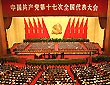
The opening of the fair's 102 session on Monday coincided with the opening of the 17th National Congress of the Communist Party of China (CPC), a crucial event to outline the roadmap of China's development in the years to come.
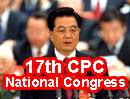
"The decision to begin reform and opening up is vital to the destiny of contemporary China, ...reform and opening up are the only way of developing socialism with Chinese characteristics and rejuvenating the Chinese nation ...," said Chinese leader Hu Jintao while delivering a keynote speech at the opening ceremony of the congress.
Hu's remarks were welcomed by delegates to the congress. General manager Xiao Yaqing of the Aluminum Corp. of China said his company was unknown to the world when it was founded, but has grown into the world's third largest aluminum company, the most fast growing company in the world's aluminum industry.
"I cannot imagine the fate of our company without the reform and opening up policy," said Xiao.
However, with thorny problems such as environment deterioration and widening wealth gap, further reform in difficult areas is confronted with deep-seated problems. Some people were discussing the future of the policy while some foreign observers were wondering if China would take a more conservative way.
There have also been academic disputes on the reform and opening up policy in China.
In this case, Chinese leadership have been reiterating that the reform and opening up policy must be carried out unswervingly. Hu Jintao said at the congress "to stop or reverse reform and opening up would only lead to a blind alley."
Reform and opening up "accord with the aspirations of the Party membership and the people and keep up with the trend of the times. The orientation and path of reform and opening up are entirely correct," Hu said.
Wang Yukai, a noted professor with the National School of Administration, said that the reform and opening up policy is now reiterated because it is at a crucial stage.
"It is getting more and more difficult compared with three decades ago. The obstacles couldn't be overcome if we do not have a firm stand," Wang said.
"Resources, environment, income disparity and social justice are among the issues that China need to tackle to further advance reform and opening up," he said.
The reform and opening up drive was launched at the Third Plenary Session of the 11th Central Committee of the Communist Party of China (CPC) in 1978, with late leader Deng Xiaoping being the "chief architect".
Between 1978 and 2006, China's gross domestic product has been growing by an average annual rate of 9.7 percent and the country has developed into the world's fourth largest economy.
China's drive of reform and opening up is hailed by the World Bank as the largest poverty reduction campaign ever launched in the world history, particularly in reducing its rural population in abject poverty. The number of extremely poor people in rural China was reduced from 250 million in 1978 to just over 20 million by the end of 2006.