 |
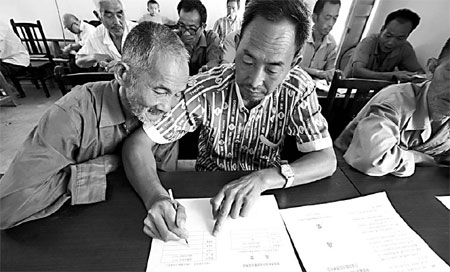
| Farmers fill out their ballots on September 27 to determine the new Party secretary of Fuxinqiao, a village in Chongqing Municipality. Chen Shichuan |
With his promise to quadruple the local GDP within three years, Chen Guohua secured a landslide victory in the race to become Communist Party chief of the Longxing township of Chongqing Municipality.
Now he has to deliver, as the people who voted him in will also be responsible for his annual performance reviews. And if just one-third of the 900 local Party members express no confidence, Chen will be removed from his seat.
Longxing is one of 200 townships in Chongqing, Sichuan and Hubei where experimental direct elections for Party chiefs are being held.
They are indicative of the changing face of the Communist Party of China.
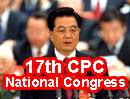
At the age of 86, and having ruled for 58 years, the CPC is moving step by step toward complete political reform. At the opening of this week's Party congress, General Secretary Hu Jintao vowed to "deepen political restructuring".
He said, however, the reform should have a "correct political orientation" and be under the leadership of the CPC, echoing his speech at Yale when visiting the United States in April 2006 that China will not embrace Western-style democracy although it is open to any tested experience buttressing democracy.
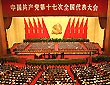
Hu's prudence has been endorsed by the largest rally in CPC history. Delegates to the congress said the Party's leadership, people's participation in political affairs as the country's masters, and the rule of law are three footstones for a "socialist democracy".
Yu Keping, deputy chief of the Central Compilation and Translation Bureau, praised democracy as "the least defective" of all political institutions created and adopted by human beings. "Comparatively, democracy is the best one in human history," Yu wrote in his article "Democracy Is A Lovely Thing", which was published early this year in the Study Times, a newspaper sponsored by the CPC Central Committee's Party School.
However, the timing of pushing democracy and institutional arrangements must be carefully chosen, said the 48-year-old, who is a visiting professor to both Duke University in the United States and Free University of Berlin in Germany.
"It requires the wisdom of both politicians and common people to gain the biggest benefit from democracy at the lowest political and social costs," Yu said.
Professor Yang Guangbin, director of the Comparative Politics Institute at the Renmin University of China, said: "Every country has its uniqueness to develop democracy based on their own history, culture and real conditions.
"It is quite harmful to oversimplify unique processes of different democracies to certain modes. Even Western democracies have survived agonizing processes."
And Yang said he believes a Chinese-style democracy is emerging.
Discussions in the Party School and other think tanks on how the CPC can expand democracy have been backed by the central authorities, he said.
In the process of deepening political restructuring, the CPC is also trying to transform itself into a cover-all political organization by diversifying its membership.
The Party amended its constitution in 2002, opening its door to private businessmen, who used to be regarded as symbols of capitalism and were excluded from the vanguard team of the Chinese working class.
Tian Peiyan, a senior theorist at the CPC Central Committee Policy Research Office, said improving "intra-Party democracy" is the ultimate approach to developing people's democracy and promoting social harmony.
"Intra-Party democracy" is largely realized by the expansion of Party members' rights, more open elections and a fair cadre nomination mechanism.
As one remarkable signal, the loss margin in the election of delegates to the 17th CPC National Congress was raised to 15 percent from 10 percent five years ago.
At lower levels, the electoral margin quota for provincial Party congresses ranges from 15 to 30 percent, almost tripling that of the past.
Xinhua
(China Daily 10/19/2007 page7)