Most only-child couples want one child
Updated: 2007-11-06 07:19
|
|
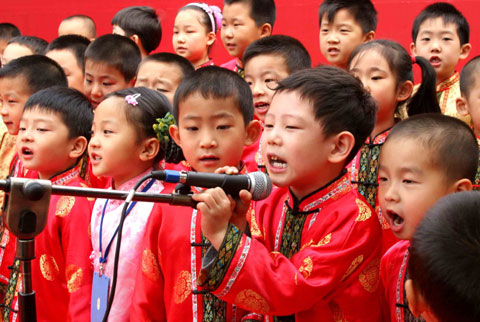
More than half of Beijing's adult single children don't intend to have two kids, even though national policy allows them to do so.
The country's family planning policy of the late 1970s restricted urban families from having more than one child to control population growth.
However, a new survey by the Beijing Administrative Institute shows 52 percent of those now-grown-up single children, who are allowed two offspring, do not want a second child.
Many cited economic pressures as a factor.
The results were released on Sunday at the Beijing Forum, organized by Peking University.
Beijing has roughly 2 million only-child adults.
More than 1,100 people from only-child families, aging 20 to 34, were polled.
Only 24 percent of respondents said they would like to have two children.
More than a quarter of respondents would opt for a "DINK" (double income, no kids) lifestyle.
Survey figures showed that respondents with a primary education wanted 1.1 children on average, those with a bachelor degree wanted 1.3, and those with masters or higher degrees wanted 1.5 children.
"Beijing has maintained a super low birth rate - less than 1.3 children in a family in average - for nearly 20 years, posing increasing pressure on the country's aging population," Hou Yafei, a professor with the institute, said.
Hou said that the top four factors that determined people's intentions to have children were "income, child care, housing and policy conditions".
"The government should encourage couples from one-child families to have a second child and should provide better welfare services."
This would promote population sustainability, Hou said.
The survey also found that people with higher education backgrounds intend to have more children because they are more confident with their economic circumstances and financial security.
Some cities have maintained negative population growth for years, due to the implementation of the family planning policy in the late 1970s and early 1980s.
To promote a slightly higher population growth rate, some provincial governments have since relaxed rules and allowed more people to have more than one child.
In Shanghai, the death rate has outstripped the birth rate for more than 10 years, and less than 30 percent of couples both from only-child families have had a second child.
"China has entered its desired low fertility period and the present fertility culture is expected to last for a long period," Mu Guangzong, a population professor with Peking University, said.
|
|
|
||
|
||
|
|
|
|