Displaced by dam, resettled with dignity
Updated: 2008-01-02 08:24
|
|
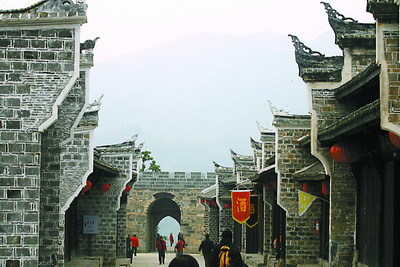
Most of the 1.22 million displaced people have been resettled in their own municipality or province, with 60 percent of them being urban residents and 40 percent farmers along the riverside. With a 63.5 billion-yuan ($8.69 billion) budget for the relocation program, the central government has compensated the displaced for their lost houses and land, and pays them 600 yuan ($82.14) each year.
But though most of them have moved into their new houses, it has not been easy for some farmers who have new plots to till. Lack of arable land and job opportunities have for long haunted the relatively less developed and barren western region of Sichuan Province and Chongqing. And the area's dense population has only complicated matters, say local resettlement officials.
"The dam project has not only created challenges of accommodating and offering jobs to the displaced, but has also offered opportunities to improve the life of the people in the impoverished areas," says Lang Cheng, director of Chongqing Resettlement Affairs Bureau's legislative division.
The local governments are trying to transform parts of the barren mountainous area into arable land, and develop agriculture-related industries to create work. Raising pigs, for instance, is one such project, and people displaced from Pingyuan village in Qingxi town, Fuling, are already involved in it. Zhou Xiaolian has 200 pigs and has benefited from the rising price of pork. Her family makes about 3,000 yuan ($410) a month, a lot more than what it used to, says the 20-something Zhou.
About 100,000 farmers, most of who are skilled in some fields or have made some money from business over the years, now live in cities. "The local governments create jobs for the village folk-turned urban residents, too," says Lang.
The central government has allocated special funds to train the new urban residents for jobs and issued preferential policies to attract more companies to set up shop in the reservoir area, says Luo Yuanhua, deputy director of the resettlement division of the Three Gorges Project Construction Commission, under the State Council.
The pilot training project in Wushan county, which sustains a large proportion of the relocated population in Chongqing, may serve as an example. With a fund of about 300 million yuan ($41.07 million), the Wanxian Vocational Education Center provides free training for 1,000 relocated and laid off workers a year. Most of those who are trained there can get a job with enterprises in garment and electronic companies situated in the same industrial park, training center president Xing Kunlun says.
With a 1,200-yuan ($164) subsidy per person, the center offers free three-year training for children of the displaced families, too. Take 17-year-old Tian Xianyan, for example. Like many of her fellow students, she is learning some job skills at the training center apart from going through the regular secondary school curriculum of science, Chinese and English languages, and other subjects. Tian's parents work in a garment design and manufacturing firm in Guangdong.
But Tian says she is still not sure whether she'd seek admission to a vocational school after graduation or simply join her parents in Guangdong. "I still think, however, I can earn a living with the skill I learn at the training center, and can live a happy life, whereas I'd be working on the farm had I been in my hometown."
Preferential policies have also attracted companies from outside to invest in the western region and help resettle the displaced. For instance, 69 percent of the employees in the Ruyi Three Gorges Technology Textile Industrial Park are people who had been displaced by the dam project.
|
|
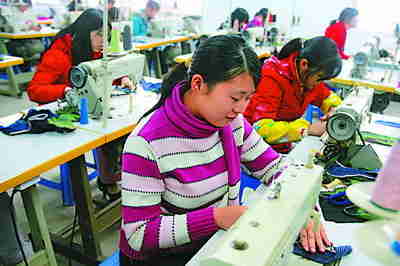
The local government pays 32 percent of the social security and 2,000 yuan ($274) as training fee for every displaced person the park employs, says Ruyi official Yuan Helu. The factory is expected to provide 20,000 fulltime or part-time jobs in the reservoir area by 2010.
Allured by the preferential policies, about 1,300 enterprises such as Ruyi have opened shop in the area and provided jobs to half a million displaced people, project commission figures show. A recent survey shows the number of the displaced living in abject poverty dropped from 1 million in 1997 to about 320,000 in 2006.
But that does not mean resettlement officials have dropped their guard to create more jobs. "To ensure that the displaced enjoy a good life, the effort to bring them back to the mainstream has to continue for decades," says Luo.
With inputs from Zhan Lisheng in Guangzhou and Xiao Ma in Shanghai


|
|
|
||
|
||
|
|
|
|