
Culture comes first for 'lucky' scholar
Updated: 2008-04-23 08:00
Shesrab Nyima considers himself a lucky man; not just because he escaped the fate of being a serf - he was born after the liberation - but also because he is able to dedicate his time to the preservation of his ethnic culture, which was neglected prior to the 1950s.
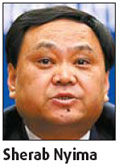
Born into a poor family in Luhuo county in the Gaze Tibetan autonomous prefecture of Sichuan province in 1955, Shesrab Nyima is vice-president of Beijing's Central University of Nationalities, which studies the 56 ethnic groups of the world's most populous country.
But Shesrab Nyima is not the only scholar in his family: His four siblings all graduated from university, which is a rare feat for people of their generation.
"My mother, who worked as a maid, was given the chance to go to school by the government after the liberation, and she began to understand the power of knowledge.
Later, despite poverty and difficulties, she insisted that all five of her children went to school," Shesrab Nyima said.
"My siblings and I were very lucky to have been able to take advantage of the new education policy," he said.
Shesrab Nyima was among the first group of children in his county to go to middle school. Prior to the 1960s, there was no comprehensive education system in Tibetan-populated regions.
Also, in 1978, he was able to take part in the reintroduced national college entrance examinations for colleges, which had been halted during the "cultural revolution" (1966-76).
Shesrab Nyima was exempted from school fees and enjoyed extra benefits as he was from an ethnic minority.
For example, coming from a Tibetan family meant he did not have to work in the development of rural areas, but instead was offered the chance to study at a teaching college after leaving middle school.
"My success and the success of my siblings epitomizes the development of education in the region," he said.
And education has continued to flourish, Shesrab Nyima said.
Today, more than 96 percent of children go to school, when in the past only the privileged sons and daughters of noble birth had that opportunity, Shesrab Nyima said.
Thanks to government support, Tibetan children now get free accommodation and food, and are exempt from fees at primary and middle schools, he said.
Also, universities apply a lower threshold for Tibetan students to give them a better chance of a higher education, he said.
As dean of the Tibetology Research Institute at the Central University of Nationalities, Shesrab Nyima said all of his masters and doctorate students study the Tibetan language and history as part of their curricula.
"The study of Tibetology has been encouraged over the past 50 years," he said.
Before 1959, folk artists in Tibet had a very low social status and their work was not protected, he said. "In fact, people were taxed for singing in Lhasa sometimes."
But in 1965 - the year the autonomous region was officially established - rules were introduced by the regional people's congress to protect the Tibetan language and its cultural relics.
The Tibetan Near Year and the Shoton (Yogurt) Festival were even set as holidays, he said.
Xinhua contributed to the story
|
||
|
||
|
|
|
|