CHINA> News

|
CHINA> News
|
|
Washington summit targets at crisis
(chinadaily.com.cn)
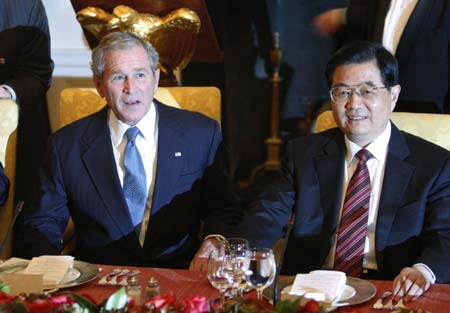
Updated: 2008-11-16 09:48 World leaders facing the difficult job of walking out of a grave economic crisis at an earlier date, agreed on Saturday in Washington DC to work more closely and coordinate more on economic policies in the coming days. However, they put off sorting out any detailed plans on overhauling financial management and regulation, or revising the problematic global currency trade and settlement regime till their next summit, scheduled on April 30, when the United States is steered by a new Barack Obama administration.
Significant at the rare summit of 21 nations, developed or developing, and four global financial organizations, nearly all the top leaders agreed that the current round of credit debacle and economic downturn is felt across the board, making a global response more likely. “Emerging market countries were not the cause of this crisis, but they are amongst the worst affected victims,” said Indian Prime Minister Manmohan Singh. Underscoring how bad things have gotten this time, US President George W Bush, the host, said he had agreed to the US$700 billion government bailout plan only after being told the nation was risk of falling into “a depression greater than the Great Depression.” At the conclusion of talks that took place over the past two days, the leaders released a joint communiqué that was modest in scope but high in hopes. Covering eight pages and 47 items of action, the communiqué is to establish a series of new safeguards for the current fragile and opaque world financial system. Nearly all the efforts are aimed in some way at better pinpointing risky investment patterns and potentially perilous regulatory blind spots, before they bring down companies and even countries. China has announced a massive US$586 billion fiscal spending plan before the end of 2010 to stimulate a slowing economy, the world's third largest. President Hu Jintao urged at the summit that world community should draw lessons from the crisis, and undertake earnest reforms of the current global financial system, and establishing a new international monetary order that is “fair, just and inclusive”. He also said those crucial reforms ought to be implemented in a comprehensive, balanced, incremental and result-oriented manner. -- "A comprehensive reform is one that has a general design and includes measures to improve not only the international financial system, monetary system and financial institutions, but also international financial rules and procedures" ; -- "A balanced reform is one that is based on overall consideration and seeks a balance among the interests of all parties" ; -- "An incremental reform is one that seeks gradual progress," said the president, adding that it should proceed in a phased manner, starting with the easier issues, and achieve the final objectives of reform through sustained efforts. -- "A result-oriented reform is one that lays emphasis on practical results. All reform measures should contribute to international financial stability and global economic growth as well as the well being of people in all countries," Hu stressed.
Based on those considerations, China's president listed four priorities in reforming the international financial system -- stepping up international cooperation in financial regulation; advancing reform of international financial institutions; encouraging regional financial cooperation; and improving the international currency system. Pushed by Bush, the leaders reaffirmed their commitment to free markets and free trade. The meeting laid out a roadmap for overhauling financial regulations that would postpone most of the difficult decisions until US President-elect Obama takes office in late January. The measures include phasing in a so-called “college of supervisors”, which would share information about global financial organs, and a plan to coordinate accounting standards. To help countries hurt by the crisis, British Prime Minister Gordon Brown is pushing for the resources of the International Monetary Fund to be expanded. The fund, he said, should function like an “international central bank.” The trouble with this idea is that there are only a handful of candidates with enough cash to pour money into the IMF — Japan, China, and oil producers like Saudi Arabia. To persuade these countries to increase their contributions would require giving them a larger role in the governance of the fund. And that would mean reducing the influence of Britain and other European countries. |
主站蜘蛛池模板: 连江县| 嘉峪关市| 闸北区| 伊吾县| 临安市| 临夏县| 普兰店市| 济源市| 定边县| 炉霍县| 青海省| 万盛区| 汾西县| 天气| 汉沽区| 怀柔区| 前郭尔| 通州区| 邵阳县| 庄河市| 得荣县| 连城县| 丁青县| 米易县| 敦化市| 嵩明县| 东乌| 霍邱县| 鹰潭市| 泰州市| 封开县| 东阿县| 龙海市| 松江区| 张北县| 旬邑县| 邹城市| 洱源县| 通山县| 古交市| 北票市| 漳平市| 米易县| 瓮安县| 兴化市| 永吉县| 宁波市| 和龙市| 溧阳市| 来宾市| 泊头市| 祥云县| 怀仁县| 丰都县| 凤冈县| 西青区| 泗水县| 饶平县| 邹平县| 阿荣旗| 南靖县| 宜阳县| 宝兴县| 乐都县| 南江县| 淅川县| 新安县| 德惠市| 涟源市| 七台河市| 绥德县| 万载县| 泰安市| 兴城市| 昌宁县| 西青区| 宜黄县| 咸宁市| 宣汉县| 梁山县| 莱阳市| 莱阳市|