CHINA> Focus

|
CHINA> Focus
|
|
The poisoned palace - mystery of last emperor's death
By Lin Qi (China Daily)
Updated: 2008-11-21 08:57
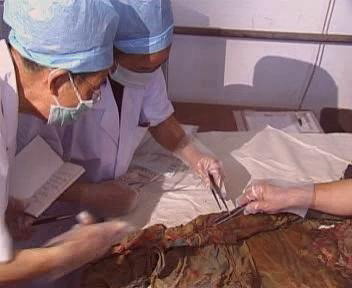
Exactly 100 years after his death, it has finally been confirmed that Emperor Guangxu (1871-1908) was a victim of arsenic poisoning, though the murderer remains a mystery. The finding has been revealed by a research team in Beijing, based on a five-year study of the emperor's remains and the conditions inside and outside his tomb. The investigators included the Western Qing Imperial Tombs (Qing Xi Ling) administrators, China Institute of Atomic Energy and forensic science experts from Beijing Municipal Public Security Bureau.
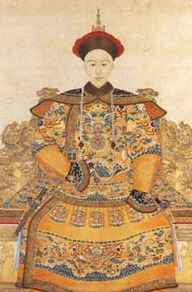
Researchers analyzed hair and clothes samples from Guangxu's body and found he had more than triple a fatal dose. They attributed its existence in the clothes around his stomach to corrosion caused by the decay of his poisoned body. Experts have also dismissed the possibility of Guangxu being poisoned by traditional Chinese medicine (TCM). Historical documents show he was prescribed TCM during his reign and some elements might have led to an overdose of arsenic and mercury. However, experts said that in the case of chronic toxicity, the ends of hair follicles contain higher amounts of poison than the rest of the hair. The opposite was true for Guangxu's hair. They have also found proof of their arsenic conclusion in the memoirs of imperial doctors involved in Guangxu's treatment before he died and in the diaries of State Council (Junji Chu) officials. Guangxu was 4 when he was chosen to be emperor by Empress Cixi, his aunt, after her only son, Emperor Tongzhi died. Although he took power at the age of 16, it was Cixi who exerted total control over the court and the country. Tension mounted between the two as Guangxu tried to act independently and introduce political, legal and social reforms, threatening Cixi's power. Guangxu started the famous "Hundred Days' Reform" in 1898 but failed. Cixi restored her own regency and confined the emperor to a small palace, Yingtai Terrace, for 10 years. Whether Guangxu was murdered has been one of China's historical mysteries. The top three suspects are Cixi, Yuan Shikai and Li Lianying. Some believe Cixi didn't want Guangxu to grab power back after she died and killed him first. Or maybe it was Yuan Shikai, a key military official and politician of the imperial court, who betrayed Guangxu in the "Hundred Days' Reform". He feared his life would be in danger after Cixi's death and might have bribed a eunuch to poison the emperor. Li Lianying was one of Cixi's favorite and most loyal eunuchs. He is also under suspicion because he was told that Guangxu had written in his diary to execute him and Yuan Shikai after Cixi died.
|
主站蜘蛛池模板: 洛阳市| 金寨县| 南开区| 石阡县| 达日县| 榆中县| 广宗县| 武邑县| 大庆市| 罗平县| 三明市| 华安县| 青岛市| 鸡西市| 双辽市| 涞源县| 财经| 耒阳市| 赤城县| 双鸭山市| 紫阳县| 曲沃县| 广水市| 青浦区| 阿拉善左旗| 常宁市| 孝义市| 宣化县| 防城港市| 杭锦旗| 威远县| 饶河县| 通州市| 米林县| 和林格尔县| 永济市| 宝山区| 柳河县| 清水河县| 宝清县| 巴里| 建水县| 稻城县| 东辽县| 镇康县| 榆树市| 宁陵县| 麦盖提县| 来安县| 廉江市| 济源市| 名山县| 澎湖县| 青海省| 即墨市| 鹿邑县| 浦江县| 郁南县| 洪洞县| 静海县| 江西省| 双柏县| 六安市| 远安县| 大埔县| 钦州市| 蕉岭县| 建宁县| 宜章县| 台安县| 澄迈县| 淄博市| 紫云| 来凤县| 武川县| 福泉市| 都昌县| 仙游县| 石棉县| 九江市| 武平县| 芦溪县|