CHINA> Highlights

|
CHINA> Highlights
|
|
Commandos and comrades who cared and shared
(China Daily)
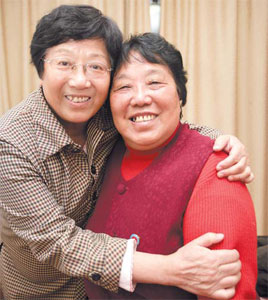
Updated: 2008-12-11 08:00 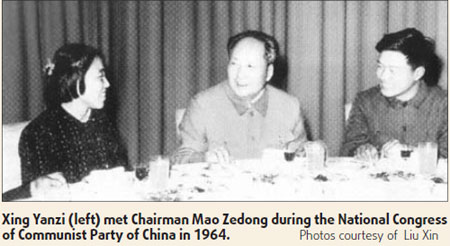 Xing Yanzi, 68, and Hou Jun, 65, smile as they remember the sweet days of their youth. It was a time of ideals, dreams and passion. It was a time when a young person could make a difference. Both women were role models of the zhiqing generation and became celebrities because they voluntarily moved to the countryside and achieved extraordinary feats to help improve the quality of life of rural people. "I didn't move to a farm in the countryside as the result of propaganda," Xing says with a smile. "But when I saw the poor village and the hungry children, I decided to do something for them." After graduating from high school in 1958, Xing went to Sijiazhuang village, Baodi county, in Hebei province, to look after her grandfather.
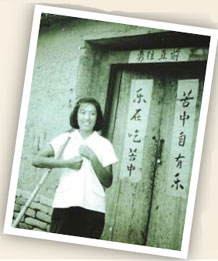
All the men in Sijiazhuang had gone to work in cities, leaving children and old people to live in poverty and hunger. The area suffered from floods every year and the setbacks caused by The Great Leap Forward Movement (1958-61) added to the woes. Xing organized a 20-women team to help the local people. In winter, they broke the frozen river surface in order to catch fish and made reed shades to sell for seeds and fertilizer. The villagers called Xing and her team "the Yanzi Commandos" and within three months, they earned 3,600 yuan, a big sum at that time. Through hard work, the Yanzi Commandos improved the quality of soil and increased production. In 1959, the People's Daily published Xing's story and she became a role model for millions of young people. In 1964, Xing met Chairman Mao Zedong during the National Congress of Communist Party of China. "In a welcome dinner, Chairman Mao told me to learn about the spirit of James Watt and (Isaac) Newton and to chase the truth tirelessly," says Xing who sat by Mao. "He noticed my bowl and asked me if he could change it for a bigger one, saying that farmers usually ate with big bowls after heavy work," Xing remembers. "He asked me to eat more and put his dumplings into my bowl." Xing spent all her youth in the village and in 1973, was appointed Party secretary of the Municipal Committee of the CPC (Communist Party of China) of Tianjin. But Xing continued to work in the village over the following decades. Hou Jun was known as "the special girl" during the 1960s. In 1964, Hou graduated from a high school in Beijing and instead of entering university, she went to Doujiaqiao village, in the same county with Xing. "Many urban young people were unemployed during the years and I didn't want to laze away in the city," says Hou. "Most of my classmates from the countryside returned to their hometowns, so why couldn't I follow them?" Many of her friends persuaded her to stay in Beijing and reminded her of the extremely poor conditions she would be facing in the countryside. But Hou was determined to make a difference. "I understood the country was in need at that time, it was especially short of food," says Hou. "The countryside could be a special university for me." Hou was often hungry as she lived in her small earth shack but her lack of food did not curb her enthusiasm and her willingness to help. After heavy farm work, she organized young villagers to study farming techniques and her efforts did not go unnoticed.
In 1963, Hou became as famous as Xing. Premier Zhou Enlai met Hou the following year and the two developed a close friendship until he passed away in 1976. During the years Hou worked in the village, she improved the salina fields and yields increased from less than 100 kg per mu (one hectare equals to 15 mu) to more than 500 kg in 1974. The village not only provided for itself, but could help feed the country. Hou worked in the village for 18 years and kept serving the Baodi people until last year when she retired. Over the past 40 years, Xing and Hou have treasured their experiences. "I didn't ask my children to learn from me, after all we grew up in different ages. But my attitude to life influenced them, and they worked hard and seldom complained," says Xing. "I am happy to see many college graduates going to the countryside now to serve the development of the rural economy. "The countryside today still needs help from the developed areas of the nation. We need to keep the zhiqing spirit." Hou says her grandchildren found stories about her on the Internet and asked more about this time in history. "The 'cultural revolution' changed the nature of the zhiqing movement, but I understood that we had no choice then and never regretted my choice." (China Daily 12/11/2008 page18) |
主站蜘蛛池模板: 天台县| 江阴市| 邵东县| 岢岚县| 莲花县| 乌拉特中旗| 巧家县| 桐城市| 陆川县| 星子县| 平昌县| 崇文区| 逊克县| 桐乡市| 日照市| 梁河县| 惠州市| 岳阳县| 阿拉善左旗| 建水县| 西和县| 遂宁市| 寿阳县| 彰化县| 凤阳县| 大理市| 泰顺县| 兴业县| 纳雍县| 阳原县| 清河县| 西乌珠穆沁旗| 虎林市| 苏尼特右旗| 德保县| 阳山县| 吕梁市| 涟源市| 通州市| 永胜县| 永新县| 名山县| 合肥市| 乌苏市| 思南县| 鄂托克旗| 宜君县| 同德县| 汉中市| 千阳县| 堆龙德庆县| 通州市| 阿拉尔市| 阿坝| 溧水县| 乾安县| 肥乡县| 北京市| 永宁县| 南皮县| 盈江县| 库伦旗| 海淀区| 黔西| 廊坊市| 满城县| 阿拉善左旗| 正阳县| 霞浦县| 巴林左旗| 望奎县| 昌平区| 开平市| 内黄县| 金山区| 镇康县| 阜平县| 西藏| 读书| 清水县| 手游| 富顺县|