CHINA> National

|
CHINA> National
|
|
Chinese toymakers in trouble amid crisis
By Liu Jie (China Daily)
Updated: 2008-12-22 07:53
All is not well in the Chinese toyland. Even as manufacturers huddle for cover from the chilly recession winds and wait for succor from Christmas sales, they now have to contend with the more stringent safety norms imposed by importing nations.
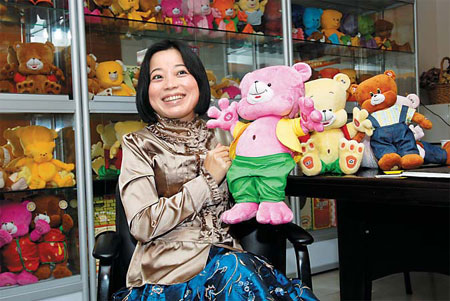
The ensuing Christmas season may turn out to be a mixed bag for exporters, say industry insiders. While some key manufacturers may have reason to cheer, for many of the small and medium-sized firms that may not be the case, as they may have to make costly technology upgrades before exports. Standard divergence "It's the most terrible Christmas season we have experienced for a decade. Plummeting orders, cost surges, buyers squeezing prices and stringent safety standards are further complicating things for us," says Lin Jianmin, founder and general manager of Quanzhou Jianmin Toy Co Ltd, located in Quanzhou Scientific and Technological Development Zone, Fujian province. The factory, which has annual sales of around 2 million yuan, employs 30 workers and produces stuffing dolls usually as Christmas gifts for children in North America and Germany. The busiest season for Jianmin Toy Co Ltd is normally from August to November, but this year orders have fallen nearly 50 percent over last year. Compounding this has been the frequent production line adjustments, says Lin. The toymaker had to make production lines changes twice in a month. When orders from Germany were cancelled, Lin had to adjust the program of machines that were producing German orders to meet US requirements, as the safety criteria differed for both nations. Further changes were called for after the US Congress passed the new federal children's product laws in August, setting higher standards for toy safety. "We had to do such adjustments now and then over the recent years, since developed markets have different safety standards and their policies keep changing constantly," says Lin. Changes like these affect the factory's working efficiency and increases costs. "It takes about a week's time to make the machines adapt to new procedures and also involves huge expenditure on purchase of substitute materials when required. "I am not sure whether I can survive after this year, but I can promise that what we make are absolutely safe and qualified," says the middle-aged Quanzhou native, adding that poor quality and safety problem would be highly punished by the local supervision and inspection authorities. "We (China) consistently request toy manufacturers to take strict control over the products' quality and to enhance supervision and inspection of the entire process of production," says Qin of Ministry of Foreign Affairs. Amid growing concerns over the safety of Chinese products, the EU and the US launched negotiations towards a common safety standard for toys on November 17 in Brussels. The talks were formally opened during a trilateral high-level meeting between EU Consumer Affairs Commissioner Meglena Kuneva, the US Chairman of the Consumer Product Safety Commission Nancy Nord, and the Chinese Vice-Minister of Administration of Quality Supervision, Inspection and Quarantine (AQSIQ) Wei Chuanzhong. The three sides have decided to bring their joint efforts to a new level by aligning their standards. Toys will be the first targets, since around 75 percent of toys sold around the world are made in China. "Common standards and policy consistence are very crucial for Chinese manufacturers to do their business in a fair and transparent arena," points out Liang Mei, deputy chairman of China Toy Association. Chinese producers have been complaining about the differing standards applied on the two sides of the Atlantic Ocean. Regulatory divergence is a "challenge" to safety, admitted Nord while speaking on the"historic opportunity to make progress on toy standardization". |
主站蜘蛛池模板: 迁西县| 平乐县| 丰都县| 大宁县| 文山县| 宝坻区| 黎平县| 上杭县| 洛隆县| 禹城市| 炎陵县| 通州区| 阿鲁科尔沁旗| 云浮市| 静乐县| 黔南| 资兴市| 漳浦县| 新宾| 竹北市| 阜康市| 马龙县| 中山市| 镇远县| 武邑县| 汝南县| 若羌县| 黔西| 连南| 交城县| 乌恰县| 封丘县| 永川市| 弥渡县| 江达县| 湟源县| 昌宁县| 三门峡市| 抚顺县| 石楼县| 丹江口市| 宁城县| 太保市| 浙江省| 兴业县| 寻乌县| 花莲县| 临猗县| 台中县| 庆阳市| 崇礼县| 阿拉善右旗| 称多县| 昌宁县| 巧家县| 濮阳市| 孟连| 邵阳县| 灯塔市| 东安县| 怀来县| 宁阳县| 花莲市| 且末县| 沈阳市| 渝北区| 武定县| 哈巴河县| 苗栗市| 中宁县| 天水市| 廉江市| 阜南县| 临夏县| 枣庄市| 旬阳县| 张家港市| 榕江县| 张北县| 交口县| 泊头市| 平潭县|