CHINA> Regional

|
CHINA> Regional
|
|
Shanty town dwellers to move into new homes before lunar New Year
By Nie Ligao (chinadaily.com.cn)
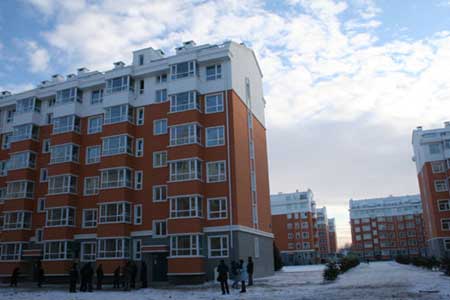
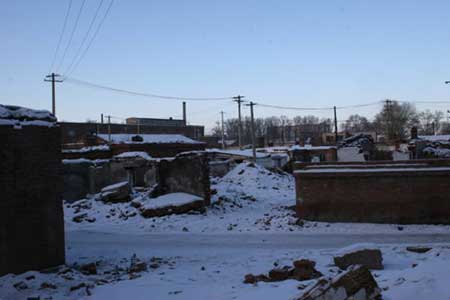
Updated: 2008-12-25 11:24 Li Chunming's family and another 1,444 households in the city of Qiqihar, in northeast China's Helongjiang province, will soon move into new apartments in a community called Xinhe, it was announced Tuesday. The community has been built on the site of a shabby and crowded shanty town where they lived before.
They will move in before the Chinese lunar New Year, which falls on January 25, 2009. Unlike the shanty towns they are used to, their new homes will be installed with tap water and central heating systems.
Xinhe community, along with five other residential communities, was built by the local government especially for previous shanty town dwellers. With a total area of 1.11 million square meters, the six communities are designed to accommodate 13,000 families. Li Chunming, among the first to move out of the shanty town, was still doubtful of his good luck. He said it felt like "a sweet dream coming true finally."
Zhang Guihai, vice mayor of the city, told reporters Monday that inhabitants who have property ownership certificates are entitled to new homes the same size as the shacks they previously owned, free of charge. Even dwellers living in unapproved buildings can get a free apartment, equal to half the floor space of their shanty. They can also add extra space at a discounted price. The poor and the disabled are entitled to a free apartment with a minimum area of 40 square meters, even if the size of their shanties were less than that, according to Zhang. Residence area per family has reached 55 square meters for previous shanty town dwellers, up from 22 square meters in 2003, according to official figures. There were many shanty towns in the industrial city of Qiqihar, due to a large number of workers being laid off after its state-owned enterprises went bankrupt one after another over the past decade. With the local economy recovering and the nation embarking on an effort to revitalize China’s Northeast, the city now has enough fiscal revenue to demolish shanty towns and build new homes for the poor. "The new apartments are financed by bank loans, government revenues through selling land use rights, government subsidies, investment from property developers and donations," Zhang said. "In 2008, the program was granted a government subsidy of more than 20.44 million yuan (US$3 million),” he said. Zhang Liang, assistant director of Qiqihar’s Construction Bureau, said over one billion yuan (US$147 million) has been spent on the project this year. There are still 286,000 people living in shanty towns covering an area of 5.94 million square meters, according to local government figures. Another 10 billion yuan (US$1.47 billion) will be needed to relocate all of these people, said Zhang. "It's a big challenge for the local government," he added. Apart from dismantling shanty towns and building new homes in the urban area, Qiqihar has also launched programs to improve living conditions in its rural area. By early 2009, 46,000 households of farmers will bid farewell to their thatched cottages. |
主站蜘蛛池模板: 师宗县| 屏山县| 都匀市| 佛山市| 双峰县| 社旗县| 彭州市| 隆林| 永清县| 安陆市| 仙游县| 林甸县| 梅河口市| 灵石县| 安平县| 富顺县| 湘乡市| 武川县| 珲春市| 边坝县| 色达县| 红安县| 丹巴县| 平凉市| 嘉义市| 白银市| 永城市| 甘孜县| 平湖市| 松潘县| 陇南市| 汨罗市| 东乌珠穆沁旗| 喀喇沁旗| 榆中县| 巢湖市| 宝坻区| 台南市| 资源县| 于田县| 金溪县| 南康市| 凉山| 岐山县| 原平市| 广河县| 金华市| 海口市| 呼伦贝尔市| 崇左市| 镇雄县| 鄂伦春自治旗| 保德县| 阜城县| 平乡县| 镇坪县| 吉首市| 云南省| 中超| 永新县| 庆元县| 都安| 马鞍山市| 新龙县| 炎陵县| 盐山县| 宣城市| 宁陵县| 龙游县| 临泽县| 桐梓县| 瑞金市| 平阳县| 成安县| 女性| 金堂县| 繁昌县| 金溪县| 石门县| 北川| 兴隆县| 松原市|