|
|
Your quick guide to how NPC, CPPCC function
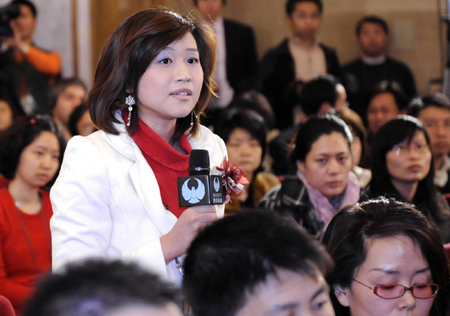
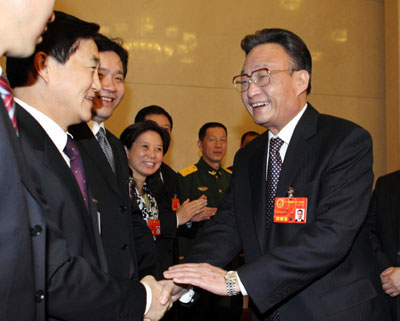
(China Daily) Updated: 2007-03-02 11:41 The National People's Congress is the highest law-making body. The tenure of an NPC is five years and the 10th NPC will finish its term in 2008. The country's administrative, judicial and procuratorial organs are created and overseen by the NPC. NPC deputies, numbering less than 3,000, vote for national leaders. The NPC usually holds its yearly full session in early March. This year's full session starts on Sunday, and is the fourth session of the 10th NPC. Wu Bangguo is the chairman of the 10th NPC Standing Committee. CPPCC The Chinese People's Political Consultative Conference is an organization of the united front that is widely represented. It is an important organ of multi-party co-operation and political consultation under the leadership of the Communist Party of China. It is composed of the CPC, other political parties, mass organizations, and representative public personages from all walks of life. There are representatives of compatriots from Taiwan, Hong Kong and Macao as well as returned overseas Chinese and other specially-invited people. The major function of the CPPCC is to conduct political consultation and exercise democratic supervision, organize its members from various non-Communist political parties, mass organizations and public personages to take part in the discussion and management of State affairs. The CPPCC session usually begins two days ahead of the NPC session, and the two sessions run parallel for more than one week. Chairman of the CPPCC National Committee is Jia Qinglin. China's non-Communist parties The eight non-Communist parties are those established before the founding of the People's Republic of China in 1949, which were then dedicated to the realization of a bourgeois republic in China and supported the Communist Party of China in the latter's effort to overthrow the rule of the Kuomintang. They are independent organizations and enjoy political freedom, organizational independence and legal equality under the Constitution. Government's work report, budget and State development report The premier usually delivers the central government's work report at the opening full session of the NPC. The report, deemed as the state-of-the-union address, usually reviews the government's work in the past year and plans the work for the coming year. The Minister of Finance will deliver a speech to NPC deputies on the budget, while the Minister of the National Development and Reform Commission discusses the social and economic developments. NPC deputies will examine these reports and raise different opinions during the group discussion. The examination on the government reports is one of the most important ways for NPC deputies to perform their governmental supervision duty. Five-year plan China introduced the first Five-Year Plan in 1953 to boost industrial development. Now the NPC deputies will examine the 11th Five-Year Programme (2006-10) after the NPC session opens on Sunday. The word "programme" is used to replace the traditional "plan" with the aim of diminishing the influence of a planned economy. At the closing session, NPC deputies will vote on the programme, which is the blueprint for the economic and social development over the next five years. The programme will not just focus on economic development, but also pay attention to environmental and social issues. Reports by the Supreme People's Court and the Supreme People's Procuratorate Each year, the country's chief judge and chief procurator deliver a speech on the works of the Supreme People's Court and the Supreme People's Procuratorate to the NPC. All deputies will vote on these reports. Press conferences during the session According to the general practice, several press conferences and group interviews will be arranged during the session. The foreign minister and premier usually meet the press during the session. The two press conferences are broadcast live across the country. Ministers and NPC and CPPCC delegates also attend press conferences or accept group interviews on other occasions. (China Daily 03/02/2006 page2) |
|