|
|
Don't be ashamed of your culture
By O. P. Rana (China Daily) Updated: 2008-03-17 07:07
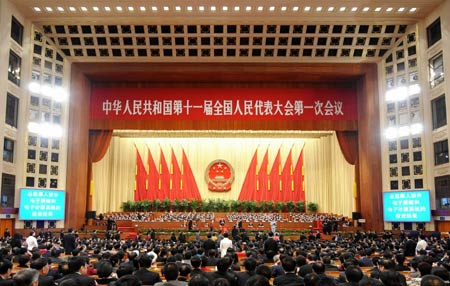
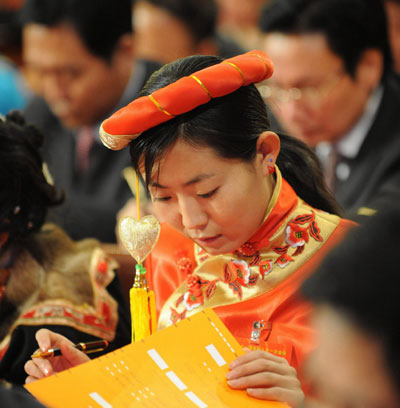
Cities in China are fast losing their architectural splendor to Western-style, glitzy skyscrapers. The ravages of modern life and the hunger for more land are swallowing up traditional houses such as those in Beijing's hutong. Despite all this, the imperial structures in the capital, the colonial buildings of Shanghai, the magnificent edifices in lesser-known towns, and the Buddhist, Confucian and Taoist temples will remain on China's map for thousands of more years. Everything in and about China has a history, a written history of more than 5,000 years. Texts written long before Confucius can still be deciphered, so long is its literary tradition. The prose epic reached its peak during the Ming Dynasty (1368-1644), when three of the four Chinese classics Romance of the Three Kingdoms, Outlaws of the Marsh and Journey to the West, were written. Poetry had already reached its zenith in the Tang Dynasty (AD618-907). Such is the power and grace of the language that all subsequent Chinese poetry forms have been derived from it - right down to Guo Moruo and Ba Jin. But then, writing has always been an art in this country. Calligraphy, rather than painting, is traditionally regarded as the highest form of visual art. In fact, any Chinese character is a work of art - so intricate are its stokes, so stylized the hand-written pattern, so full of vigor its appearance. The language, the literature, the history, the customs and traditions and the way of life have given birth to the unique culture that is China's. Bur ask a young urban couple what they plan to wear on their wedding day, and the answer more often than not would be: a Western-style white wedding gown for the bride and a Western suit for the groom. Some couples do get married both in the traditional and Western way, but they still need the Western outfits. So what's left of a Chinese wedding? The food at the banquet? Maybe, but more and more Western dishes have started appearing on the menu. Every society is known by and for its distinct culture. A government (like the NPC and the CPPCC have been doing for the past fortnight) can treat the illnesses in the economy, attend to the body politic, right wrongs in society and ensure justice, but it cannot determine culture. Culture is something that belongs to the people and their way of life. In more ways than one, it reflects their proximity to their roots. True, it's no longer possible for a couple to go through the rigors of a traditional Chinese marriage. The traditional go-betweens have given way to the "virtual" matchmakers on the Internet. Very few betrothals take place, and a bride's family rarely sends its daughter to the "cock loft", or a separate part of the house, with her closest friends days before the wedding. Friends of a bride-to-be rarely sing songs of lament, cursing the go-between and the groom's family for snatching her away from her loved ones (still one of the highlights of an Indian wedding). The hairdressing ritual is taken care of by beauty parlors. Not everyone can be a writer, an architect or a painter and leave a cultural imprint on society. But we can at least see more brides in traditional Chinese jackets, red shoes and perhaps red silk veils covering their face, can't we? And more grooms can be seen in long gowns, red shoes and a red silk sash with a silk ball on their shoulders, can't they? After all, this is what culture is all about. There's nothing shameful or outdated about it. On the contrary it is a matter of great pride. The author is a senior editor with China Daily (China Daily 03/17/2008 page7) |
|