CHINA> Focus

|
CHINA> Focus
|
|
The epicenter of endurance
By Wang Xu and Alexis Hooi (China Daily)
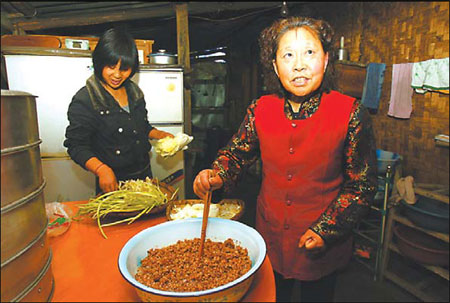
Updated: 2009-05-12 08:04 The family now live together in a three-room shack, built using wood pillars and bamboo mats handed out by the local government along with 2,000 yuan ($293) in relief subsidies. Their makeshift house stands about 150 m from a nearby mountain slope. The two-story home they used to share, which was reduced to rubble in the quake, is now simply a place they visit to collect firewood to cook with, a source which proved invaluable during the harsh winter months.
Most people in Yinxing still live in temporary structures like Tan's, while the local government is searching for safer plots in the valley to build new ones for them. Of the families in the town who lost their homes, 227 already have new houses as the land their old properties stood on was deemed safe, said township head Yu Zeyong. And from next month, the authorities will start work on several residential areas for the 400 or so families whose old sites were too dangerous for habitation. Maoming, a city in Guangdong province, plans to spend 98 million yuan over the next two years to help rebuild Yinxing, with basic public facilities like water treatment plants, primary schools and local medical clinics completed by August this year.
A new 100-sq-m building costs each family about 74,000 yuan to build, of which the central and local governments would pay 40,000 yuan, said Yu. Each household can also apply for a mortgage of 20,000 yuan, with interest incentives. That means a family like Tan Tianzheng's would have to pay around 14,000 yuan for a new home. Her family also received an additional 30,000 yuan from the government after it bought their riverbank land to construct a residential community, which is expected to be complete by the winter. However, a new home could still prove be too costly for some Yinxing villagers and farmers, such as Ma Shaoying, 32, who lives with her husband and father-in-law in a shack much smaller than Tan's. Doctors had to amputate Ma's 5-year-old son's left leg after the quake and she now pays 500 yuan a month to send him to a kindergarten in Dujiangyan. Meanwhile, her eldest son, who is 7, studies in nearby Meishan and has not seen his parents since March because they cannot afford the 200-yuan bus fare. Ma said her family's farmland on a hill slope was completely destroyed and her husband now has to work on construction sites. Even before the quake, Ma's father-in-law gave up treatment for his spine injury because of a 10,000-yuan debt incurred in 1996 to build their old home. Making a living could also poise a formidable obstacle for families like Ma's. Before the May 12 disaster, eateries and family-run shops dotted the highway through Yinxing and many locals lived off roadside stalls serving truck drivers and visitors to Jiuzhaigou and Huanglong, two famous tourist spots in Sichuan province. The town, which is a rich source of hydropower, also attracted energy-intensive enterprises with its lower power prices. Local farmers, some of whom grew the region's famous orchids, also had the highest average income in Wenchuan because of its proximity to affluent customers in nearby Chengdu, the provincial capital. But the quake destroyed 80 percent of the valley town's 83 hectares of farmland, officials said. The challenges facing Yinxing's reconstruction are typical in other quake-hit zones in Wenchuan, local authorities said. The quake left farmers in the county's 118 villages with only about 300 sq m of cropland each, less than a quarter of the national average. About 20 percent of the county's 100,000 residents are also still without a job. Still, Yinxing township head Yu said the area's sole highway would boost the recovery work once it is fully repaired, and assured the roadside businesses would soon be teeming with customers again. On May 9, the Sichuan government unveiled plans for a new freeway connecting Yingxiu with Wenchuan county seat through Yinxing. The road, costing almost 5 billion yuan, will shorten the drive from Yinxing to Chengdu to just 40 minutes, making the area even more attractive to industrial investment. All the rebuilding is bringing renewed hope to villagers like Tan, who works at a makeshift canteen on the roadside after she finishes peddling her steamed buns every morning. "It's much better for the drivers to sip a cup of tea in the canteen, rather than sit in their vehicles and wait for the mile-long traffic jam to ease," Tan said. "Business is getting good, too."
|
主站蜘蛛池模板: 平谷区| 湖州市| 滨州市| 尼玛县| 榆树市| 嘉荫县| 象州县| 西青区| 仙游县| 普安县| 云梦县| 甘泉县| 江川县| 新沂市| 鹤峰县| 武安市| 斗六市| 岳阳县| 花垣县| 泉州市| 台东县| 微山县| 南城县| 陆河县| 嫩江县| 临江市| 伊金霍洛旗| 密云县| 徐汇区| 开江县| 连江县| 石林| 胶南市| 若羌县| 新乡市| 江达县| 永德县| 成武县| 旌德县| 义马市| 连江县| 乌什县| 四会市| 利辛县| 且末县| 平邑县| 辉南县| 双柏县| 偏关县| 宁化县| 郑州市| 济南市| 贵溪市| 平顶山市| 五莲县| 徐闻县| 孝昌县| 石阡县| 昌邑市| 龙泉市| 武定县| 福清市| 长顺县| 金平| 偏关县| 筠连县| 贵州省| 绿春县| 喀喇沁旗| 金溪县| 聂拉木县| 大港区| 磐安县| 崇信县| 山东| 邵东县| 饶平县| 郧西县| 徐水县| 南开区| 屯昌县| 荥阳市|