CHINA> Focus

|
CHINA> Focus
|
|
A(H1N1) gets treatment from TCM
By Thomas Talhelm (China Daily)
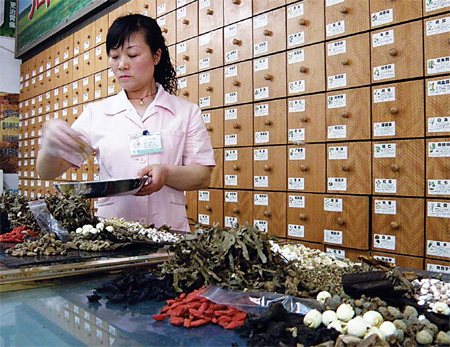
Updated: 2009-06-24 10:34 In early May, the Chinese Ministry of Health and the State Administration of Traditional Chinese Medicine raised public debate when they unveiled a Chinese-medicine plan, including prevention, to combat H1N1, the world's newest epidemic, popularly known as swine flu. The recommended concoction called on mulberry leaves, cogongrass rhizome, honeysuckle and nine other ingredients, but netizens raised doubts over how a traditional preparation could help prevent such a new disease. "Has anyone ever heard Chinese medicine say there's a disease they don't have a cure for?" joked a commenter on the popular message board site, Douban.
Yet, Chinese-language media have been quick to weigh in against those who don't understand traditional Chinese medicine (TCM). "From the perspective of Chinese medicine, the swine flu is not so different from other types of flu and can most certainly be prevented and treated by means of Chinese medicine," says Dr Heiner Fruehauf, Founding Professor of the School of Classical Chinese Medicine in Portland, Oregon. According to TCM theory, by adjusting the body to its environment, even people exposed to the virus will not become infected, says Dr Liu Qingquan, director of Beijing University of Chinese Medicine's Dongzhimen emergency treatment department.
"The environment that we find ourselves in might have the swine flu virus but [if you're properly suited to your environment] Chinese medicine thinks it's not nosogenetic [harmful] to you, whereas it is nosogenetic to me." According to Dr Xu Wenbing, Chairman of the Hope Institute of Chinese Medicine in Beijing, the traditional medicines for SARS and the H1N1 do not attack the virus. Instead, they try to remove those internal conditions in the body that allow the virus to live. "There is no medicine to directly kill the virus. A virus is like a seed: It needs things like temperature and water to grow," Dr Xu says. "When you take away these conditions, the body will cure itself." In adjusting the body to fight H1N1, TCM doctors use medicines that target the digestive system. Whereas medicines designed for SARS treated the respiratory system, medicines for H1N1 target the digestive system, reflecting the finding that the illness triggers symptoms, such as vomiting and diarrhea. In order to treat the digestive system, TCM takes into account factors, such as the season and the weather. The summer season, says Dr Xu, can throw off the digestive system, cutting appetite, sending the body's heat to the surface, and making the stomach cold. He suggests some simple steps to put the stomach's temperature back in balance: "Drink hot water and put ginger or cinnamon in it. If people always take cold beverages, eat ice cream, or drink water directly from the refrigerator, they will harm their stomach." |
主站蜘蛛池模板: 当涂县| 巴青县| 兴仁县| 玉田县| 天等县| 富顺县| 南汇区| 大竹县| 葵青区| 江西省| 安宁市| 新竹市| 辉南县| 新昌县| 巴中市| 武城县| 南投县| 衡山县| 勃利县| 宽甸| 灌南县| 蒙阴县| 邢台市| 张家口市| 海门市| 兴宁市| 连江县| 峡江县| 沙坪坝区| 合作市| 姚安县| 九江县| 英吉沙县| 桐柏县| 渝北区| 涿州市| 安化县| 黄石市| 兴义市| 腾冲县| 青川县| 平乐县| 贵阳市| 万宁市| 双鸭山市| 霍山县| 孙吴县| 平利县| 芦溪县| 绥宁县| 称多县| 神池县| 康马县| 巴青县| 尼勒克县| 龙岩市| 浦东新区| 洪江市| 丹凤县| 会昌县| 铁力市| 曲周县| 施甸县| 阿巴嘎旗| 青田县| 金秀| 玉田县| 洮南市| 都兰县| 三门县| 教育| 维西| 乐陵市| 弋阳县| 嘉善县| 武强县| 外汇| 新竹市| 武陟县| 龙州县| 江城| 陆良县|