CHINA> News

|
CHINA> News
|
|
DNA identification helps quake survivors find dead
By Qiu Lin (Xinhua)
Updated: 2009-05-05 14:30 Xue Yuchao has finally brought home the ashes of four family members who died in last year's May 12 earthquake that claimed 70,000 lives. "Now, they can rest in peace, " says the 52-year-old, struggling to hold back his tears. The devastating quake claimed his mother, son, sister and brother.
Standing in the debris of their apartment building in Dujiangyan, one of the hardest-hit cities in Southwest China's Sichuan province, Xue recalls: "The building was gone in the blink of an eye; my son had no chance." Xue's mother and brother lived in the building. At the time of the quake, his 21-year-old university student son was home on vacation and visiting his grandmother. Xue speaks proudly of his elder son, who was awarded scholarships every year for his academic excellence, relieving Xue of the pressure of paying 6,000 yuan ($876) in tuition fees. A vegetable seller, Xue made just 1,000 yuan a month and got another 300 yuan in welfare. "I ran as fast as I could to my mother's place after escaping from my house which also collapsed," he recalls. He first checked on his second son, whose school stood across the street. He was fine. As he raced to his mother's place, he kept trying to reach them on their mobile phones. But there was no response. Perhaps they had escaped, he thought. Then on May 17, rescue workers found the bodies of his son, brother and sister. His mother's body was never found. There was no time to mourn. Funeral homes and police took away the bodies to cremate as the government rushed to avoid the threat of epidemics. Liu Liangzhi, head of the Dujiangyan Funeral Home, recalls seeing about 200 bodies every day in the week the quake struck. "The numbers exceeded our crematorium's capacity," Liu says. The funeral home could only cremate 36 bodies a day. "We had to work 24 hours a day."
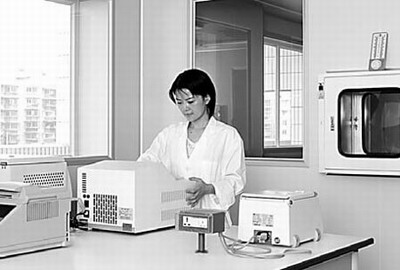
Two days after the quake struck, on May 14, the Investigation Department of the Chengdu Public Security Bureau detailed a plan to identify the victims and dispatched 54 forensic doctors to the disaster zones. Around 30 forensic experts were stationed at Liu's crematorium to collect DNA samples from the dead. Forensic expert Ding Yong says they first photographed the bodies and then collected the DNA samples. "For each body, we took three pictures - of the full figure, the face and of birthmarks or objects found on the bodies." If the body was still warm, they took blood samples. From decaying bodies, they collected a cartilage, tooth or bone in an ethanol-filled tube. All the samples were coded with numbers. |
主站蜘蛛池模板: 建平县| 和政县| 康马县| 通州区| 宁乡县| 灵武市| 泾阳县| 湘乡市| 巨野县| 洪洞县| 察哈| 云和县| 安龙县| 科尔| 翁牛特旗| 黄冈市| 衢州市| 诏安县| 漠河县| 东明县| 赤城县| 黄龙县| 浦县| 仪陇县| 黑山县| 吴忠市| 新郑市| 双柏县| 会昌县| 巩留县| 永安市| 凌云县| 阳城县| 景宁| 丘北县| 平利县| 长兴县| 丽水市| 山西省| 镇江市| 九龙坡区| 兴国县| 锡林郭勒盟| 怀集县| 图木舒克市| 乌拉特前旗| 达拉特旗| 万安县| 金川县| 临朐县| 恩平市| 鄄城县| 绵阳市| 红原县| 寿光市| 长治县| 布拖县| 申扎县| 建宁县| 庆阳市| 望谟县| 九台市| 赤水市| 黄骅市| 台北县| 鄂伦春自治旗| 定西市| 马尔康县| 健康| 浠水县| 天津市| 黔南| 德安县| 汽车| 从化市| 汶上县| 马关县| 呼玛县| 漳浦县| 辉南县| 当阳市| 萨迦县|