CHINA> Background

|
CHINA> Background
|
|
History of the Uygurs
(China Daily)
Updated: 2009-07-13 08:33 Uygur means union or alliance. Modern Uygur people can trace their ancestors back to the nomadic tribes who lived in the area of Lake Baikal and the Irtish River further north of today's Mongolia about 200 BC, contemporaneously with the Han Dynasty of the Middle Kingdom. Among the numerous names these tribes took up was Uighur or Ouigour.
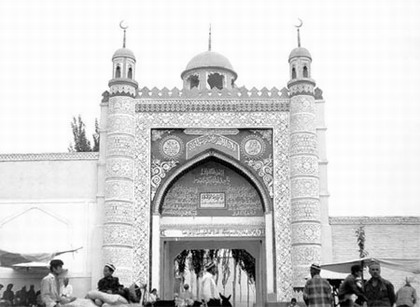 In AD 744, the Uighur founded a khanate in Mobei, an area encompassing Lake Baikal and Mongolia. They even dispatched troops twice to help the Tang central authorities to quell rebellions. However, the Uighur Khanate collapsed in 840 because of natural disasters, internal strife and attacks by neighboring tribes. Consequently, most of the Uighur migrated westward. One of their sub-groups moved to the modern Jimsar and Turpan in Xinjiang, where they founded the Gaochang Uighur Kingdom. Another sub-group moved to the Central Asian grasslands, scattered in areas from Central Asia to Kashi, and joined other peoples in founding the Karahan Kingdom. After that, the Tarim Basin and its surrounding areas were under the rule of the Gaochang Uighur Kingdom and the Karahan Kingdom. The local residents were merged with the Uighurs that had moved west, thus laying the foundation for the subsequent formation of the Uygur ethnic group. In the middle of the 10th century, the Uighurs founded the Hala Khanate, which had a profound influence on the development of Uighur history. During that period, Uighur farming communities began to appear and the Uygurs made rapid socio-economic and cultural progress. Prosperous trading took place in which horses, jade articles and herbs were transported inland in exchange for silk, tea and money.
In 1371, the Mongol Empire of the Chagatai Khanate collapsed and many separatist regimes were set up by descendants of the Mongols. Continuous wars greatly damaged the Uighur society and economy. The Yarkant Kingdom was founded in the early 17th century in an area south of the Tianshan Mountain. Most of the residents of the Kingdom were Islamic Uighurs. They maintained a peaceful trading relationship with the Qing Dynasty. Tribal wars broke out in 1678 and the Baishan tribe together with the Mongol Dzungar force invaded the south, which eventually led to the demise of the Yarkant Kingdom. From 1755 to 1759, the Qing government successfully suppressed the Dzungar and Khoja revolts. The government eventually established the military administration known as the Ili General in Huiyuan city to rule the Xinjiang region and the areas south and east of Balkhash Lake. China Daily |
主站蜘蛛池模板: 古交市| 北海市| 望谟县| 永清县| 天全县| 固安县| 天台县| 和平区| 武威市| 英山县| 茶陵县| 张家港市| 巨野县| 南木林县| 上饶县| 司法| 常熟市| 青岛市| 肥东县| 凤山县| 阿拉尔市| 邵阳市| 图们市| 广饶县| 张家港市| 莫力| SHOW| 元氏县| 饶平县| 革吉县| 思茅市| 共和县| 交城县| 衡水市| 印江| 旺苍县| 五指山市| 南乐县| 通渭县| 鹤壁市| 甘泉县| 安徽省| 理塘县| 高邮市| 贵阳市| 五常市| 宝清县| 化德县| 衡东县| 池州市| 渝中区| 平顶山市| 凤城市| 保山市| 台山市| 娄烦县| 瑞昌市| 曲周县| 南宁市| 正定县| 泽州县| 松滋市| 湘潭县| 永川市| 阿荣旗| 板桥市| 固镇县| 北票市| 教育| 东乡族自治县| 广州市| 沿河| 祁阳县| 淳安县| 宜君县| 牡丹江市| 筠连县| 黄龙县| 特克斯县| 扶余县| 古交市| 滦南县|



